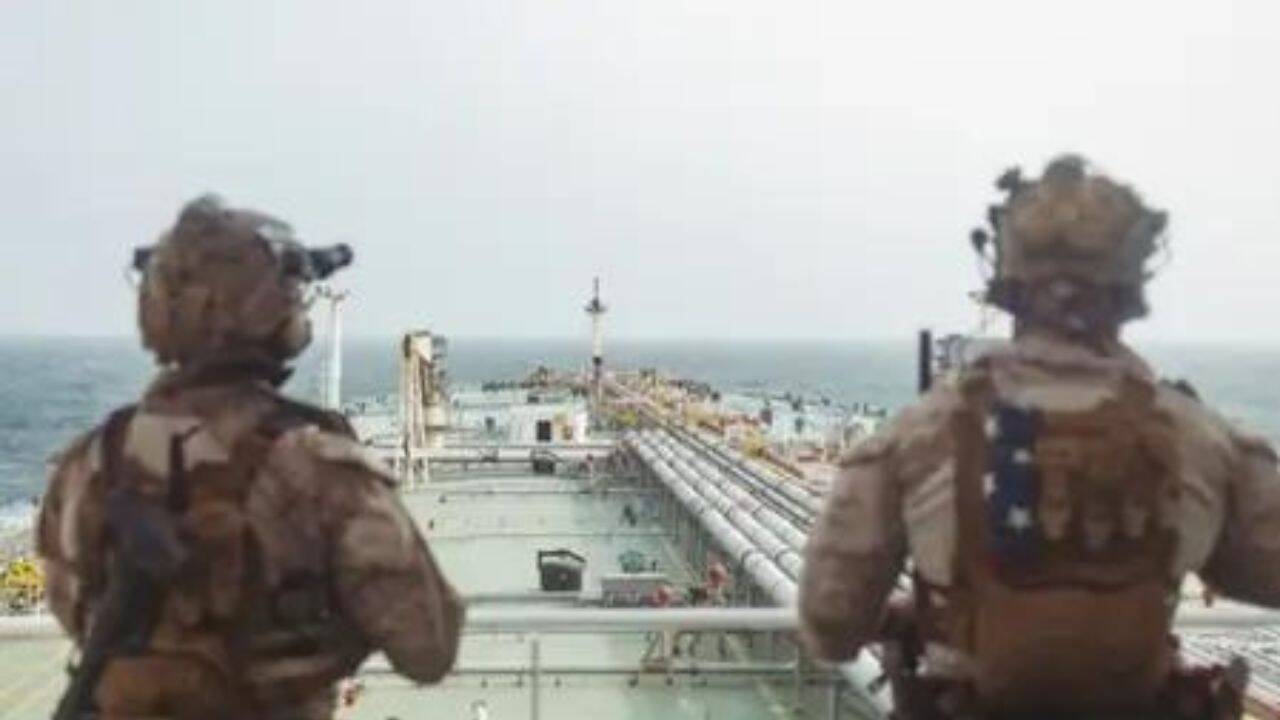
The Middle East is sliding toward a massive regional war, and the window to stop it just slammed shut. Following a fatal drone and ballistic missile assault on American forces stationed at the Muwaffaq Salti Air Base in Jordan, President Donald Trump directed the US military to launch intense, retaliatory airstrikes directly inside Iranian territory. This isn't just another routine proxy skirmish in a distant desert. The direct targeting of Iranian soil represents a massive escalation that upends years of calculated deterrence.
If you are trying to understand why this specific round of violence matters more than previous back-and-forth volleys, look at the geography and the targets. Washington isn't just hitting empty launchpads. US Central Command confirmed that the five-hour bombardment aimed to swiftly punish the Islamic Revolutionary Guard Corps and systematically dismantle Iran’s grip on the Strait of Hormuz. We are witnessing a direct confrontation over the world’s most critical oil chokepoint, and the economic fallout will hit global markets long before the smoke clears. You might also find this similar coverage useful: Why Iran Is Dragging Us Allies Into A Scorching Summer War.
The Human Cost that Forced Washington's Hand
The immediate catalyst for the renewed campaign was a Friday night assault in Jordan. Iranian-backed forces launched a sophisticated, coordinated wave of drones and ballistic missiles at the Muwaffaq Salti Air Base. The strike pierced base defenses, killing two American service members and leaving another missing in action. Four more required emergency hospitalization in Jordan.
This brings the total American military death toll in this specific conflict to 16 service members. For a US administration already facing intense domestic pressure, losing troops on foreign soil is a bright red line. Defense Secretary Pete Hegseth made it clear that the loss of American lives has only stiffened Washington's resolve to meet Iranian force with devastating consequences. Proxy containment failed. Direct retaliation was the only option left on the table. As reported in recent articles by Wikipedia, the effects are worth noting.
Crippling the Strait of Hormuz
The primary strategic objective of the new US airstrikes on Iran centers on a single, vital body of water. The Strait of Hormuz handles roughly 20% of the world’s daily oil supply. Before this conflict reignited, it was the economic artery of global energy shipments. Now, it is a combat zone.
US forces hammered several high-value military targets along Iran’s southern coast. According to reports from Iranian state media and maritime tracking agencies, the operations focused heavily on the Hormozgan and Khuzestan provinces. Bombs rained down on coastal surveillance networks, air defense batteries, drone storage warehouses, and maritime launch stations near Sirik, Hajiabad, and Qeshm Island.
The Pentagon isn't just trying to stop missile launches. They are trying to break a blockade. Trump recently reimposed a strict naval blockade on Iranian ports to cut off Tehran’s illicit crude oil exports. Iran responded by trying to choke off all commercial shipping through the strait, targeting any vessel that refused to obey its checkpoints. By striking infrastructure like bridges, tunnels, electricity grids, and water desalination plants near major ports like Bandar Abbas, the US military is sending a clear message. If Iran chokes the global economy, its own domestic infrastructure will be dismantled piece by piece.
The Broken Promises and Failed Diplomacy
How did things get this bad so quickly? The short answer is a total collapse of diplomatic credibility on both sides. Just last month, a fragile memorandum of understanding temporarily extended a brief ceasefire and was designed to keep the shipping lanes open. It lasted barely a few weeks before dissolving into chaos.
Iran’s Supreme Leader, Mojtaba Khamenei, publicly declared that President Trump's signature is entirely worthless and lacks any credibility. Tehran formally walked away from its interim nuclear and military commitments, claiming the US violated the deal first.
The diplomatic vacuum has allowed the conflict to expand rapidly across the region. Iran isn't just hitting US bases. It recently launched missile and drone attacks targeting American allies across the Gulf, striking Saudi Arabia, Kuwait, and Bahrain. A critical power and water desalination plant in Kuwait was hit, causing widespread infrastructure disruptions and injuring local civilian workers. In Bahrain, air defense sirens wailed through the night as military units scrambled to intercept aerial threats aimed at regional security hubs.
What Happens Next
The danger of an all-out, uncontainable war is higher than it has been in decades. Iran’s military leadership warned neighboring countries hosting American forces that they will face immediate, severe retaliation if their territory is used to launch strikes against Iran. Meanwhile, the United Arab Emirates and other regional powers are desperately calling for an immediate end to the violence, warning that attacking civilian infrastructure violates international law and threatens to destabilize global energy markets beyond repair.
The current strategy relies on the hope that overwhelming force will compel Tehran to back down and reopen the Strait of Hormuz. History shows that the Iranian regime rarely backs down when pushed into a corner. With 50 people reported killed and over 500 wounded inside Iran from recent US campaigns, the political pressure on Mojtaba Khamenei to deliver on his promise of unforgettable lessons is immense.
Keep a close eye on global energy markets and military deployments in the Gulf over the coming days. If Iran retaliates by deploying anti-ship missiles against Western naval assets or executing deeper strikes into neighboring Gulf states, the current campaign will shift from localized retaliation to a multi-theater war that nobody can easily stop. Watch the Strait of Hormuz. The next 48 hours will decide if global oil prices skyrocket and if the US finds itself dragged into a massive, open-ended conflict.