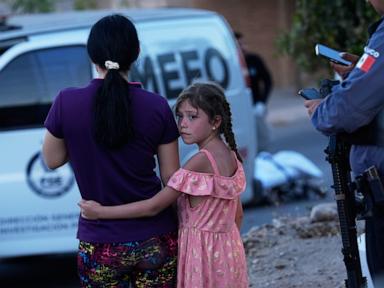
The United States government just escalated its cross-border security strategy by formally designating the Juárez Cartel and Los Viagras as Foreign Terrorist Organizations (FTOs). This major policy expansion officially puts eight Mexican criminal syndicates on the same legal and security tier as Al-Qaeda and ISIS.
If you think this is just a symbolic war of words, you are missing the point entirely.
By upgrading these cartels from "transnational criminal organizations" to "terrorist organizations," the U.S. State Department changes how the financial, legal, and military apparatus of the U.S. can target them. It is a strategic move that introduces massive legal liabilities for everyday businesses while flashing a green light to U.S. intelligence and special operations.
The New Additions to the Terror List
To understand why this matters, look at the specific groups targeted in the July 2026 update. The State Department did not pick these names out of a hat. They selected two heavily operational syndicates with completely different, yet equally devastating, tactical footprints.
The Juárez Cartel (The Border Gatekeepers)
The Juárez Cartel is one of the oldest, most deeply entrenched drug trafficking networks in Mexico. Based directly opposite El Paso, Texas, in the border city of Ciudad Juárez, they control one of the most lucrative smuggling corridors on the planet.
- The Legacy: Founded by Amado Carrillo Fuentes—mythologized as "El Señor de los Cielos" (The Lord of the Skies) for his fleet of Boeing 727s used to traffic Colombian cocaine—the cartel has survived decades of brutal wars.
- The Enforcers: They operate through terrifying proxy networks, specifically their armed wing La Línea and the transnational prison gang Barrio Azteca. Both groups have carried out massacres, car bombings, and public executions to hold territory.
- Strategic Impact: Designating them allows the U.S. to lock down the central Texas-Mexico border corridor. It mirrors previous FTO designations of the Gulf Cartel and the Northeast Cartel, which dominate the eastern end of the Texas border.
Los Viagras (The Warlords of Michoacán)
Unlike the classic border-crossing syndicate model of the Juárez Cartel, Los Viagras are a highly violent regional cartel operating out of the western state of Michoacán. Their origin story explains their brutal adaptability.
- The Rise: They emerged directly from the chaos of the 2013–2014 "Autodefensa" (self-defense) movement. When local farmers picked up weapons to fight off older cartels like the Knights Templar, opportunistic elements hijacked the movement. Los Viagras filled the power vacuum.
- The Model: Led by Nicolás Sierra Santana (who carries a $5 million U.S. bounty), they focus heavily on extortion, synthetic drug production, and regional dominance. They do not just traffic drugs; they tax everyday life—extorting lime farmers, avocado growers, and local governments.
- Strategic Impact: By targeting Los Viagras, the U.S. squeezes the synthetic drug supply chain at its origin point before these substances ever reach the northern border.
What the Foreign Terrorist Organization Label Actually Does
Labeling a cartel an FTO is not a semantic PR stunt. It triggers a completely different legal and operational playbook than standard drug-trafficking laws like the Kingpin Act. Here is the real impact.
1. The "Material Support" Trap
Under 18 U.S. Code § 2339B, it is a federal crime to knowingly provide "material support or resources" to a designated FTO. This does not just apply to people buying weapons or smuggling drugs.
The definition of material support is incredibly broad. It includes:
- Providing communications equipment or financial services.
- Offering legal advice, logistics consulting, or transport.
- Paying "taxes" or extortion fees to secure local supply chains.
If an international business operates in Michoacán or Juárez and pays off a local cartel representative to protect their trucks or agricultural shipments, that business is now technically providing material support to a terrorist organization. The compliance risks for multinational agricultural, mining, and shipping companies just went through the roof.
2. Extraterritorial Jurisdiction and Asset Freezing
An FTO designation allows the U.S. Treasury Department's Office of Foreign Assets Control (OFAC) to immediately freeze any assets of these organizations or their associates within U.S. jurisdictions. More importantly, financial institutions worldwide must block transactions linked to these groups or face severe secondary sanctions, blocking them from using the U.S. financial system entirely.
3. The Military and Kinetic Option
This is the elephant in the room. When the U.S. labels an entity an FTO, it shifts the operational framing from law enforcement to national security.
Under a standard law enforcement model, U.S. agencies must work through foreign governments, coordinate extraditions, and build cases for court. Under a counter-terrorism model, members of these cartels can be classified as hostile actors. This provides a stronger legal foundation for unilateral operations, cross-border intelligence-gathering, and potentially drone strikes or special forces raids inside sovereign territory.
Why This Puts Mexico in an Impossible Position
This policy expansion puts immense pressure on Mexican President Claudia Sheinbaum. Mexico has historically viewed the FTO designation as an aggressive violation of its sovereignty.
The timing is incredibly tense. Ten current and former officials from Sinaloa state were recently indicted over alleged ties to the Sinaloa Cartel, highlighting the depth of cartel infiltration in Mexican institutions. By designating more groups as FTOs, Washington is sending a direct message: if Mexico cannot or will not clean up its security apparatus, the U.S. is building the legal framework to act unilaterally.
Mexico faces a double-edged sword. If they fight the designations, they look like they are protecting criminals. If they accept them, they invite U.S. intervention and face the reality of their own territory being treated as a counter-terrorism battleground.
Strategic Action Steps for Cross-Border Entities
If you run a business, logistics firm, or investment fund with operations anywhere near Juárez, Michoacán, or other cartel-heavy regions in Mexico, you need to react to these developments immediately.