You can feel the heavy, uneasy silence on the streets of Nairobi and Dar es Salaam today. It's July 7, 2026—Saba Saba day—a date historically etched into the East African consciousness as a moment for citizens to stand up, march, and demand political freedom. Instead of vibrant crowds demanding economic dignity, the only major presence on the tarmac is a sea of combat boots, riot shields, and unmarked vehicles.
Governments in both Kenya and Tanzania have systematically closed the door on public demonstration. If you think this is just a routine law-and-order response, you're missing the bigger picture. We're witnessing a synchronized, calculated shift toward zero-tolerance governance across East Africa. Leaders who once promised democratic renewal are now relying on massive police deployments and covert security tactics to ensure their survival.
The strategy is working, but it's coming at a devastating cost to civic freedom.
The Illusion of Peace on Saba Saba Day
The streets aren't empty because people suddenly became content with soaring living costs or political repression. They're empty because citizens are terrified.
In Tanzania, the commercial hub of Kariakoo sat largely deserted. Shop owners shuttered their stalls, and residents stayed indoors. The memories of last October’s post-election crackdown—where opposition groups claim up to 700 people were killed during demonstrations against alleged vote-rigging—are still raw. Tanzanian authorities banned all political gatherings, framing today’s called protests as nothing short of an attempted coup.
"The deaths that occurred last October are scary," Hussein Matimbwa, a 33-year-old resident of Dar es Salaam, told reporters. "Demonstrating is legal, but here in Tanzania you can be eliminated simply for participating."
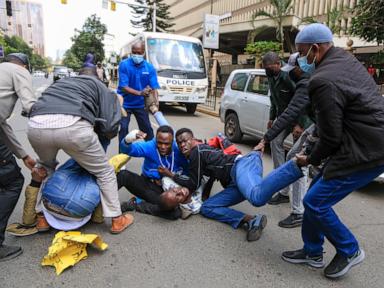
Across the border in Kenya, the scene was eerily similar. Only a year out from the August 2027 general elections, President William Ruto's administration took zero chances. Police blocked major arteries leading into central Nairobi, preemptively firing tear gas at the slightest hint of a gathering. A small, brave contingent from the Economic Justice Movement attempted to march against police brutality and the cost-of-living crisis. They were immediately swarmed. Undercover teams bundled activists into unmarked vehicles before the protest could even find its rhythm.
Two Years Since the Gen Z Uprising
To understand why the Kenyan state is acting with such aggressive paranoia, you have to look back to June 2024. That was the watershed moment when the country's youth shook the political establishment to its core, storming parliament to reject punitive tax hikes.
But defiance has carried a brutal price tag. The Independent Policing Oversight Authority and various rights watchdogs report that at least 127 Kenyans have been killed in protest-related violence over the last two years.
The state's current playbook has shifted from reactive brutality to preemptive locking down. By refusing to accept notifications of protests from civil society organizations, the police effectively criminalize dissent before it even hits the pavement.
The psychological toll on the population is palpable. Activists face an exhausting environment. Wanjira Wanjiru from the Mathare Social Justice Centre noted a general sense of exhaustion among regular citizens. People want change, but they also want to survive. When the state deploys armed plainclothes officers alongside regular units, it sends a clear message: we are watching, and we won't play by the rules.
Moving Beyond Outright Brutality
What the standard international news wires often overlook is how the nature of state control in East Africa has evolved. It isn't just about firing tear gas into a crowd anymore; it's about making sure the crowd never forms in the first place.
- Strategic Bureaucracy: Police forces simply refuse to acknowledge letters of intent to protest, rendering any gathering automatically "illegal."
- Economic Chokeholds: Deploying security forces to commercial districts forces businesses to close, turning public opinion against activists by associating protests with immediate financial loss.
- Digital and Covert Intimidation: The use of unbadged security personnel and sudden internet disruptions cuts off the organizational oxygen required for modern, decentralized movements.
This coordinated clampdown leaves citizens with very few safe avenues for expression. Mainstream media outlets face intense pressure, exemplified by President Ruto’s recent public lashings of independent press coverage online.
Where Does East Africa Go From Here?
If you are a resident, an investor, or an observer of East African politics, the current stability shouldn't comfort you. It's an artificial calm built on fear, and history shows that high-pressure systems without release valves eventually rupture.
With Tanzania still reeling from a highly contentious election cycle and Kenya bracing for a high-stakes vote in 2027, the coming months will test the limits of this heavy-handed governance strategy. Relying on security forces to mask systemic economic failures and broken political promises is a short-term fix.
For citizens looking to navigate this increasingly restrictive landscape, the battlefield is shifting. Street actions are drawing maximum state violence, forcing civil society to pivot toward sustained legal challenges, regional East African Court of Justice petitions, and deeper underground community organizing. The desire for accountability hasn't vanished; it has just been forced to change its shape.