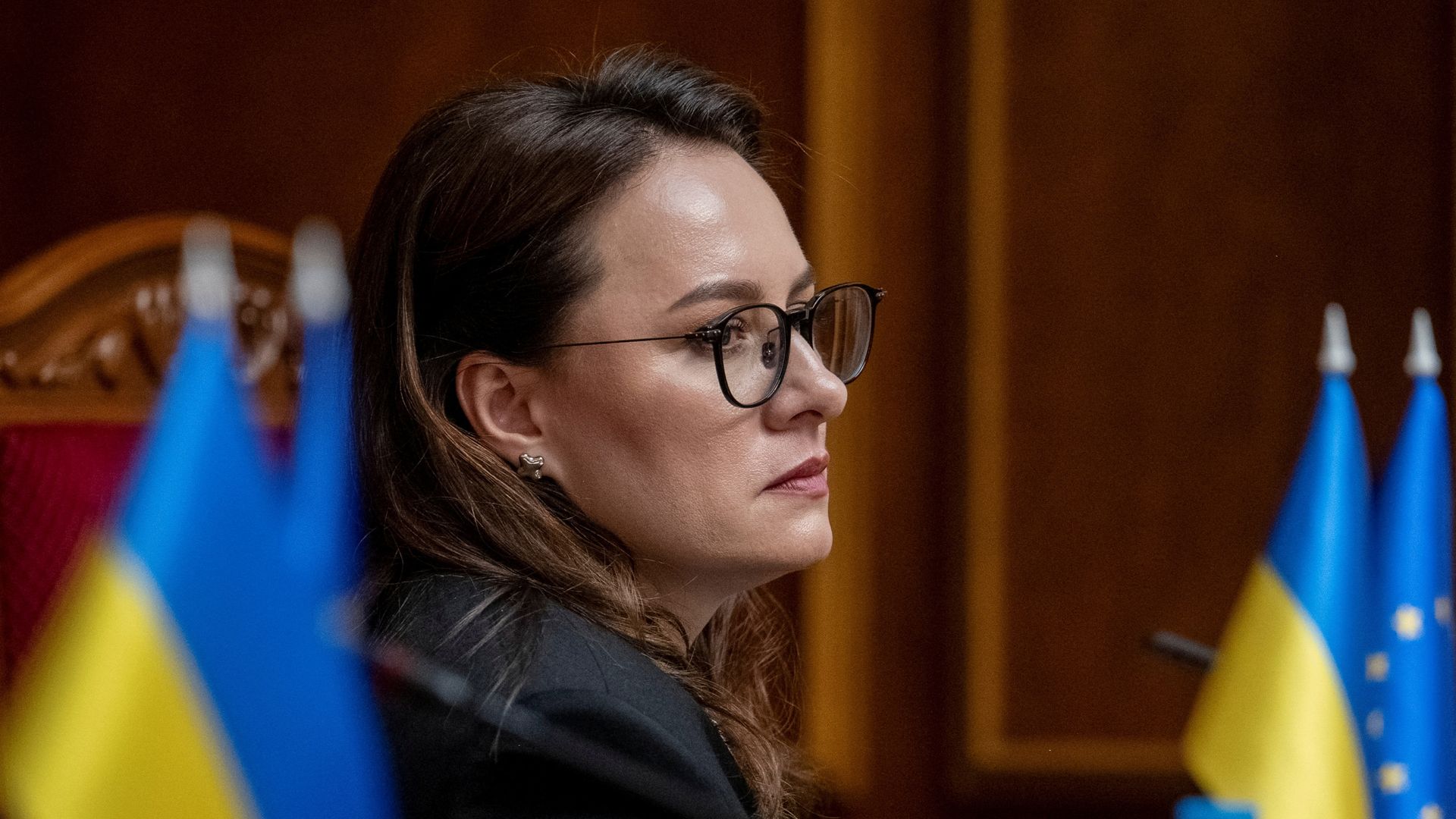
Volodymyr Zelenskyy isn't afraid to flip the chessboard when the game stalls. On Sunday, the Ukrainian President pulled the trigger on another massive political shakeup, removing Prime Minister Yulia Svyrydenko after just under a year in office.
It's a dizzying move for outside observers. Svyrydenko, who took the job in July 2025 at age 39, was widely seen as a rising technocratic star. She locked down the critical US-Ukraine minerals agreement earlier this year, a deal designed to bind American economic interests directly to Ukraine's frontline survival. Now, she's out as premier, and under Ukrainian law, her departure forces the resignation of the entire cabinet. You might also find this similar story insightful: Why Zelenskyy Is Rebuilding His Wartime Cabinet From Scratch Again.
If you're trying to make sense of this, don't look at it as a sign of panic. Look at it as a cold, calculated pivot in political strategy. Kyiv is facing a grueling war of attrition, mounting pressure on the Eastern front, and a shifting geopolitical landscape where Western patience is constantly tested. Zelenskyy isn't just shuffling names; he's retooling his administration to survive a prolonged global standoff.
The Strategy Behind the Shakeup
Zelenskyy explicitly stated that the country is changing its political strategy. In wartime, domestic economic policy takes a backseat to international diplomacy and weapons procurement. Svyrydenko isn't being cast out into the political wilderness. Instead, Zelenskyy is moving her to lead a new area of relations with a key international partner. As reported in detailed reports by USA Today, the effects are notable.
Opposition lawmakers, including Yaroslav Zhelezniak, suggest she's highly likely to take over as Ukraine's ambassador to the United States.
Moving a former prime minister to an embassy position tells you everything you need to know about Kyiv's priorities. Foreign policy is the lifeblood of Ukraine's defense. Zelenskyy noted that each priority area of foreign policy will be assigned to a specific person with substantial experience, capable of implementing agreements made at the leader level.
Who Steps in Next
While Parliament must still formally vote to accept the resignation and reset the government, the wheels are already turning. Denys Shmyhal, Svyrydenko's predecessor who has recently been serving as first deputy prime minister and energy minister, is stepping up as acting premier.
The rumor mill in Kyiv is spinning fast, with several heavyweight names floating around as permanent successors:
- Denys Shmyhal: A return to his old post would signal stability for a battered domestic economy.
- Mykhailo Fedorov: The current digital transformation and defense minister, famous for building Ukraine's drone army.
- Serhiy Koretskyi: The current chief of state energy giant Naftogaz, a critical pick if energy infrastructure defense is top priority.
Leading Under Martial Law
We need to talk about the elephant in the room. Zelenskyy is governing under martial law. Because wartime conditions make holding national elections practically impossible, his term has extended without a vote.
Russian propaganda routinely seizes on this to claim the current administration is illegitimate. Even some Western politicians have occasionally chimed in with criticisms. But on the ground in Kyiv, the reality is pragmatic. You can't hold a fair, democratic election when millions of citizens are displaced, cities are under constant drone assault, and hundreds of thousands of voters are stuck in trenches on the frontlines.
Because the ballot box is temporarily paused, internal cabinet shakeups have become Zelenskyy's primary tool for injecting fresh momentum into his government. When a ministry underperforms, or when the global political climate shifts, he changes the leadership. We saw it with the defense ministry overhaul previously, and we're seeing it now with the entire executive branch.
What Happens to the Economy Now
The immediate domestic challenge is keeping the lights on and the war machine funded. Svyrydenko's short tenure was heavily focused on deregulation, social welfare stabilization, and expanding domestic weapons manufacturing.
Whoever takes the reins permanently has to balance three brutal realities:
- Keeping the energy grid alive under relentless Russian missile strikes.
- Convincing international donors that financial aid isn't being swallowed by systemic corruption.
- Rapidly scaling up domestic artillery and drone factories to rely less on volatile foreign political cycles.
Your Next Steps for Tracking This Story
Don't just watch the headlines; watch where the key players land. To truly understand where Ukraine's foreign policy is heading, look at the upcoming parliamentary votes in Kyiv.
If Svyrydenko is officially nominated as the ambassador to Washington, it means Kyiv is doubling down on a highly transactional economic and security relationship with the US. Watch who takes over the prime minister spot. If it's a defense or tech figure like Fedorov, expect Ukraine to pivot even harder into an aggressive, tech-first domestic defense industry. If it's an energy or financial technocrat, expect a focus on infrastructure survival through the coming winter.
This analysis outlines why the sudden leadership vacuum in Kyiv is actually a calculated diplomatic play. To see how these high-level political shakeups directly translate to the frontline reality and troop morale, check out this detailed breakdown of the situation in Ukraine. This video helps explain how political strategies in Kyiv affect the defense decisions made by leadership under intense international pressure.