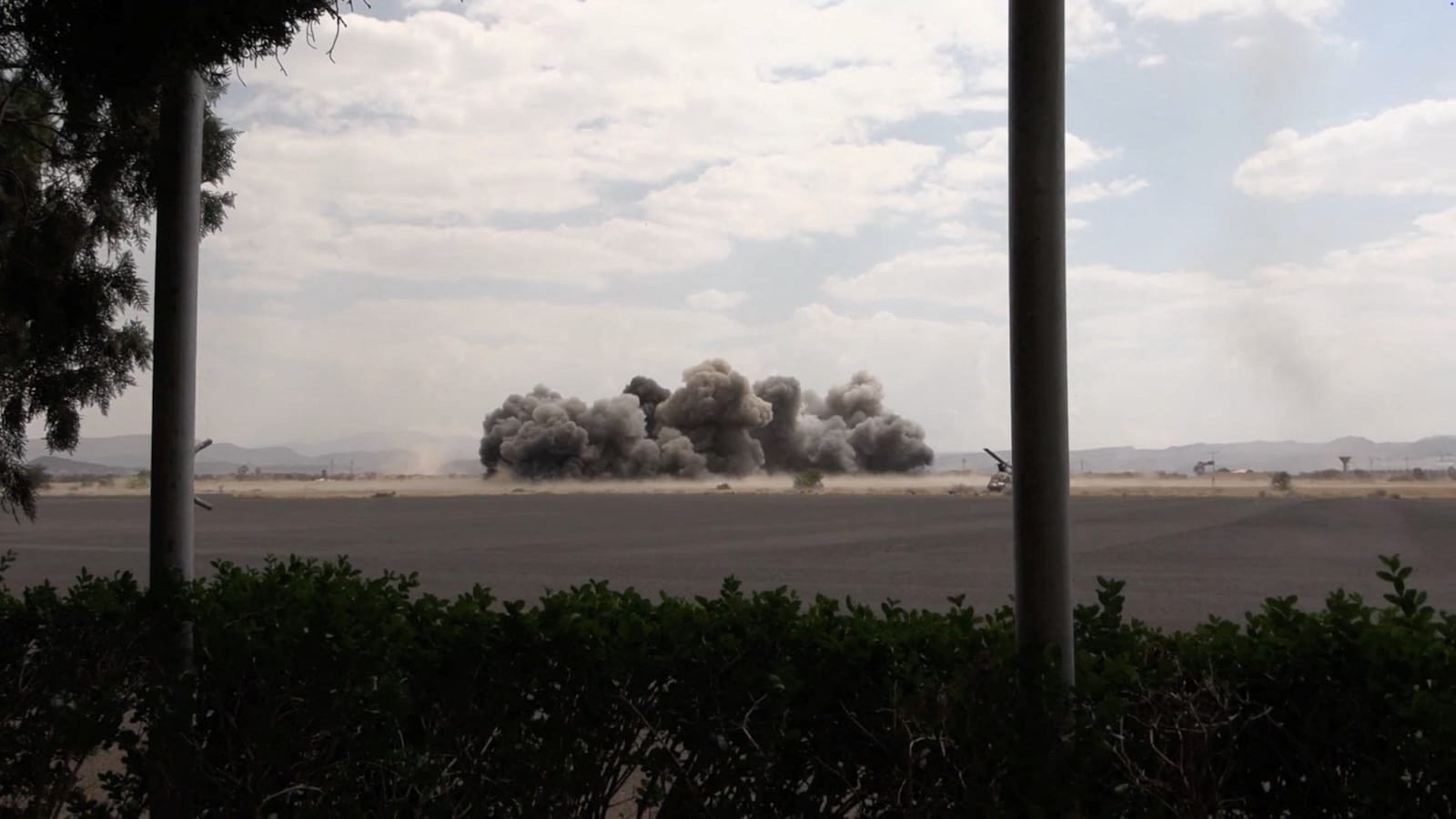
The fragile calm in the southern Arabian Peninsula just went up in smoke. After more than four years of relative peace, Yemen's Houthi rebels launched a barrage of ballistic missiles and drones into Saudi territory, directly targeting Abha International Airport and nearby military bases.
Saudi air defenses managed to intercept the incoming threats over its southern region. But the political damage was already done. The informal truce that kept a lid on a brutal, decade-long civil war is officially over.
If you're wondering why this matters right now, the answer is simple. This escalation isn't just a local border skirmish. It threatens to reignite a catastrophic war on Saudi Arabia's doorstep, upend global shipping routes in the Red Sea, and shatter the delicate diplomacy holding the wider region together.
The Flight That Broke the Peace
The trigger for the collapse wasn't a sudden border raid. It was a single airplane flight.
Things boiled over at Sana'a International Airport, a facility controlled by the Houthis in northern Yemen. The rebels had arranged a direct flight from Iran—the first of its kind in over a decade—to bring home a Houthi delegation and wounded fighters. For the Houthis, this was a display of sovereignty and a direct link to their primary international backer.
For the internationally recognized Yemeni government, which is backed heavily by Saudi Arabia, it was a red line.
The Yemeni military launched an airstrike directly targeting the runway and taxiways at Sana'a airport. The goal was clear: damage the tarmac so the Iranian plane couldn't land. The Yemeni defense ministry stated it acted to stop an illegal flight that violated national sovereignty. Denied its landing strip, the Iranian aircraft diverted and touched down at the Red Sea port of Hodeidah instead.
The Houthis didn't see it as a domestic government operation. They blamed Saudi Arabia entirely.
Houthi military spokesperson Yahya Saree wasted no time. He declared that the "Saudi aggression" had officially ended the de-escalation phase. Hours later, ballistic missiles were flying toward Abha.
A De-escalation Built on Quickand
To understand why a single runway strike could unravel four years of quiet, you have to look at how fragile this peace actually was.
Saudi Arabia and the Houthis originally reached an informal truce in 2022. Riyadh was desperate for an exit strategy from a war that had dragged on since 2015, drained its finances, and exposed its critical oil infrastructure to drone attacks. The truce mostly held, even as the Houthis launched missile attacks against international commercial shipping in the Red Sea following the outbreak of the Israel-Gaza war.
But beneath the surface, frustration was building. Analysts like Mohammed Albasha, a US-based risk advisory founder, point out that the Houthis felt they weren't gaining any real dividends from their restraint. They wanted the economic blockade on their territory completely lifted, civil servant salaries paid, and international recognition.
When a recent UN- and Red Cross-mediated prisoner exchange collapsed, both sides started pointing fingers. The airport strike was simply the match that lit the powder keg.
What Happens Next
The immediate threat is a return to full-scale regional warfare. The Houthis have already warned global commercial airlines to steer clear of Saudi airspace, hinting that more strikes are coming.
This creates a massive headache for Saudi Arabia. The kingdom has spent the last few years trying to pivot its economy away from oil and market itself as a global tourism and business hub. Missiles exploding near southern tourist spots like Abha completely ruins that narrative.
Furthermore, if the conflict expands back into the Red Sea maritime corridors, global supply chains will take another major hit. While Saudi Arabia can bypass some shipping issues by using its internal East-West pipeline to move oil to the coast, a hot war on its southern border puts its domestic infrastructure back in the crosshairs.
If you are tracking geopolitical risk or supply chain stability, keep your eyes on these three indicators over the next 48 hours:
- Saudi Counter-Responses: Watch whether the Saudi military launches direct retaliatory airstrikes on Houthi strongholds in Sana'a, or if they leave the fighting to local Yemeni government forces to avoid a total escalation.
- Commercial Flight Paths: Monitor international flight routing over the Arabian Peninsula. If major carriers start diverting around Saudi airspace, it means intelligence agencies expect prolonged missile activity.
- Red Sea Shipping Rates: Look for sudden jumps in maritime insurance premiums around the Bab el-Mandeb strait. A renewed Houthi focus on Saudi targets usually coincides with increased aggression against maritime traffic.