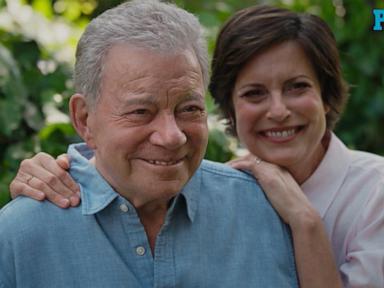
When a doctor tells you that you have stage 4 cancer, time suddenly freezes. Everything stops. You aren't thinking about work, fame, or legacy anymore. You're just thinking about staying alive.
That exact nightmare hit the Shatner family not once, but twice in back-to-back years.
Most people know William Shatner as Captain James T. Kirk, the legendary star who commandeered the Starship Enterprise. He seems larger than life, almost indestructible, even as he navigated his 90s. But behind closed doors, Shatner and his youngest daughter, Melanie Shatner Gretsch, faced the terrifying reality of advanced cancer.
Their shared ordeal began quietly. In July 2022, Melanie felt a small lump. She acted fast, getting imaging and a biopsy that confirmed aggressive, HER2-positive breast cancer. Further tests revealed the disease had spread to lymph nodes deep inside her chest. That technically put her at stage 4.
While Melanie fought through rounds of harsh chemotherapy, targeted infusions, radiation, and a double mastectomy, her father received his own crushing news.
In June 2023, roughly a year after his daughter's diagnosis, Shatner noticed a lump near his cheek. It was stage 4 malignant melanoma. Worse, tests showed the skin cancer had already spread to his lungs and brain.
For any family, one stage 4 diagnosis is devastating. Two at the exact same time feels like a cruel twist of fate.
Against all incredible odds, both father and daughter are now completely cancer-free.
How did they do it? What kept them going when doctors warned them that time was running out? The answers come down to advanced modern oncology, immediate action, and an unbreakable family bond.
The Reality of Facing Two Simultaneous Stage 4 Diagnoses
Cancer doesn't care who you are. It doesn't care if you're a Hollywood icon or an everyday citizen.
When Melanie was first diagnosed, she admitted to feeling overwhelming terror. Facing a stage 4 diagnosis means the cancer has spread beyond its origin point to other parts of the body. In her case, the cells traveled to chest lymph nodes that surgeons couldn't easily reach. She recalled feeling hysterical during her darkest moments, calling her father in tears and wondering if she was going to die.
Shatner stepped up as a loving father. He pulled her close with what she called his trademark "Daddy Bear hug" and reassured her. He told her that this brutal experience would eventually become just a blip in her life—a distant memory.
He had no idea that a year later, he'd be sitting in a doctor's office listening to his own life-threatening diagnosis.
Shatner initially noticed a lump near his ear and cheek. His primary doctor thought it might just be a blocked salivary gland and advised him to massage it. Shatner massaged it for a month, but it kept growing. He knew something was wrong.
He sought a second opinion. A trusted physician felt the lump and told him directly that it needed to come out right away.
Surgery confirmed it was melanoma, and scans revealed metastatic spread to his lungs and brain. Doctors were blunt with Shatner. If he had waited any longer to get treated, he would have died in a matter of months.
How Modern Science Saved Melanie and William
Two decades ago, a dual stage 4 diagnosis like this would have been a virtual death sentence. The medical options were limited, and treatments often couldn't keep up with metastatic spread.
Things are different now. Science caught up.
Melanie’s Battle Against HER2-Positive Breast Cancer
Melanie was treated by an aggressive team of specialists at UCLA Health. Because her tumor was HER2-positive—a fast-growing type of breast cancer—her oncologists used a targeted attack.
Her 18-month treatment routine included:
- Targeted Therapies: Drugs like trastuzumab (Herceptin) and pertuzumab (Perjeta) that specifically target and block the protein helping cancer cells multiply.
- Systemic Chemotherapy: Intense chemotherapy infusions to wipe out circulating malignant cells.
- Surgical Intervention: A double mastectomy in December 2022 to clear out all remaining breast tissue.
- Radiation: 30 targeted radiation sessions to destroy any hidden cells in her chest lymph nodes.
Her medical team treated her with a "curative intent" approach despite the stage 4 classification because the spread was localized to chest nodes rather than distant organs. It was exhausting, painful, and life-altering. But it worked.
Shatner’s Fight Against Metastatic Melanoma
For Shatner, treatment required a completely different breakthrough: immunotherapy.
Rather than relying purely on broad chemotherapy, Shatner’s doctors used targeted immunotherapy drugs. These medications train your body's immune system to spot hidden cancer cells and destroy them naturally.
Over two long years of treatment following his tumor removal, the immunotherapy wiped out the lesions in his lungs and brain. Shatner suffered intense fatigue, but his body fought back. Today, at 95 years old, he shows no evidence of disease.
What Their Dual Recovery Teaches Us About Survival
Seeing a father and daughter both overcome stage 4 cancer offers several vital lessons for anyone navigating a scary diagnosis.
1. Second Opinions Save Lives
Shatner was initially told his cheek lump was just a clogged gland. If he had listened to that advice and waited another six months, his melanoma would have killed him. Never hesitate to push back or consult another specialist when something in your body feels wrong.
2. Early Detection and Early Action Matter
Melanie didn't wait around when she felt a lump. She scheduled imaging immediately. Catching metastatic cancer early gives doctors room to throw everything they have at it before it shuts down major organs.
3. Isolation Makes Cancer Worse
Melanie noted how isolating cancer treatment can feel. Going through treatments side-by-side bonded father and daughter in a profound way. They leaned on each other, shared their fears, and kept each other motivated. Having a strong support network isn't just nice—it's essential for survival.
Life After Stage 4 Cancer
Beating stage 4 cancer changes how you view every single day. Shatner and Melanie aren't letting their second chance at life go to waste.
The duo launched a weekly podcast titled No Time But Now, where they sit down with health experts, researchers, and fellow survivors to talk about longevity, resilience, and living in the present. Shatner has openly reflected on how close he came to dying, stating that he now feels an overwhelming sense of wonder for the simplest things—his dogs, hummingbirds, his family, and just being alive.
Melanie is writing a memoir to help other patients navigate the terrifying emotions of an aggressive diagnosis. She candidly shares the struggles of adjusting to life after a double mastectomy, showing other women that it's okay to feel sad while still feeling profoundly grateful to survive.
Practical Action Steps If You or a Loved One Face a Diagnosis
If you or someone in your family is dealing with a serious medical diagnosis, don't let panic paralyze you. Take these steps right away:
- Get an immediate second opinion: If a lump or symptom persists, see a specialist. Request biopsies and imaging without delay.
- Ask about targeted therapies and immunotherapy: Medical science evolves rapidly. Ask your oncologist if your specific cancer type has biological markers suitable for targeted drugs.
- Build a dedicated care team: Choose medical centers known for aggressive, comprehensive cancer treatment.
- Lean on emotional support: Do not try to carry the weight alone. Connect with family, support groups, or counselors who understand what you are going through.
Shatner and his daughter proved that even a stage 4 diagnosis isn't always the end of the story. With fast action, advanced treatments, and emotional strength, recovery is entirely possible.