For decades, North American archaeology had a gatekeeper problem. If you suggested humans walked the Americas before 13,000 years ago, you were basically laughed out of the room. The "Clovis First" theory was absolute gospel. It claimed a single group of big-game hunters crossed a land bridge from Siberia, tracked mammoths through an ice-free corridor, and populated the continent.
Then came the mud of New Mexico.
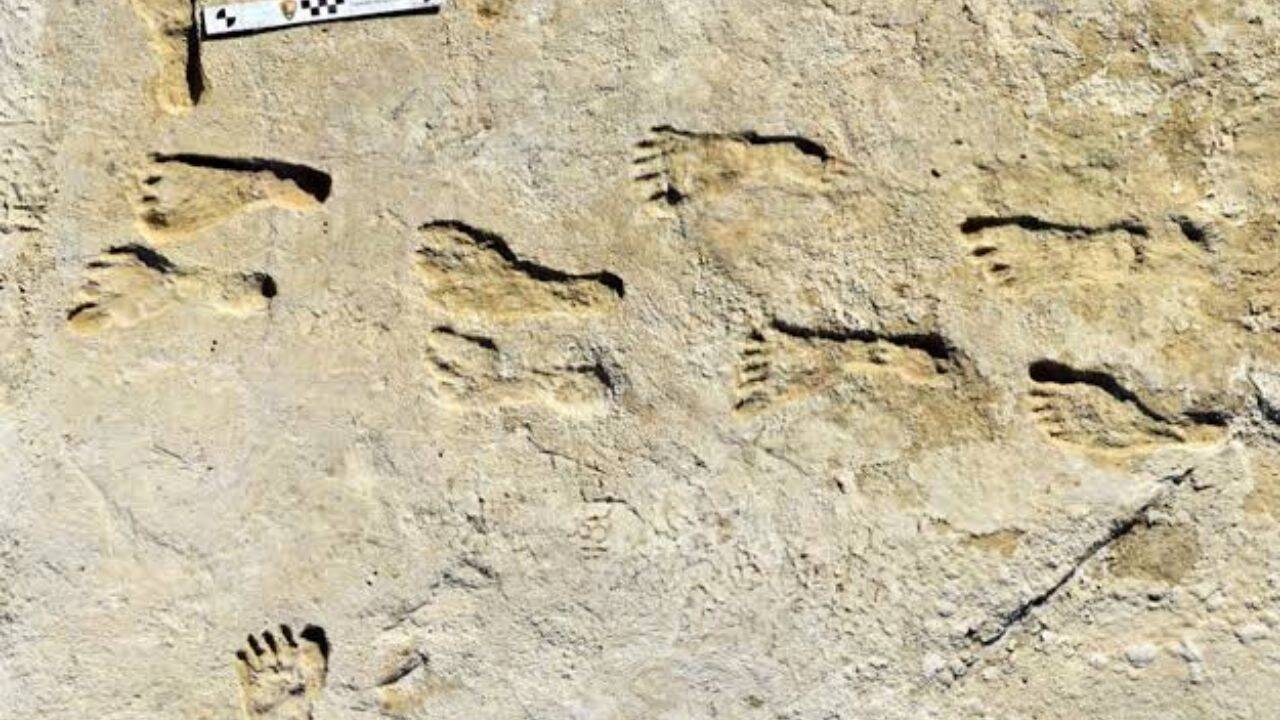
Fossilized footprints pressed into an ancient lakebed at White Sands National Park don't just nudge the timeline forward. They completely shatter it. The prints date back between 21,000 and 23,000 years. This means people were thriving in North America during the Last Glacial Maximum, the absolute coldest peak of the ice age, when massive glaciers blocked any inland route from Alaska.
The Cold Hard Data Behind the Mud
When researchers from the U.S. Geological Survey first dropped the 23,000-year-old dating bombshell, the academic establishment went into defense mode. Critics claimed the initial radiocarbon dating was flawed. They argued the seeds of the aquatic ditch grass (Ruppia cirrhosa) used for dating absorbed ancient carbon from the water, making the tracks look much older than they actually were.
Scientists went back to work. They didn't just retest the seeds. They targeted terrestrial conifer pollen trapped in the same sediment layers, which gets its carbon straight from the atmosphere. They also used optically stimulated luminescence, a method that measures the last time quartz grains saw sunlight.
The results were identical. Subsequent independent laboratory testing of the surrounding wetland mud confirmed it. The dates hold up. People were undeniably there, walking alongside ice age megafauna.
A Snapshot of Ordinary Ice Age Life
What makes White Sands spectacular isn't just the sheer age. Stone tools and butchered bones tell us what people ate or made. Footprints tell us how they lived.
Most of the tracks belong to teenagers and young children. It feels remarkably familiar. One specific trackway tells a deeply human story: a young woman or adolescent male walking for over a mile through slippery mud, carrying a toddler. You can see where her feet slid under the extra weight, and where she occasionally set the child down on the ground, leaving tiny, frantic toddler prints before picking them back up.
While she walked, a giant ground sloth and a mammoth crossed her path. The animals didn't panic. The human didn't hunt. They simply shared a landscape. Another set of tracks shows kids jumping and splashing in ancient puddles left by a receding Lake Otero.
What the Establishment Got Wrong
The biggest mistake mainstream archaeology made for a century was treating the absence of evidence as evidence of absence. Because Clovis spear points were distinct and highly visible, scientists assumed they represented the very first arrivals.
The White Sands prints prove that humans survived the harshest climate conditions imaginable without leaving a heavy archaeological footprint. They didn't leave behind massive stone monuments or deep trash heaps; they just left their steps in wet earth that happened to dry, bury, and fossilize under perfect conditions.
This forces a massive rewrite of global migration routes. If huge ice sheets completely covered Canada 23,000 years ago, those teenagers at White Sands couldn't have walked through the middle of the continent to get there. They must have arrived much earlier, likely hugging the Pacific coast by boat long before the ice closed the gates.
Actionable Steps for History Enthusiasts
If you want to keep up with how history is changing right now, don't rely on textbooks that take a decade to update.
- Track active digs: Keep an eye on reports from pre-Clovis sites like Page-Ladson in Florida or Meadowcroft Rockshelter in Pennsylvania.
- Check the source: Read open-access papers on Science and Nature rather than watered-down news summaries.
- Visit the history: If you go to White Sands National Park, book a ranger-led tour specifically focused on the megafauna and human trackways, as these areas are highly protected and shifting constantly due to wind erosion.