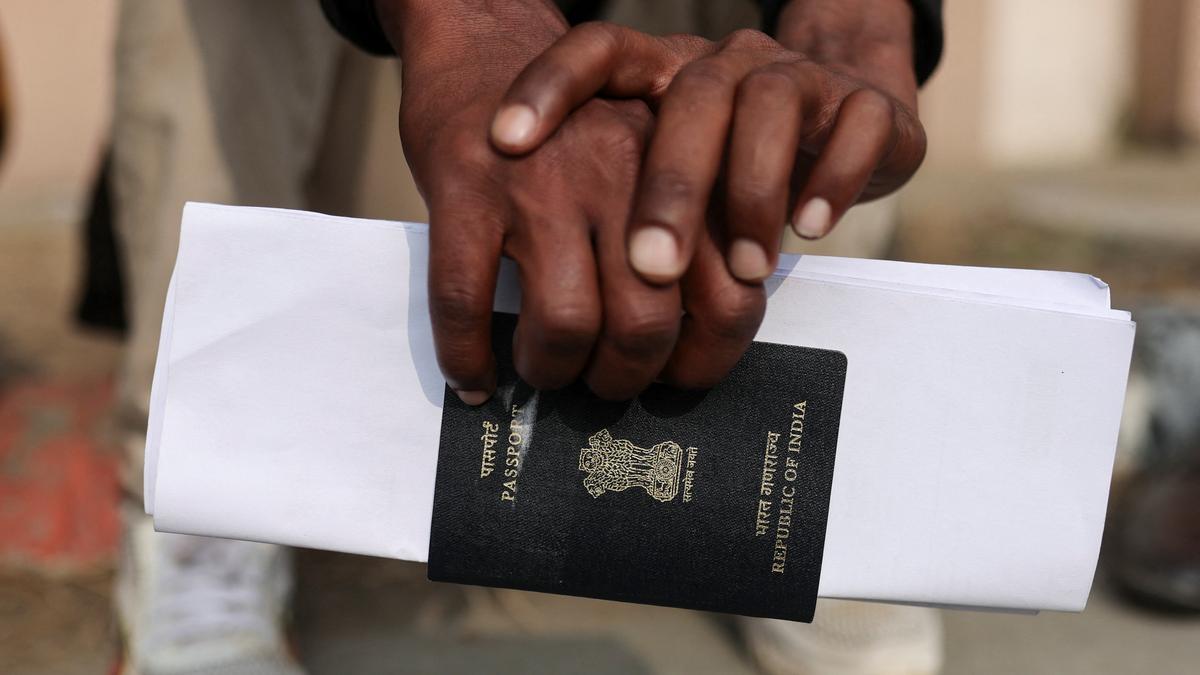
Applying for a US visa used to be a nerve-wracking exercise in organizing physical paperwork. You spent weeks stacking bank statements, employment letters, and academic transcripts in neat, color-coded folders. Today, the process requires something far more intimate. It demands your digital identity.
Under updated US Department of State regulations, foreign students, exchange visitors, and high-skilled workers must lay their personal lives bare. It is no longer just about your bank balance or your job offer. It is about your tweets, your Instagram photos, your professional LinkedIn history, and even your old Reddit comments.
If you want to enter the United States, you have to hand over the keys to your online life. This is not a hypothetical future scenario. It is the reality of the visa screening process right now.
The Public Profile Mandate
The policy shift rolled out in waves. First came the directive for students and vocational exchange visitors (F, M, and J visas). By late 2025, the State Department expanded this "online presence review" to high-skilled H-1B specialty workers and their H-4 dependents.
Under these rules, you must list every single social media platform and handle you used over the past five years. But the government did not stop at mere disclosure. Consulates now expect you to change your privacy settings on all profiles to "public" during the application and adjudication period.
This mandate goes far beyond basic identification. When you set your accounts to public, you are not just letting a visa officer look at your profile picture. You are opening up your entire digital history to the world. Anyone can find you. Anyone can scrape your data.
For young students, many of whom are minors, this is a massive security risk. It exposes them to doxxing, targeted digital profiling, cyberbullying, and online harassment. Yet, if they want to study at a US university, they have no other choice.
What Officers Are Actually Searching For
Visa officers are not scrolling through your vacation photos to admire the scenery. They are looking for specific markers to verify your identity and determine your admissibility.
First, they look for identity alignment. Does the name, education, and employment history on your LinkedIn page match what you wrote on your DS-160 application form? If your visa application says you work as a software developer, but your public profile says you are a full-time yoga instructor, your application will face immediate delays.
Second, they screen for red flags. This includes any content that could be interpreted as hostile toward the United States, links to flagged organizations, or statements promoting unlawful behavior. Officers also scan for discriminatory language and hate speech.
The real danger here is context. An ironic joke, a shared meme, or a heated political argument from three years ago can easily be misconstrued. A single consular officer has the unilateral authority to interpret your online behavior. If they flag your account, your application is pushed into administrative processing under Section 221(g) of the Immigration and Nationality Act. This can delay your visa for months, often costing students their academic terms or professionals their job offers.
The Illusion of Voluntary Consent
Technically, providing your social media handles is voluntary. Practically, it is not.
If you decide to withhold your usernames or hide your profiles, the State Department can simply deny your visa. They will cite a failure to establish eligibility or, worse, material misrepresentation.
Omission is treated as a lie. If the US government uses database cross-referencing to find an active account under your name that you did not disclose, your credibility is ruined. In the world of immigration, a loss of credibility is almost impossible to recover from.
This system creates a massive chilling effect on free speech. Visa applicants are actively self-censoring. They delete old posts, avoid liking political commentary, and stay silent on controversial global issues. When a foreign government forces you to modify your behavior online just to secure an interview, true digital privacy ceases to exist.
Practical Steps to Safeguard Your Digital Footprint
You cannot change the rules, but you can control how you navigate them. If you are preparing for a US visa interview, you need to take proactive, legal steps to secure your personal data while remaining completely honest on your forms.
- Run a personal digital audit. Before you fill out your DS-160, search for your own name and usernames in an incognito browser tab. See what is publicly visible to a stranger. This is exactly what the consular officer will see.
- Align your professional data. Make sure your LinkedIn, personal website, and public resumes show consistent dates and titles. Correct any discrepancies before submitting your paperwork.
- Be honest about inactive accounts. If you have a dusty Twitter account from 2021 that you haven't opened in years, disclose it anyway. Leaving it off your form is a major red flag.
- Avoid sudden mass deletions. Deleting thousands of posts or purging entire accounts right before your interview looks suspicious. It signals to the reviewer that you have something to hide. Focus on clarifying your public presence rather than erasing your digital history.
- Secure your accounts from external threats. Because you must make your accounts public, turn on two-factor authentication (2FA) immediately. Update your backup emails and phone numbers. This prevents malicious actors from hijacking your newly public profiles.
The scrutiny is intense, and the wait times are growing. Do not make the mistake of treatingWhy US Visa Social Media Checks Are a Privacy Nightmare
technology
You are sitting at your desk, staring at a screen, filling out the DS-160 form to visit the United States. You expect the usual questions about your job, your finances, and your travel history. Then you hit a section that stops you cold. The form asks for every social media handle you have used over the last five years.
It does not matter if you use a pseudonym. It does not matter if your accounts are strictly personal. The United States government wants to see your digital footprint, and they will not process your application without it.
This policy is not brand new, but its long-term consequences are finally catching up with travelers. What started as an aggressive "extreme vetting" initiative has ossified into a permanent dragnet. It changes how people post, how they think, and how they protect their privacy.
If you plan to travel to the US, you need to understand what this screening actually entails, how the government analyzes your data, and what you can do to protect your privacy without committing visa fraud.
The Five Year Digital Trail You Must Hand Over
In June 2019, the US Department of State updated its immigrant and nonimmigrant visa forms to require social media identifiers. This rule swept up millions of applicants overnight. Suddenly, tourists, students, business travelers, and prospective immigrants had to list their handles for a massive list of platforms.
The list is extensive. It includes global giants like Facebook, Instagram, X (formerly Twitter), YouTube, and LinkedIn. It also covers platforms popular in specific regions, such as Sina Weibo, Tencent Weibo, VKontakte, and Douban.
Consular officers do not ask for your passwords. That is a critical distinction. They are not supposed to log into your account as you. Instead, they want your public-facing usernames so they can run them through internal screening processes.
The policy applies to almost everyone. Only certain diplomatic and official visa types are exempt. If you are applying for a standard B1/B2 tourist visa, an F-1 student visa, or an H-1B work visa, you are in the dragnet.
The state justifies this by claiming it helps identify terrorists and other public safety threats. But the reality is that the vast majority of flagged accounts belong to ordinary people whose posts are completely harmless but easily misunderstood.
How Consular Officers Actually Screen Your Accounts
How does the government process millions of social media handles every year? They do not hire millions of officers to scroll through your Instagram feed manually. They use automation.
The State Department and the Department of Homeland Security rely on automated screening tools. These software programs scrape public data from the handles you provide. They search for specific keywords, associations, and patterns.
This is where things go wrong.
Algorithms are notoriously bad at understanding human nuance. They do not get sarcasm. They do not understand regional slang, inside jokes, or cultural context.
If you tweeted a joke about "blowing up" a party three years ago, an automated tool might flag you. If you shared an article about a political protest in your home country, the system might mark you as a potential instigator.
This creates a phenomenon researchers call "context collapse." Your joke meant for five friends on Twitter is suddenly evaluated by a government official in a cubicle who has no idea who you are or what your sense of humor is like.
Even worse, these tools often struggle with translation. Slang in Arabic, Spanish, or Hindi does not translate cleanly into English security databases. A harmless colloquial expression can easily be flagged as a threat, leaving you to explain yourself in a high-pressure visa interview.
The Legal Battle Over Your Right to Be Anonymous
This policy has not gone unchallenged. Civil liberties groups have fought it in US courts for years.
A major lawsuit, Doc Society v. Blinken, was filed by the Brennan Center for Justice, the Knight First Amendment Institute at Columbia University, and the American Civil Liberties Union. The plaintiffs included international documentary filmmakers and activists. They argued that the social media requirement violates the First Amendment rights of US citizens who communicate with visa applicants, as well as the applicants themselves.
Think about a foreign journalist who uses a pseudonym to protect themselves from an authoritarian government. If they want to travel to the US for a media conference, they must hand over that pseudonym to the US government.
This completely destroys their anonymity.
If that database is hacked, or if the US government decides to share that data with foreign intelligence partners, that journalist's life could be in danger.
The lawsuit argued that this requirement creates a massive chilling effect. When people know the US government is watching, they stop posting about sensitive political topics. They stop criticizing government policies. They stop associating with certain groups.
The courts have largely protected the government's broad power to control borders, meaning the rules remain in place. But the legal fight highlighted a terrifying truth: the US government is effectively policing global speech online.
Border Searches vs Visa Applications
Do not confuse the DS-160 social media disclosure with what happens when you actually land in the US. They are two entirely different legal situations, and the rules at the airport are even more invasive.
When you fill out your visa application, you are outside the US. The government cannot physically force you to do anything, but they can deny your visa if you refuse to cooperate.
When you arrive at a US port of entry, you meet Customs and Border Protection officers. Under the "border search exception," US courts have ruled that CBP officers have incredibly broad authority to search your belongings without a warrant.
This includes your phone, laptop, and tablet.
Visa Application (DS-160)     -->   Asks for handles only. No passwords. Public data.
CBP Airport Inspection        -->   Can demand unlocked devices. Can read private DMs, emails, and photos.
If a CBP officer selects you for secondary inspection, they can demand that you unlock your phone. If you refuse, they can deny you entry if you are a foreign national. If you are a permanent resident, they might seize your phone for weeks and send it to a forensic lab to extract the data.
During these physical device searches, officers are not just looking at your public posts. They are reading your WhatsApp chats, looking through your private photos, and reading your emails.
The distinction is clear. Your visa application reviews your public online persona. The border search reveals your entire private digital life.
Practical Steps to Protect Your Digital Footprint Without Lying
If you are applying for a US visa, you cannot simply leave the social media section blank or lie about your accounts. That is considered material misrepresentation.
If the government finds out you lied, you face a lifetime ban from entering the United States. Do not risk it.
You can, however, take legal, proactive steps to protect your privacy before you apply.
Audit Your Accounts Now
Do not wait until the week before your interview to look at your digital footprint. Search your own name online. Look at what is public on your profiles.
If you have old accounts on platforms you no longer use, delete them. If you cannot access them to delete them, you still need to list them if you used them in the last five years, but purging inactive digital clutter makes your overall footprint smaller.
Tighten Your Privacy Settings
The State Department collects your public handles. They do not have the legal right to demand your passwords to view private content.
Set your accounts to private.
Limit who can see your past posts. On platforms like Facebook, you can retroactively change the privacy of all past posts to "Friends Only" with a single click. Doing this prevents automated government scrapers from building a massive profile on you.
Understand the Risk of Deleting Content
You might be tempted to delete specific posts or tweets that look controversial. Be careful.
While it is not illegal to clean up your social media, doing a massive, sudden purge right before you apply can look suspicious if the government has already cached some of your data. Focus on making your accounts private rather than systematically deleting years of history, which can sometimes trigger automated fraud flags.
Separate Your Professional and Personal Identities
If you rely on social media for your livelihood but want to maintain your privacy, keep your personal life off your public feeds. Use a professional page for public consumption and keep your personal profiles locked down under strict privacy settings, shared only with people you actually know.
The reality of modern travel is that your physical passport is no longer the only document that matters. Your digital passport—your social media history, your search habits, and your online associations—is being scrutinized just as closely.
Treat your digital footprint with the same care you treat your physical documents. Keep it secure, keep it private, and know your rights before you queue up at the embassy.