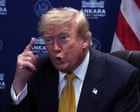
The fragile peace between Washington and Tehran is officially dead. Speaking next to NATO Secretary General Mark Rutte at the alliance summit in Ankara, Donald Trump made it clear that he considers the June 17 memorandum of understanding a complete waste of time.
"I think it's over," Trump told reporters, launching into a characteristic tirade against Iran's leadership, calling them "scum" and "vicious, violent people."
If you are wondering why energy markets are suddenly volatile today, this is your answer. The collapse of the truce wasn't just a sudden rhetorical shift. It follows a chaotic 24 hours in the Strait of Hormuz where the US military launched heavy airstrikes on more than 80 Iranian targets. Simultaneously, the White House revoked the crucial temporary sanctions waiver that allowed Tehran to export oil.
Here is what went wrong, what the mainstream media isn't telling you about the legal fine print, and why this escalation threatens to fracture NATO from within.
The Airstrikes That Broke the Truce
The immediate catalyst for the collapse occurred on Tuesday, July 7, when Iranian forces targeted three commercial vessels transiting the Strait of Hormuz. The targeted ships included the Qatari liquid natural gas carrier Al Rekayyat, the Saudi-flagged Wedyan, and the Liberian-flagged Cyprus Prosperity.
Central Command reacted swiftly, launching a massive wave of strikes intended to degrade Iran's maritime interception capabilities. According to US officials, one Iranian Revolutionary Guard Corps naval officer was killed in a drone strike near Bandar Mahshahr. Iran retaliated almost immediately, firing missiles at US military bases in Bahrain and Kuwait.
Trump's take on the situation was characteristically blunt. Referring to the recent death of Iran's Supreme Leader Ali Khamenei, Trump stated: "We told them to go and do their funeral stuff, but instead they started shooting rockets at ships yesterday, so we then hit them really hard last night."
The Secret Legal Dispute Over Sea Lanes
While headlines focus on Trump's aggressive language, the real conflict lies in how both sides interpreted the memorandum of understanding signed last month. The deal was supposed to guarantee at least 60 days of phased negotiations to secure a permanent settlement on Iran's nuclear program and end the broader regional war.
Instead, a major legal disagreement emerged regarding who actually controls the Strait of Hormuz, a waterway that handles up to 20% of global oil and gas trade.
- The Iranian Position: Iranian officials claim the June agreement explicitly granted Tehran administrative control over the strait for a minimum of 30 days from the signing date. They intended to implement a tiered security system and charge transit fees to commercial ships, a move Western powers labeled a protection racket.
- The US Position: The US military opened a new southern transit route through the strait, running close to Oman's territorial waters, to bypass Iranian checkpoints. All three commercial tankers attacked on Tuesday were using this specific path.
Iran considers the unauthorized opening of new sea lanes a violation of the truce. The US and NATO argue that the maritime law requires completely unrestricted commercial shipping, and that Iran's attacks on neutral gas carriers completely invalidated the peace framework.
NATO Fractures Over Bombing Rights and Greenland
The crisis in the Middle East has directly spilled over into the NATO summit in Turkey, exposing deep divisions between the US and its European allies. Trump openly aired his grievances on Wednesday morning, stating he was "very upset with NATO" because European members refused to support US military operations against Iran.
Apart from the UK, European nations denied the US military permission to use their airbases for bombing missions against Iranian targets. This refusal infuriated Trump, who accused the alliance of failing to stand against the world's primary state sponsor of terrorism.
The tension wasn't limited to the Middle East. In a bizarre series of diplomatic broadsides during the same meeting, Trump managed to alienate multiple European partners at once:
- Spain: Trump announced he directed Treasury Secretary Scott Bessent to cut off trade ties with Spain, calling Madrid a "terrible partner" due to its failure to meet the alliance's defense spending targets.
- Denmark: Trump revived his long-standing, controversial demand that the US should take control of Greenland, using it as another stick to beat European defense complacency.
Mark Rutte tried his best to project a unified front, publicly backing the overnight US airstrikes and putting the blame for the ceasefire's failure squarely on Tehran. But behind closed doors, European diplomats are bracing for a highly volatile summit. The alliance hoped to focus on projecting unity regarding Ukraine, but Trump's trade threats and unilateral military actions have completely derailed that agenda.
What Happens Next
Don't expect the fighting to stop anytime soon. While Trump noted that US envoys like Steve Witkoff and Jared Kushner still want to keep talking, he made it clear he has zero personal interest in further diplomacy.
The immediate economic impact will hit oil markets. Revoking the Iranian oil export waiver blocks Tehran's primary source of revenue, meaning the US counter-blockade in the Persian Gulf will intensify. If you are watching global energy prices, expect high volatility over the coming days as shipping companies reroute vessels away from the Gulf entirely.
The Pakistan-mediated peace talks that showed promise in April and June are effectively dead. With the US blockading Iranian ports and Iran threatening more missile strikes on Western commercial shipping, the region is slipping back into full-scale conflict.