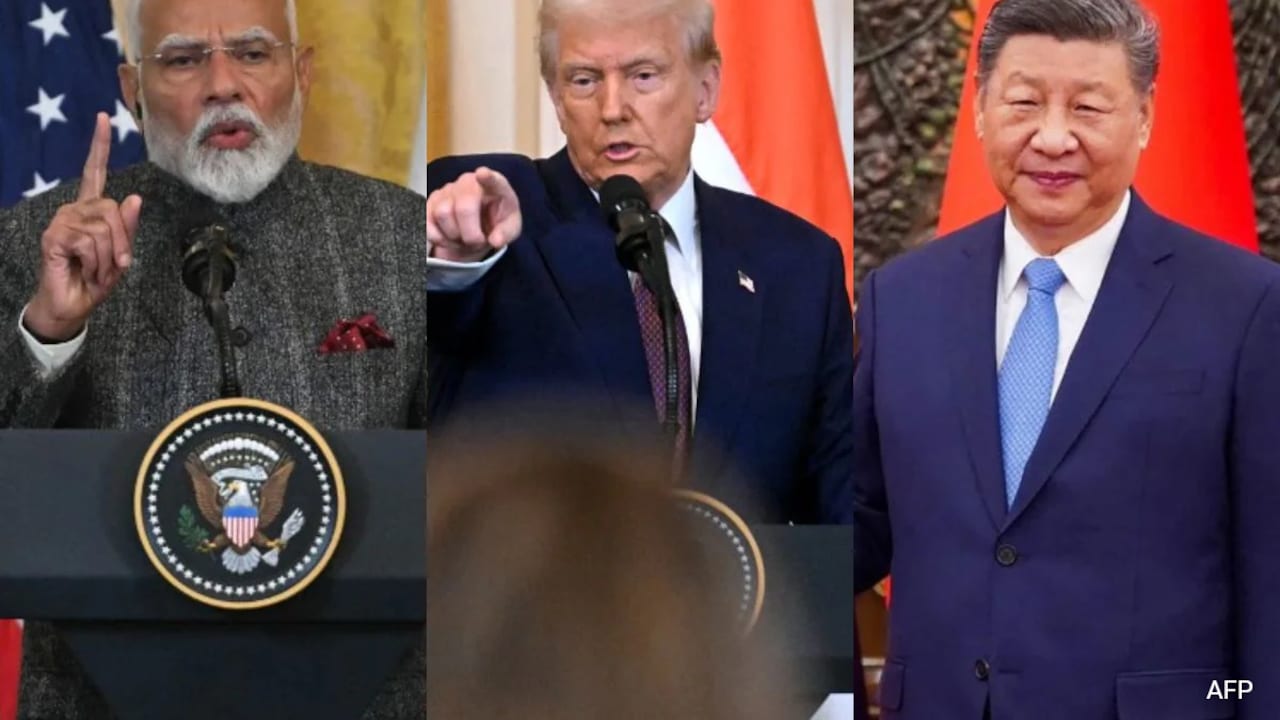
Let's be completely honest about what just happened in Washington. The threat of a blanket 500% tariff on countries buying Russian energy was never a realistic policy. It was a financial nuclear bomb. Had the US actually detonated it, the blast radius would have flattened the global economy, triggered a historic diplomatic rift with India, and pushed China even further into Moscow's economic embrace.
On Tuesday, July 14, 2026, sanity finally entered the room.
US senators unveiled a heavily revised version of the sweeping Russia sanctions bill. The headline change is a massive climbdown. Instead of the terrifying 500% blanket tariff originally proposed to punish buyers of Russian crude, the revised bipartisan legislation caps the penalty at a maximum of 100%. And instead of targeting every single nation with a pipeline or a tanker, this new penalty strictly targets the top five purchasers.
For India and China, this is a massive sigh of relief. But if you think this means the US is suddenly playing nice, you are misreading the room. This is a cold, calculated shift designed to make the sanctions weapon actually usable instead of self-defeating.
The reality of the US scaling back its massive Russian oil tariff threat
The legislative push behind this bill is deeply personal and highly political.
This sanctions package was the brainchild of the late Republican Senator Lindsey Graham and Democratic Senator Richard Blumenthal. They spent more than a year hammering out a framework to choke off Russia’s energy revenues. Graham, who passed away suddenly on July 11, 2026, had just returned from Ukraine and was pushing hard to get Donald Trump's blessing for the bill.
He got it. Senate aides confirmed that the drastic scaling back of the tariff from 500% to 100% was the direct result of months of backroom negotiations to secure Trump’s support. Trump wanted a weapon he could actually wield. A 500% tariff is an unguided missile. A 100% targeted tariff with executive waiver built-in? That is a leverage tool.
The revised bill has quickly gathered steam, boasting 26 bipartisan co-sponsors. Leaders from both sides of the aisle are now pushing to fast-track it as a tribute to Graham's legacy.
Why a blanket 500% tariff was always an economic suicide mission
Let's look at the numbers. They tell the real story of why Washington blinked.
Under the original draft of the Sanctioning Russia Act, any country importing Russian crude oil, natural gas, or petroleum products could face secondary tariffs of up to 500% on all their exports to the US.
Think about the sheer scale of that threat. China and India alone buy roughly 70% of Russia’s seaborne crude. They are the critical economic lifelines keeping Moscow’s war chest filled. However, they are also deeply integrated into the global supply chain.
For India, the US is its largest single export market. Indian pharmaceutical firms, IT service providers, and textile manufacturers rely on friction-free access to American buyers. Economists calculated that a 500% tariff on Indian exports would have instantly shaved at least 0.5% off India's GDP.
It would have done something far worse to the US.
- Supply Chain Shock: Sourcing basic generic medicines, software support, and manufactured goods would have become instantly unaffordable for US businesses.
- Energy Market Chaos: Forcing India entirely off Russian oil overnight would have sent global Brent crude prices soaring past $150 a barrel, triggering a massive wave of inflation inside the US during an election-sensitive cycle.
- Geopolitical Fractures: It would have utterly destroyed the Quad alliance. Washington cannot counter Beijing in the Indo-Pacific if it is busy wage-warring economically against New Delhi.
Washington realized that threatening a partner like India with economic annihilation was not a smart move. It was a strategic blunder.
The new math of the watered down sanctions bill
The revised bill is much smarter, much more targeted, and far more dangerous because it is actually realistic enough to be enforced. Here is how the new math works.
The Top Five Rule
The blanket tariff is gone. Now, the maximum 100% tariff applies strictly to the top five largest buyers of Russian crude and the top five buyers of Russian natural gas.
According to Senate aides, the five crude buyers currently in the crosshairs are:
- China
- India
- Slovakia
- Hungary
- Azerbaijan
For natural gas, the top targets are China, France, Japan, Hungary, and Belgium.
The 15% Gas Loophole
The bill creators knew they could not punish European allies or critical Asian partners like Japan without triggering a massive backlash. So, they built in an elegant escape hatch. Any country that imports less than 15% of its total natural gas from Russia—and is actively taking steps to reduce that number—gets a free pass. This immediately protects Japan, France, and Belgium from being hit.
The Presidential Override
This is the most crucial revision. The bill gives the US president the unilateral authority to waive the tariffs if doing so is deemed to be in the "national interest".
This completely changes the dynamic. It transforms a rigid legislative mandate into a highly flexible political carrot. It allows Trump to hold the threat of a 100% tariff over India's head during trade talks, only to waive it the moment New Delhi offers a concession on something else.
How this plays out for India and China moving forward
The impact of this revised bill will be felt very differently in New Delhi and Beijing.
India's Balancing Act
India has been walking a tightrope for years. It argues that its energy purchases are based purely on national interest and inflation control, not political alignment. When Russia offered steep discounts on Urals crude, Indian private and state refiners jumped at the opportunity.
However, India has already started quietly backing away. Realizing that the political winds in Washington were shifting, Indian refiners began cutting back Russian imports earlier this year. According to Kpler data, India’s Russian crude imports dropped from a high of 1.84 million barrels a day in late 2025 down to 1.04 million barrels a day by February 2026.
Now, India finds itself in a highly delicate spot. A temporary US Treasury waiver that shielded Indian buyers from secondary sanctions expired on June 17, 2026. This revised bill means India has a bit of breathing room, but the threat of a 100% tariff still looms large if they don't continue to slowly wind down their reliance on Moscow.
China's Defiance
China has no interest in pleasing Washington. Unlike India, which wants to maintain great relations with both West and East, Beijing sees its energy alliance with Russia as a strategic necessity.
China imported a massive 109 million tonnes of Russian oil last year. They will likely ignore the US tariff threats, rely on their own domestic payment systems, and use the "shadow fleet" of tankers operating completely outside Western maritime insurance and shipping networks to keep the oil flowing. The revised bill explicitly targets this shadow fleet, but enforcing those sanctions on Chinese soil is notoriously difficult.
What global energy buyers need to do right now
If you are managing supply chains, refining operations, or energy portfolios, do not let this "easing" fool you. The compliance environment is getting significantly more complex, not less. Here is what you should be doing right now to protect your operations.
- Review Your Russian Exposure: If your supply chain relies on products from any of the top five importing nations, you need to map out your secondary exposure. Even if you don't buy Russian oil directly, buying from a refiner that does could put you in a compliance gray zone.
- Monitor the 15% Gas Threshold: If you operate in Europe or East Asia, ensure your natural gas import data is meticulously tracked. Staying under that 15% mark is your shield against US secondary sanctions.
- Prepare for Sanctions on the Shadow Fleet: The US is going to double down on tracking non-Western tankers. Ensure your shipping partners are fully vetted, transparent, and utilizing compliant maritime services to avoid sudden asset freezes.
- Expect Direct US Trade Pressure: If you are an Indian exporter, expect Washington to use the threat of these tariffs as leverage in upcoming bilateral trade negotiations. Keep your supply chain flexible so you can adapt if specific sectors are targeted.
The 500% tariff was a paper tiger. This revised 100% tariff bill has teeth, a pragmatic target, and a clear path to becoming US law. It's time to adjust your risk models accordingly.