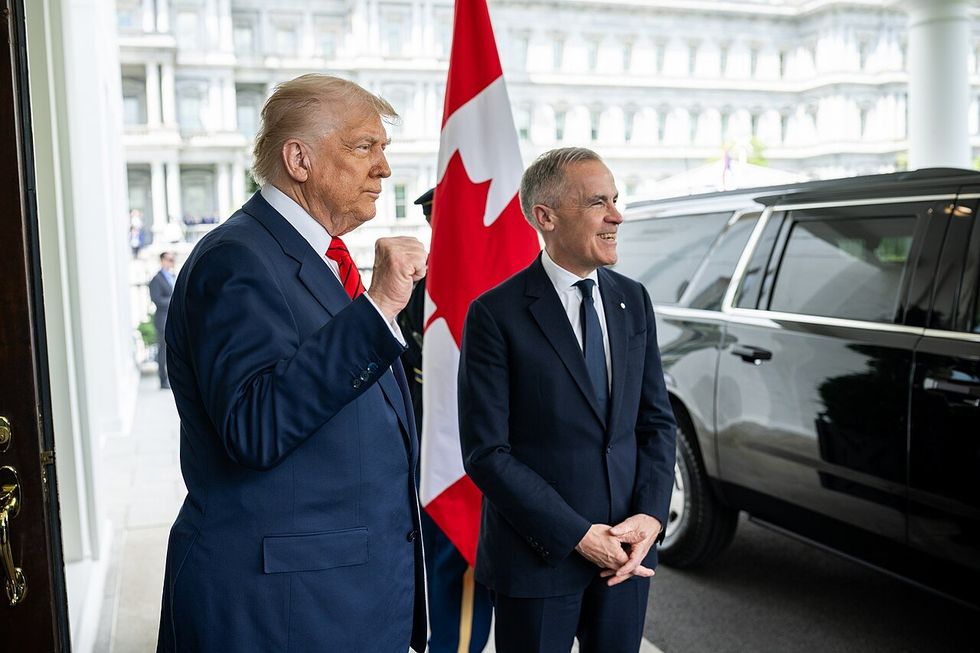
Donald Trump just fired his sharpest economic warning shot at Ottawa yet, claiming Canada literally cannot survive without American economic backing.
Speaking from the Oval Office during a meeting with Lebanese President Joseph Aoun, Trump declared that "without us there's no way they can survive" while defending a massive new 50% tariff penalty on Canadian imports. The comment comes right on the heels of the White House rolling out severe import levies that hit roughly $28 billion in trade, targeting everything from Canadian timber and cement to hockey sticks, wine, and auto components. You might also find this similar coverage useful: Why The Faa Giving Boeing Back Its Certification Keys Matters More Than You Think.
This isn't just standard political theater anymore. It's a full-blown trade crisis that threatens cross-border supply chains built over half a century.
The Real Numbers Behind Trump's Warning Shot at Canada
The trade friction between Washington and Ottawa didn't appear overnight, but the temperature jumped significantly. The White House points to three main grievances to justify the 50% import tax: As reported in latest reports by TIME, the effects are notable.
- Canadian provincial bans on American alcohol sales
- Canada's long-standing supply management controls on American dairy, poultry, and eggs
- Automobile quotas and tariff restrictions enforced by Canadian border authorities
Trump insists Canada has treated American farmers and workers unfair for decades. "Canada's been very, very tough on us over the years, for many years, and no other president's done anything about it," he told reporters.
The economic realities behind these numbers tell a much more tangled story. Canada sends nearly 75% of its total exports across the southern border. That massive dependence gives Washington immense leverage in pure dollar volume. But the relationship isn't a one-way street.
35 U.S. states count Canada as their primary foreign customer. American automakers rely on Canadian parts crossing the border up to seven times before final assembly. American housing contractors depend heavily on Canadian softwood lumber, while U.S. refineries rely on crude oil from Alberta's oil sands. Slapping 50% import taxes on these supplies hits American consumers right in the wallet.
How Canadian Leaders Are Fighting Back
Canadian Prime Minister Mark Carney held a phone call with Trump to try and calm the waters. Carney publicly confirmed that both leaders agreed to step up negotiating sessions over the next month, even as he warned that the new tariffs directly breach the Canada-United States-Mexico Agreement.
Meanwhile, Canadian provincial premiers aren't backing down.
British Columbia Premier David Eby didn't mince words after hearing Trump's Oval Office remarks. Eby declared there's "not a chance in hell" that American alcohol will return to store shelves in his province anytime soon. Most Canadian provinces pulled American booze off liquor store shelves earlier this year as a retaliatory jab against initial U.S. tariffs.
Ontario Premier Doug Ford echoed that sentiment, stating plainly that Ontario won't lift its alcohol ban while American tariffs remain in place. Canadian provincial leaders are signaling that they refuse to yield under public pressure.
When reporters asked Trump if the new trade restrictions were tied to Canadian wildfire smoke drifting across the border, Trump claimed that issue is being handled separately. But the overlap in rhetoric highlights just how fragile bilateral relations have become.
What This Tariff Escalation Means For You
If you buy goods made in North America, prepare for price swings. Tariff threats at 50% levels ripple through the economy fast.
Consumer Costs Will Rise
When import duties jump, the importer pays the tax at the border, not the foreign country exporting the product. American businesses importing Canadian timber, metals, or manufacturing components pass those costs down to buyers. Expect higher price tags on new home construction, remodeling projects, automotive repairs, and selected grocery items.
Supply Chains Will Stall
Supply chain managers are scrambling to rethink procurement strategies before the 30-day implementation window closes. Shifting manufacturing operations or finding alternative suppliers for specialized industrial parts takes months, if not years.
Retaliatory Tariffs Target U.S. Exports
Canada's response won't remain passive. Expect Canada to target key American exports from politically sensitive U.S. states—ranging from agricultural equipment to consumer food products. American farmers and manufacturers who depend on northern sales face sudden revenue drops.
Practical Steps to Protect Your Business and Portfolio
Navigating this trade standoff requires direct action rather than passive waiting.
- Audit your supply chain exposes immediately. Identify every component, raw material, or finished product sourced from Canada or manufactured using Canadian inputs.
- Review trade agreements and exemptions. Check whether your specific import product codes qualify for temporary waivers under current CUSMA provisions before the new rules take effect.
- Lock in short-term pricing contracts. If you rely on cross-border materials, attempt to lock in current pricing with suppliers before tariff implementation windows close.
- Prepare for currency fluctuations. Trade tensions usually weaken the Canadian dollar against the USD. Businesses trading across the border should hedge currency exposure to minimize foreign exchange risks.
- Diversify buyer networks. If your business exports heavily to Canada, start exploring domestic buyers or alternative export markets in Europe and Asia to buffer against retaliatory tariffs.
Watch the negotiation window closely over the next 30 days. Both sides have a heavy incentive to reach a compromise before these massive tax hikes take full effect at the border.
Watch the clip of Donald Trump's Oval Office statements regarding Canada and trade tariffs here: Trump comments on Canadian trade and economic dependence.
This video gives you direct footage of the president's actual words in the Oval Office, allowing you to hear his exact tone and context when discussing Canadian trade policy.