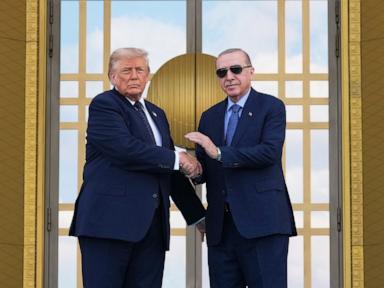
Donald Trump just blew up six years of American foreign policy in a single afternoon. Sitting next to Turkish President Recep Tayyip Erdogan at the presidential compound in Ankara, Trump dropped a bombshell that has defense analysts scrambling. He announced that the United States will lift CAATSA sanctions on Turkey and seriously consider allowing the country back into the elite F-35 fighter jet program.
If you feel a sense of deja vu, you aren't alone. Trump's own administration kicked Turkey out of the F-35 program back in 2019. The reason? Erdogan bought an S-400 air defense system from Russia, a move Washington said could allow Moscow to spy on the crown jewel of American stealth aviation. Now, Trump is ready to wipe the slate clean, calling Turkey more loyal than other traditional allies.
But saying you want to lift sanctions is one thing. Actually navigating the brutal legal and congressional reality of Washington is another.
The S-400 Problem That Stalled a Strategic Partnership
To understand why this sudden pivot matters, you have to look back at how we got here. Turkey wasn't just a buyer for the F-35. It was a core manufacturing partner. Turkish defense companies built essential parts of the fuselage, landing gear, and cockpit displays. Ankara originally planned to purchase 100 of the conventional F-35A models.
Everything ground to a halt when Erdogan finalized a $2.5 billion deal with Vladimir Putin for the S-400 system. The Pentagon faced a clear security nightmare. Operating a high-tech Russian radar system in the same military ecosystem as America's top stealth fighter meant Russia could potentially track the F-35, collect data on its stealth signature, and figure out how to shoot it down.
In 2020, Washington hit Turkey with Countering America's Adversaries Through Sanctions Act (CAATSA) measures. It targeted Turkey's defense procurement agency, effectively freezing top-tier military cooperation. For six years, the relationship was on ice.
Now, Trump says he wants to move past it. "We don't want to sanction friends," he told reporters ahead of the NATO summit. He argued that Turkey has been incredibly helpful on Middle East issues, particularly regarding Iran, while other NATO allies dragged their feet on patrolling critical corridors like the Strait of Hormuz.
The Massive Legal Wall standing in Trump's Way
Trump can promise a clean slate all he wants, but he can't just wave a magic wand. Congress spent years locking these restrictions into actual federal law.
The primary barrier is Section 1245 of the 2020 National Defense Authorization Act (NDAA). This specific piece of legislation explicitly prohibits transferring any F-35 aircraft or technology to Turkey unless the administration certifies that Ankara no longer possesses the S-400 system or any related Russian hardware and personnel.
Furthermore, Congress codified the CAATSA sanctions in the 2021 NDAA. To undo this, Trump needs Capitol Hill on his side. Right now, lawmakers are sharply divided.
- The Skeptics: Senator John Cornyn openly expressed disbelief online, hoping the reports were wrong. Israel is also pushing back hard. Prime Minister Benjamin Netanyahu went on television to declare that giving Turkey the jets would upset the delicate balance of power in the Middle East, which relies on Israeli air superiority.
- The Optimists: Some lawmakers are willing to play ball if a compromise exists. Senator Mike Rounds noted that if Trump's team has figured out a workaround, it could be good news for NATO by adding a massive fleet of fifth-generation fighters to the alliance's eastern flank.
The Secret Workaround Whispered in Washington
How do you give Erdogan his jets without violating federal law? Diplomats have quietly floated a potential compromise for months: relocating the Russian S-400 missiles to a third country or placing them under strict, verifiable U.S. or NATO supervision where they can never be turned on.
Whether Russia would ever allow that is a massive question mark. Weapon sales contracts usually contain strict end-user certificates that forbid transferring the hardware to third parties without Moscow's explicit permission. Erdogan would have to pull off a spectacular diplomatic balancing act to satisfy Washington without infuriating Putin.
Trump claims his top cabinet members, including Secretary of State Marco Rubio, Treasury Secretary Scott Bessent, and Defense Secretary Pete Hegseth, are actively grinding out the details. Vice President JD Vance also confirmed that the Defense Department is reviewing the logistics of the fighter jet program.
Why This Unpredictable Play Fits Trump's Blueprint
This move shouldn't shock anyone who watches how Trump handles foreign relations. He doesn't view alliances through rigid institutional lenses. He views them as personal deals built on loyalty and transactional value.
Trump likes strong leaders, and he has always maintained a personal rapport with Erdogan. By dangling the F-35, Trump is trying to pull Turkey firmly back into the Western orbit at a time when the Middle East is incredibly volatile. Turkey has the second-largest military in NATO. If Trump wants to reshape American commitments in the region and force allies to take on more burden, he needs a heavily armed, cooperative partner in Ankara.
What to Watch for in the Coming Weeks
If you are tracking defense markets, international relations, or geopolitical risk, don't expect things to change overnight. Watch these specific markers to see if Trump's announcement turns into actual policy:
- The Congressional Notification: Keep an eye on formal filings from the State Department. Trump will have to formally notify Congress of any intent to lift sanctions or sell hardware, which will trigger a fierce legislative showdown.
- The S-400 Paperwork: Watch for any joint statements regarding the physical location of Turkey's Russian missiles. If Turkey moves them to an airbase in a third country, the legal path opens up instantly.
- The Israeli Reaction: Watch how Trump manages Netanyahu's public objections. If the U.S. offers Israel advanced upgrades or additional defense funding to offset the Turkish sale, it means the deal is moving forward seriously.
Trump started his trip to Turkey with a massive diplomatic gamble. He wants to reward a friend, boost American defense manufacturing, and rewrite the rules of NATO engagement. Now, the real fight moves from the summit halls of Ankara to the hearing rooms of Washington.