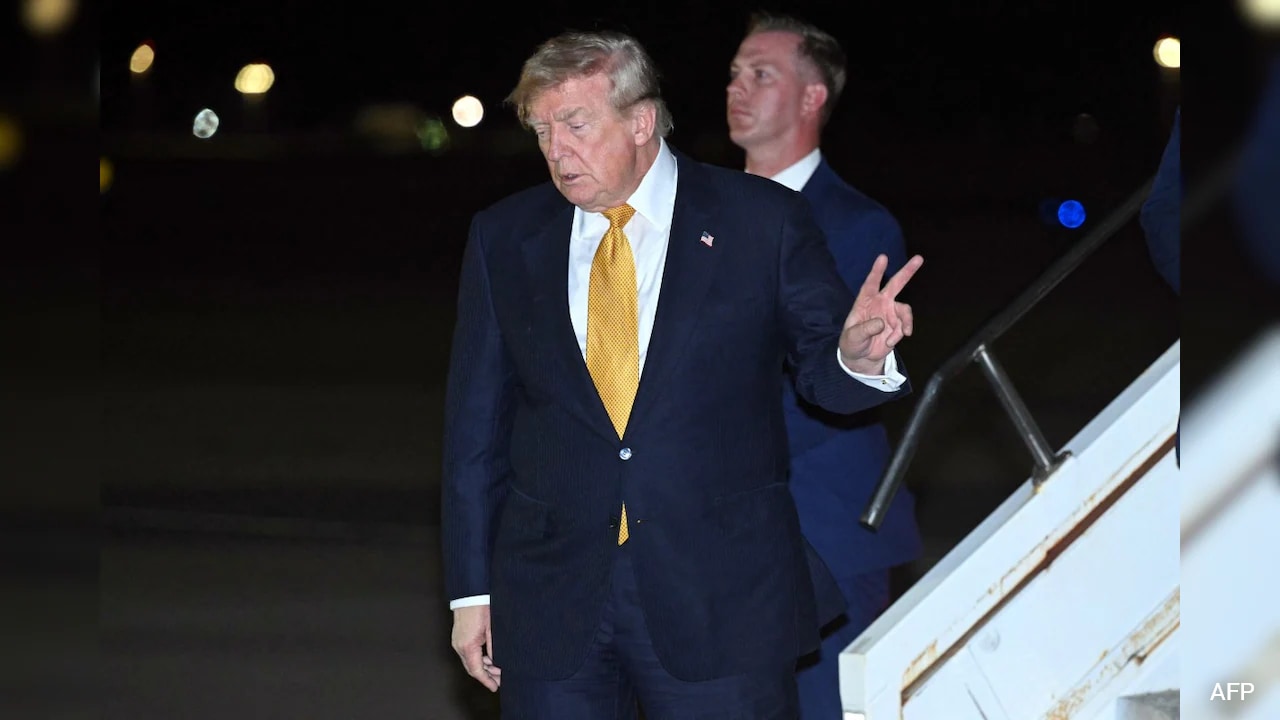
Donald Trump says the ceasefire with Iran is over, and he's promising a twenty-to-one retaliation if Tehran keeps messing with commercial ships.
Returning from a NATO summit in Turkey aboard Air Force One, the president made it clear that Washington is done playing nice. After Iranian forces allegedly targeted three cargo ships in the Strait of Hormuz, US Central Command launched a massive wave of retaliatory airstrikes. Trump hopped on Truth Social to post an image of the destruction, warning, "If it happens again, it will get much worse!"
If you're watching the oil markets or worrying about a massive global conflict, you're probably asking the big question. Are we looking at a permanent Middle Eastern war, or is this just classic Trump brinkmanship?
Trump insists it's the latter. He's telling anyone who will listen that a full-scale war won't happen because Iran simply doesn't have the muscle left to fight back.
The Twenty to One Retaliation Rule
The temporary June 17 memorandum of understanding between Washington and Tehran didn't even last a month. It completely collapsed after the US accused Iran of attacking merchant vessels off the coast of Oman. The response from the Pentagon was swift, hitting Iranian port facilities and military sites in Bandar Abbas, Chahabar, and Konarak.
Trump's military strategy here isn't subtle. It's asymmetric warfare by design.
"We hit them 20 to one. Every time they hit us, we're going to hit them 20," Trump told reporters.
Trump claimed that 159 Iranian ships are already at the bottom of the sea. He says the country's naval and military capabilities have been thoroughly decimated. According to his logic, the conflict can't drag on because Iran has nothing left to fight with. He's betting that overwhelming, disproportionate force will scare Tehran into backing down completely, rather than dragging the US into a multi-year quagmire.
Why Energy Markets Aren't Buying the Optimism
Trump thinks his aggressive stance will ultimately make the region safer and keep oil flowing freely. Traders on Wall Street aren't so sure. Crude prices just extended gains for a third consecutive session.
The issue is geography. The Strait of Hormuz handles about one-fifth of the world's daily oil supply. It's a tight, dangerous chokepoint. Even if the US military dominates the skies, Iran can still wreak havoc. They have sea mines, shore-to-ship missiles, and cheap suicide drones.
Saudi Aramco Chief Executive Amin Nasser recently dropped a sobering warning. He noted that any sustained disruption in the Strait could delay global oil market stability until 2027. It puts roughly 100 million barrels of oil at risk every single week.
Shipowners are already terrified. Insurance rates are spiking, and many captains flat out refuse to enter the Persian Gulf right now. No matter how fast Trump claims he can "finish the job," the commercial shipping industry operates on risk calculation, not political promises.
What Happens If Tehran Bluffs Back
Iran isn't exactly acting like a defeated nation yet. The Islamic Revolutionary Guard Corps claimed it already launched retaliatory missiles and drones at US military bases in Bahrain and Kuwait. Meanwhile, Iran's UN ambassador, Amir Saeid Iravani, is busy sending letters to the UN Security Council condemning the American strikes as a violation of international law.
There's a massive disconnect between Trump's rhetoric and the reality on the ground. Trump claims Iranian leaders called him begging for a deal right after the bombs dropped. He told reporters he's not even sure if they're "worthy" of a deal.
But Iranian state media tells a different story. They report that military planners are currently drawing up designs for a much larger strike against American bases across the Middle East. If Iran decides to call Trump's bluff, the president has already threatened to escalate by striking civilian infrastructure, targeting power grids, desalination plants, and the massive oil-production hub on Kharg Island.
Next Steps for Global Businesses and Observers
If you operate a business tied to global logistics, energy, or supply chains, don't rely on the administration's timeline of a quick resolution. History shows these conflicts have a funny way of spinning out of control.
- Diversify Supply Routes: If your supply chain relies heavily on transit through the Middle East, look for alternative freight routes immediately, even if they cost more upfront.
- Hedge Energy Costs: Expect oil price volatility to continue through the summer. Locking in fuel contracts now might save your bottom line if the Strait gets choked off.
- Monitor Base Movements: Watch the status of US installations in Kuwait and Bahrain. If those bases see repeated, successful strikes, a much wider conflict is practically guaranteed.