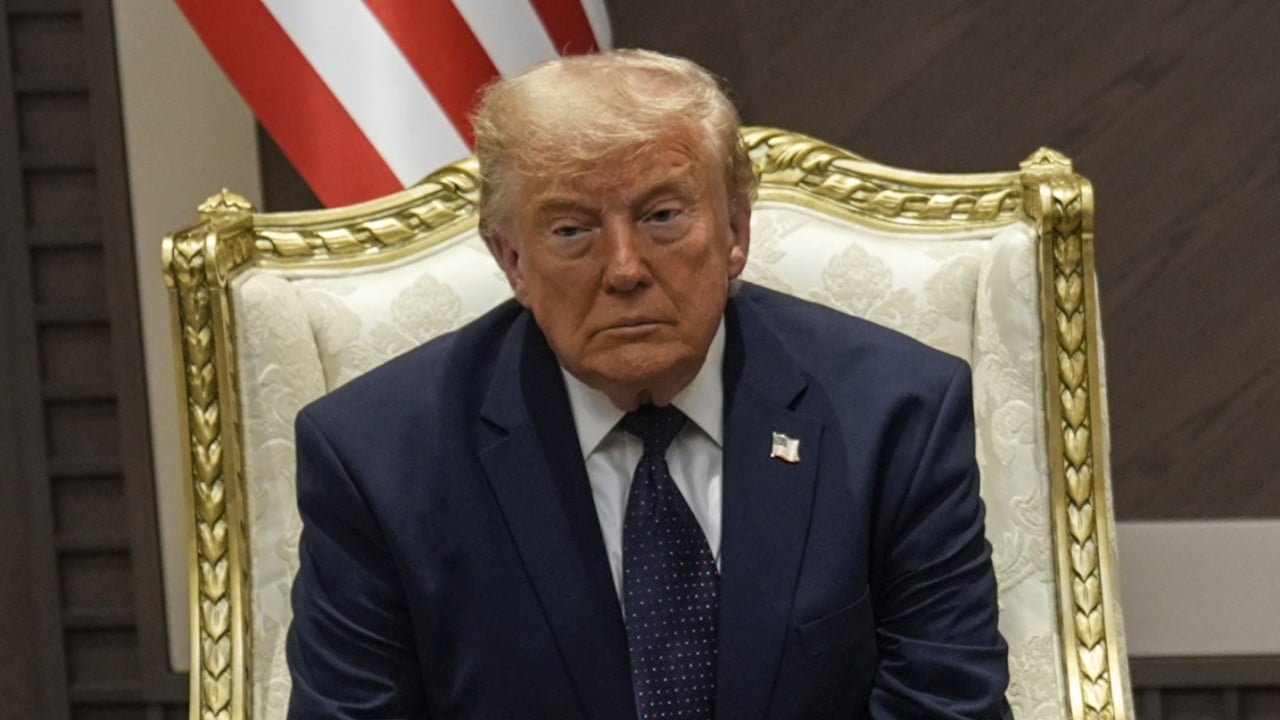
You thought the annual NATO summit would be about defense budgets, drone initiatives, or unified strategy. Then Donald Trump landed in Ankara, stepped off Air Force One, and immediately reminded everyone that geopolitics under his watch is run like a high-stakes real estate negotiation.
Sitting next to Turkish President Recep Tayyip Erdogan on July 7, 2026, Trump didn't just air his usual grievances about European defense spending. He escalated. He revived his long-standing demand that the United States should take control of Greenland from Denmark, a founding NATO ally. Worse for European capitals, he tied the Arctic territory directly to the presence of American forces on the continent.
"We could remove all of our soldiers out of Europe," Trump warned, explicitly using the threat of a total military drawdown to pressure Denmark and the broader alliance.
If European leaders thought the tens of billions of dollars in new arms deals they prepared for this summit would satisfy the American president, they miscalculated.
The Greenland Ultimatum
The core of the issue isn't just a quirky desire for a massive ice-covered island. Trump views Greenland as a massive security blind spot that Denmark cannot handle.
"That should be controlled by the United States, not by Denmark," Trump told reporters during his meeting with Erdogan. He claimed the territory is currently surrounded by Chinese and Russian vessels, a security risk he insists Washington cannot tolerate.
According to Trump, this specific real estate dispute is what poisoned his relationship with the alliance in the first place. He complained that Denmark refuses to cooperate despite the immense sums the US spends protecting Europe from Russia.
The backlash from Copenhagen was instant. Danish Prime Minister Mette Frederiksen, speaking from Ankara hours later, made it clear that Greenland is not a commodity. "I hope that it is equally well-known everywhere that this is not going to happen," she said, expecting allies to respect Danish sovereignty. Greenland’s Foreign Minister Mute Egede echoed the sentiment on social media, stating flatly that the island's future belongs exclusively to its people.
Testing Allies and the Iran Aftermath
The Greenland dispute is only half the story. Trump arrives in Turkey deeply resentful of how European allies behaved during the recent conflict with Iran.
Before the current ceasefire took hold, Washington requested support and access to military bases across Europe. Trump revealed in Ankara that he used those requests as a loyalty test. European powers failed it.
"Italy turned us down, and Germany turned us down, and France turned us down," Trump complained. He questioned why the US should continue guarantees for nations that refuse to back American operations.
This specific resentment explains why Trump openly praised Erdogan while bashing traditional allies. He noted that if the summit weren't held in Turkey—led by his "strong" friend—he might not have even shown up.
What Europe is Doing to Cope
NATO Secretary-General Mark Rutte is trying desperately to steer the conversation back to defense realities. Europe knows Trump wants cash and commitments, so they arrived in Ankara with a massive checkbook.
The alliance has rolled out major initiatives to prove its financial commitment:
- A multinational group of 15 nations agreed to purchase a fleet of Airbus refueling and transport planes.
- Rutte announced a four-country deal to buy advanced Triton surveillance drones.
- The alliance launched a $40 billion counter-drone initiative.
- The European Union is utilizing a cheap loan system to unlock up to $170 billion from capital markets for defense procurement.
These projects represent the tens of billions in new contracts meant to appease Washington. But by threatening the 80,000 US troops currently stationed across Europe over an Arctic real estate dispute, Trump has changed the game entirely.
Real Steps for Transatlantic Defense
European defense ministries cannot afford to treat the Greenland threat as a bluff. Relying on American troop presence is a gamble. Security teams need to pivot immediately.
First, European members must accelerate the independent command structures currently funded through EU capital market loans. The Triton drone acquisitions and Airbus transport deals are a start, but logistics integration must happen without relying on US infrastructure.
Second, Denmark and Arctic Council nations need to quietly formalize joint maritime patrols in the High North. If the stated pretext for US intervention is the presence of Russian and Chinese vessels, European allies must visibly secure those waters themselves to take away the talking point.
Relying on glitzy arms procurement announcements to handle a mercurial American president doesn't work. True strategic autonomy is the only defense left.