Donald Trump thought he could bully the global economy into submission, but math doesn't care about capital letters on Truth Social.
If you've noticed your credit card interest rates spiking, your grocery bills refusing to budge, or the price of gas creeping back up, you can stop guessing why. The bill for Trump's chaotic foreign policy has officially arrived. While the administration claims its recent "ceasefire" with Iran was a masterpiece of negotiation, the world’s top economic minds are pointing out the obvious: America didn't win. We lost.
Nobel laureate economists Joseph Stiglitz and Paul Krugman have shredded the administration’s victory lap. They aren't just talking about abstract geopolitical points on a map. They are tracking a direct line from a completely unnecessary conflict to the compounding economic anxiety hitting everyday Americans. The reality of this failure is far worse than a bad headline—it's actively draining your purchasing power.
The Ceasefire Delusion Where Iran Walked Away Winning
Trump recently blasted out a 4:32 AM tirade mocking critics who claimed he wasn't tough enough on Tehran, pointing to a fluctuating stock market as proof of his genius. But checking the Dow Jones during a global security crisis is a terrible way to measure strategic success.
As Paul Krugman pointed out, the administration fundamentally confused destruction with strategy. The new ceasefire didn't achieve a single core American objective. Instead, it left Iran in a vastly stronger regional position than it occupied before the bombs started falling.
Think about the sheer backwardness of this strategy:
- Trump tore up the Obama-era nuclear deal (the JCPOA) during his first term, claiming he could get something better.
- He launched a costly, unilateral military campaign that bypassed Congress entirely.
- After depleting weapons stocks and burning through billions of taxpayer dollars, he signed a deal that is demonstrably worse than the original agreement he destroyed.
"Iran won," Krugman summarized bluntly. The U.S. essentially spent massive amounts of capital to prove to the globe that our military leverage is far more limited than the White House wants to admit. If Trump wanted a deal that actually contained Iran's nuclear ambitions, he literally could have done nothing and been in a better position. Instead, he created a disaster, spent a fortune trying to bomb his way out of it, and then demanded applause for stopping the fire he ignited.
The Broken Supply Chains Inside the Affordability Crisis
The immediate temptation is to view a Middle Eastern conflict as an isolated event happening thousands of miles away. It isn't. Joseph Stiglitz argues that this war of choice has injected a new wave of volatility into a global supply chain that was already fragile.
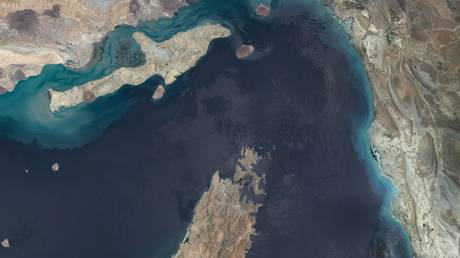
When military strikes hit critical energy and shipping infrastructure in the Persian Gulf, the ripples hit your local supermarket. It takes years to repair destroyed oil and gas production facilities. The administration loves to brag that the U.S. is a net exporter of energy, but that's a basic economic misunderstanding. Oil is a globally traded commodity. When global supply drops, domestic prices soar, regardless of how much crude we pump in Texas.
But it gets uglier. This conflict didn't just rattle oil tankers; it jeopardized global fertilizer production.
Modern agriculture lives and dies by fertilizer. When the production hubs in the region face disruptions, the cost of farming skyrockets globally. That means the price of beef, grain, and produce at your grocery store stays artificially elevated. You're paying a "Trump conflict tax" every time you check out at the register.
Why Interest Rates Aren't Coming Down Anytime Soon
If you are trying to buy a house, refinance a vehicle, or clear off a credit card balance, you are trapped in a high-interest nightmare. We were supposed to see borrowing costs ease up, but the economic fallout from this war has choked off that possibility.
High energy and food prices feed directly into core inflation. The Federal Reserve has a specific mandate to bring inflation down, and when erratic foreign policy shocks keep driving costs up, the Fed has only one tool to fight back: keeping interest rates high.
Stiglitz notes that the timing couldn't be worse. The U.S. economy was already reeling from erratic trade tariffs, immigration crackdowns, and a massive fiscal deficit driven by corporate tax cuts. Because the administration cleared out our fiscal cushion to reward billionaires, the government now has almost no financial room to buffer the public from these economic shocks. The burden falls squarely on your shoulders in the form of higher monthly loan payments.
The Hidden Winners in Moscow
You have to look at who actually benefits when American foreign policy goes off the rails. While U.S. consumers watch their savings erode, Vladimir Putin is laughing all the way to the bank.
The prolonged conflict in the Middle East kept global energy markets tight, which more than doubled Russia’s revenue from oil and liquefied natural gas (LNG). At the exact same time, Washington’s preoccupation with Iran allowed the White House to choke off aid to Ukraine and fracture the NATO alliance—delivering the Kremlin’s ultimate policy goals on a silver platter.
The administration’s domestic supporters live inside an information bubble where these moves look like "America First" strength. From the outside, it looks like a staggering sequence of unforced errors that enriched foreign adversaries while depleting our own strategic reserves.
Protect Your Finances From Erratic Policy Shifts
You can't control the White House's Twitter feed, but you can adjust your financial strategy to survive the volatility it creates. Relying on traditional economic assumptions won't work when the rules of global trade are being dismantled.
- Lock in fixed borrowing rates immediately. If you're carrying variable interest on credit cards or personal loans, pay them down aggressively or roll them into fixed-rate options. Inflationary shocks mean interest rates will stay higher for longer than Wall Street keeps predicting.
- Rebalance your portfolio away from high-tariff vulnerabilities. Companies dependent on highly complex, international supply chains are sitting ducks for the next sudden policy shift. Look toward domestic service sectors or firms with localized supply lines.
- Build a larger cash reserve. The standard three-month emergency fund isn't enough when global energy costs can spike overnight based on a single midnight social media post. Aim for six months of bare-minimum living expenses held in a high-yield savings account.
The propaganda machine will keep telling you that everything is a historic victory. Don't buy it. Watch your bills, track your expenses, and plan for an economy where stability is no longer guaranteed.