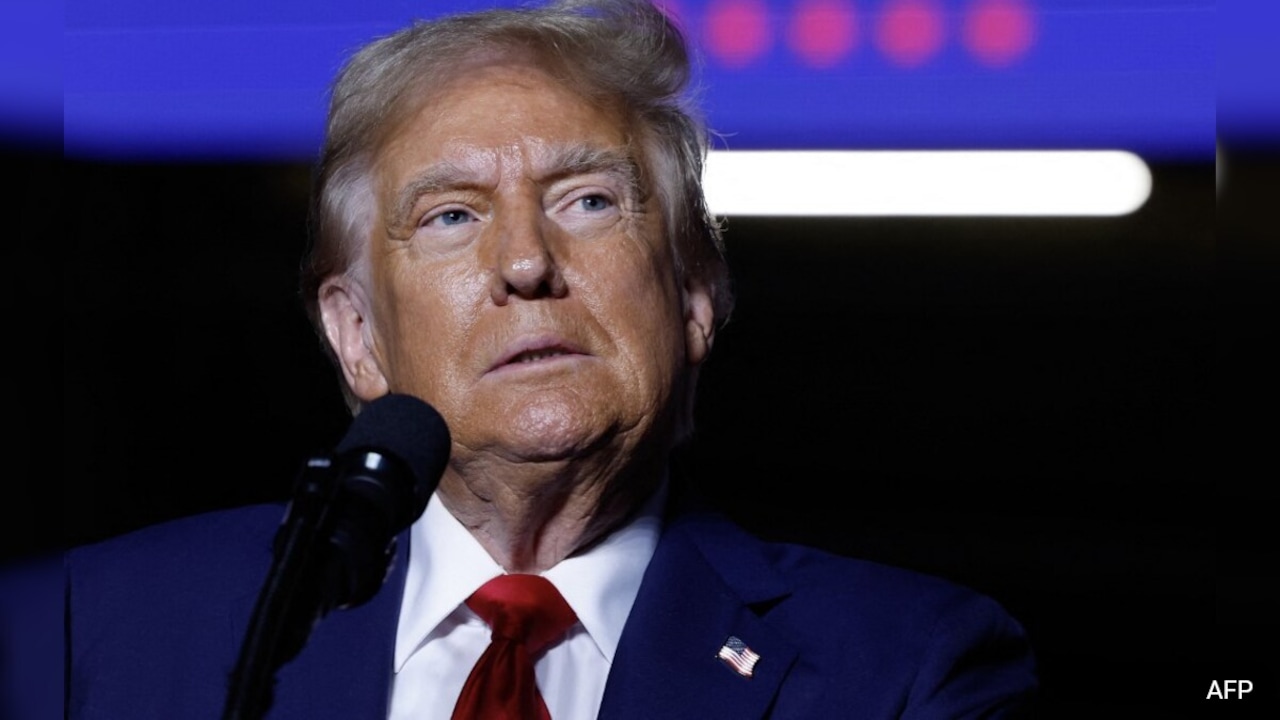
Donald Trump just landed in Ankara for the NATO summit and immediately made one thing clear: he doesn't care about the alliance's traditional power structure. Standing next to Turkish President Recep Tayyip Erdogan, Trump openly admitted he might have skipped the entire summit if it weren't being held in Turkey.
Think about that for a second. The leader of the world’s most powerful military just told a room full of diplomats that his attendance at a crucial transatlantic summit depended entirely on his personal relationship with a single strongman.
It’s a brutal wakeup call for Western Europe. While traditional allies like Germany and France spent weeks preparing a multi-billion-dollar showcase of new military spending to appease the American president, Trump spent his first hours on the tarmac praising his "chemistry" with Erdogan and rehashing old grievances against the rest of the alliance.
The message is loud and clear. If you want Washington’s respect, blindly throwing money at defense contracts won't cut it anymore. Trump values personal loyalty and transactional strength over legacy treaties.
The Chemistry That Is Shaking the Alliance
Western diplomats are sweating over the obvious affection between Trump and Erdogan. It isn't just standard diplomatic fluff. Trump genuinely respects leaders who run their countries with an iron fist, and he isn't shy about saying it out loud.
"It's a chemistry that works between us," Trump told reporters while sitting in Erdogan's massive presidential palace. He even went a step further, calling Erdogan a "very strong leader" and noting that sometimes you get along best with the toughest people.
This isn't just about a couple of politicians getting along over coffee. This relationship has massive geopolitical consequences. Turkey has spent years in the diplomatic doghouse with the West, especially after buying a Russian S-400 missile defense system back in 2019. That move got them kicked out of the U.S. F-35 fighter jet program and hit with heavy sanctions.
Now, with a simple handshake on an Ankara runway, Trump is ready to tear up those old punishments. He announced that his administration is moving to lift those sanctions, putting the F-35 fighter jets back on the table for Turkey.
Europe Spent Billions for Nothing
European leaders knew Trump was coming to town with a chip on his shoulder. They tried to get ahead of the storm. Before Air Force One even touched down, NATO Secretary-General Mark Rutte and various European heads of state rolled out a massive defense forum to blast techno music and show off tens of billions of dollars in new military contracts.
They announced massive deals. Swedish manufacturer Saab is supplying up to ten new GlobalEye surveillance aircraft for a ten-nation coalition. A fifteen-nation group pledged to buy air-to-air refueling and transport planes from Airbus. They even tapped into a newly created European Union cheap loan system that can raise up to $170 billion on capital markets just for defense upgrades.
They thought this would make Trump happy. They thought showing a commitment to their own defense would earn them some praise.
They were wrong.
Trump didn't care about the shiny new planes or the multi-billion-dollar price tags. He was still furious about how European nations treated the U.S. during the recent military conflict with Iran.
"I was testing to see whether or not they'd be there, because I've long said that we helped them," Trump barked during his press availability. Then he named names. "Italy turned us down, and Germany turned us down, and France turned us down."
To Trump, NATO isn't an abstract ideal of democratic unity. It's a protection racket. If the U.S. defends Europe, Europe needs to back the U.S. when Washington goes to war. Since the major European powers refused to let American forces use their bases during the Iran conflict, Trump views them as fundamentally disloyal.
Turkey, on the other hand, played its cards perfectly. By acting as a loyal partner and offering a warm, high-status welcome—complete with military officials on horseback and jets painting the sky in smoke—Erdogan secured a massive win without having to beg for it.
The Deficit Report Card
The numbers back up Trump's frustration, even if his methods are chaotic. NATO leaders agreed last year to an aggressive new target: spending 5% of their GDP on defense by 2035. That is broken down into 3.5% for core military requirements and 1.5% for upgrading security infrastructure like roads, bridges, and airports to move troops quickly.
The Trump administration expects a progress report at this summit, and several nations are about to get a failing grade. Look at the projections:
- Slovenia is lagging way behind, expected to hit just 1.6% of GDP.
- Belgium, Spain, and the Czech Republic are barely scraping by, struggling to even hit the old 2% target.
When countries like Slovenia and Belgium can't even hit historical spending minimums, it gives Trump all the ammunition he needs to threaten a complete withdrawal of American forces from the continent.
Furious Allies and the Greenland Distraction
The sudden shift toward Turkey is causing massive ripple effects across the globe. The most immediate pushback came from Israeli Prime Minister Benjamin Netanyahu.
Netanyahu went on CNN to openly blast the potential F-35 sale to Turkey, claiming that giving Erdogan that kind of advanced military hardware would lead to direct aggression in the region. Israel has long relied on its qualitative military edge in the Middle East, and a Turkey armed with stealth fighters throws a massive wrench into that strategy.
But Trump isn't listening to Israel on this one, nor is he listening to the bipartisan contingent in Congress that wants to block the deal until Turkey gets rid of its Russian missile systems. He sees Turkey as a loyal actor and Europe as a collection of freeloaders.
Then came the bizarre twist that everyone should have seen coming. Just as European diplomats were trying to stabilize the conversation, Trump decided to reopen an old diplomatic wound.
He reiterated his position that Greenland should be under the control of the United States, not Denmark.
A senior U.S. official confirmed that behind the scenes, Trump still fully believes the U.S. should annex the territory. While official talks with Denmark are ongoing and don't explicitly mention annexation, Trump throwing this into a press conference at the end of a meeting with Erdogan was a calculated power move. It reminded European leaders that he can challenge their sovereign borders and territorial integrity whenever he feels like it.
What Happens Next
This summit is turning into a disaster for traditional transatlantic unity. If you are watching this unfold and wondering what it means for global security, you need to look past the political theater and focus on the immediate, practical shifts happening right now.
First, watch the U.S. Congress. The White House wants to lift sanctions and sell F-35s to Ankara, but federal law still contains strict barriers regarding nations that hold Russian defense hardware. Congressional leaders will either have to capitulate to Trump’s demands or risk a massive showdown with the executive branch.
Second, expect a massive spending panic in Europe. Deficient nations like Belgium, Spain, and Slovenia will have to rapidly adjust their domestic budgets to pour money into defense infrastructure if they want to avoid severe American penalties or a reduction in intelligence sharing.
Finally, keep an eye on Ukraine. Zelenskyy is on the sidelines of this summit making a desperate pitch for NATO membership. But with Trump openly coordinating with Putin via working-level channels and pushing for a rapid peace deal, Europe's dream of an expanded, united front against Russia is effectively dead. The era of a U.S.-led Europe is giving way to a transactional network of strongmen, and Western Europe is completely unprepared for the shift.