When a video recorded from a residential apartment window in Bologna spread across social media, it didn't just provoke outrage. It ignited a full-blown political crisis.
The footage shows 42-year-old Abderrahim Fakir pinned face down on the pavement in the Pilastro neighborhood on a hot Sunday afternoon. Two police officers sit heavily on his back. Emergency medical responders stand nearby, watching silently. Fakir, who had lived in Italy since he was five years old and ran a small moving and cleaning business, can be heard shouting a desperate plea over and over again. "Aiuto, aiuto, basta." Help, help, that's enough. You might also find this related article interesting: Why Turkish Opposition Splinters Keep Giving Erdoğan The Upper Hand.
Minutes later, he stopped breathing.
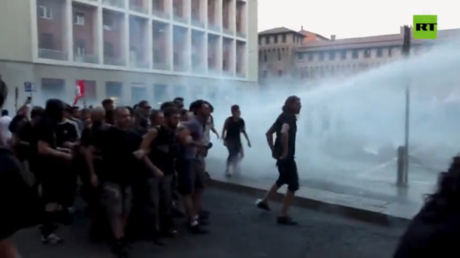
The tragedy immediately sparked clashes on the streets of Bologna, leaving 56 police officers injured as demonstrators threw firecrackers and bottles, met by tear gas and water cannons from riot police. But if you think this is just another brief headline about street protests, you're missing the bigger picture. This incident exposes deep-seated fractures within Italian society, police accountability, and a fierce battle over the direction of the country's justice system. As reported in latest articles by TIME, the results are worth noting.
A Routine Call That Turned Fatal
Let me break down what actually happened on July 19, 2026.
Residents in Pilastro called emergency services shortly after noon because Fakir was acting erratically and allegedly damaging a vehicle. According to his family, he suffered from both asthma and a heart condition, and witnesses suggested he was experiencing a severe psychiatric crisis.
When police arrived, they sprayed Fakir with pepper spray. They forced him to the ground, face down, to handcuff him. As Fakir pleaded for help, officers continued to hold him down and eventually bound his ankles together. By the time anyone checked his vital signs, he was completely unresponsive.
His sister, Khadija, spoke out to Corriere della Sera with words that resonated far beyond Bologna. She said police are supposed to protect people, not kill someone having an episode. Her heartbreak sparked calls for immediate answers.
Lawyer Barbara Spinelli, who assisted Fakir when he renewed his stay permit the previous year, described him as a respectful, well-educated man who was legally residing in Italy but constantly worried about deportation. She recalled reassuring him that Italy was a rule-of-law democracy where the police respect human rights. Now, that statement feels painfully hollow.
The Clashes on the Streets of Bologna
News of the video spread quickly. By Monday evening, central Bologna became a battleground.
Hundreds of protesters gathered to demand justice. Some knelt with raised fists, mimicking Black Lives Matter demonstrations. Others sat in public squares holding pictures of Fakir. However, as night fell, tensions boiled over into intense clashes.
Protesters threw bottles, chairs, and firecrackers toward police lines. Riot officers retaliated using high-pressure water cannons and tear gas to clear the squares. According to the police union COISP, dozens of officers suffered injuries during the unrest.
The victim's family publicly urged demonstrators to remain peaceful, emphasizing that violence only distracts from seeking truth. Yet the anger on the streets reflects a deeper resentment that has been building up for years.
Political Polarization and the Model 45 Bis Inquiry
The response from Italy's political establishment was swift, sharp, and divided straight down party lines.
Prime Minister Giorgia Meloni called for a thorough investigation while sharply condemning the violent protests. She stated on X that those attacking police officers were seeking confrontation rather than truth. Far-right Deputy Prime Minister Matteo Salvini and European Affairs Minister Tommaso Foti defended the police conduct and slammed anti-police chants as disgraceful.
On the other side, opposition leaders pulled no punches. Senator Ilaria Cucchi—whose own brother Stefano died in police custody back in 2009—publicly criticized government officials for giving unconditional support to the officers before a full investigation was completed. Meanwhile, Democratic Party leader Francesco Boccia warned against importing heavy-handed foreign policing models into Italy.
Currently, the Bologna Public Prosecutor's Office is investigating two police officers and four healthcare workers for potential manslaughter through negligence. Interestingly, prosecutors are applying a recently introduced legal framework known as "Model 45 bis." This procedure allows authorities to conduct preliminary inquiries into individuals acting under professional duty without immediately placing them under formal criminal investigation.
Whether body-camera footage and autopsies will bring clear answers remains to be seen.
Actionable Next Steps to Track This Story
If you're following this story and want to understand how it unfolds, here is what you should monitor over the coming weeks:
- Watch for the official autopsy report: Medical examiners will determine whether asphyxiation, pepper spray, underlying medical conditions, or a combination of factors caused Fakir's death.
- Follow the "Model 45 bis" legal precedent: Pay attention to how Italian courts handle the six individuals under review, as this case will set a major legal precedent for police accountability in Italy.
- Monitor legislative debates: Watch for proposed reforms around police restraint protocols and psychiatric emergency response procedures in the Italian parliament.