You see a single headlight in the distance and assume you have plenty of time to turn left. It looks far away, moving at a steady pace. But human biology is playing a trick on you. That single light doesn't provide the two points of reference your brain needs to judge depth accurately. By the time you realize the light isn't a distant car but a motorcycle right in front of you, it's too late.
This specific optical illusion is killing people on Manitoba highways.
We are only midway through the summer riding season, and Manitoba families are already burying their loved ones at an alarming rate. According to recent data from Manitoba Public Insurance (MPI), motorcycle fatalities have spiked. Seven Manitobans have lost their lives on the tarmac so far this year. To put that in perspective, all of last year saw a total of six motorcycle deaths. We have surpassed last year's entire death toll before even hitting the mid-summer heat.
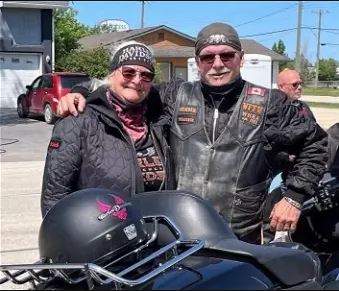
Behind these numbers are empty chairs at kitchen tables. On June 13, Dan Keats and Brenda Lee, both 65, died when their motorcycle crashed on Breezy Point Road in the RM of St. Andrews. They were the rock of their family, known for charity work and an open-door policy for anyone needing a hand. Now, their children and grandchildren are left trying to figure out how to carry a grief that their daughter, Mandy Keats, says never really goes away.
The question we have to confront is simple. Why are these crashes happening now, and what are we missing when we talk about road safety?
The Lethal Physics of Rural Manitoba Roads
When most people think of traffic accidents, they picture chaotic urban intersections. But the real danger for bikers lies on the long, open stretches of rural pavement. Historical MPI data reveals a harsh reality. Roughly 71% of fatal motorcycle crashes happen on rural highways, far outpacing the five-year average of 58%.
Rural roads present a unique cocktail of hazards. Higher speed limits mean less time to react. Road surfaces change instantly from smooth asphalt to loose gravel, patch jobs, or deep ruts from agricultural equipment. Then there is the isolation. If a rider goes off the road into a ditch on a remote stretch of highway, it might be hours before anyone notices.
Just weeks ago near Lac du Bonnet, a 58-year-old rider from Whitemouth failed to return home. He was eventually found dead in a ditch along Highway 11. It's a sobering example of how unforgiving rural riding can be.
The crashes themselves usually fall into two categories:
- Single-vehicle run-offs: Nearly 40% of fatal motorcycle incidents don't involve another vehicle. The rider loses control on a bend, hits debris, or swerves to miss wildlife and leaves the road.
- The left-turn collision: This accounts for the remaining 60%. A driver turns left directly into the path of an oncoming motorcycle because they simply did not register its presence or misjudged its speed.
Why Your Brain Can't See Motorcycles
Sgt. Mark Hume of the Manitoba RCMP's northwest division traffic services points out that motorists genuinely fail to perceive oncoming bikes. It isn't always malicious distraction, though texting while driving remains a massive problem. Often, it's a physiological limitation called "inattentional blindness."
The human brain is bombarded with visual data when driving. To cope, it filters out things it doesn't expect to see. Because cars and trucks dominate the roads, drivers look for two headlights spaced a certain distance apart. When a motorcycle approaches with a single headlight, the brain struggles to calculate how fast it's closing the gap.
Dave Remington has spent 50 years riding and 26 years instructing riders at Safety Services Manitoba. He emphasizes that the margin for error on a bike is basically zero. If you mess up in a sedan, the crumple zones and airbags save you. On a bike, you are the crumple zone. Remington notes that aggressive driving behavior has worsened since the pandemic, making defensive riding more critical than ever before.
What Needs to Change Right Now
We can't keep relying on the standard "look twice" bumper stickers. It's not working. Shifting the needle on these tragedy metrics requires concrete action from both drivers and riders.
If you drive a vehicle, you need to change how you scan intersections. Don't just look for cars. Look for shapes. When you see a single headlight, assume it's closer than it looks and wait. Give motorcyclists a full three to four seconds of following distance. If they have to brake suddenly to avoid a pothole or a dead animal, they need that space to maneuver without you running them over.
For riders, the strategy has to be entirely defensive. Assume you are completely invisible to every motorist on the asphalt.
- Flash your brakes: When slowing down, tap your brakes lightly to flash your tail light. It forces the driver behind you to wake up.
- Avoid riding in blind spots: If you can't see a driver's face in their side mirror, they definitely can't see you.
- Wear high-visibility gear: It might not look as cool as solid black leather, but neon yellow or reflective vests break through the visual clutter of a busy highway.
The motorcycle community in Manitoba is incredibly tight-knit. When a rider goes down, the shockwave hits clubs, charity groups, and families across the province instantly.
If you're hitting the highway this weekend, take an extra three seconds at that stop sign. Check your mirrors twice. Those three seconds are the difference between an ordinary drive and destroying a family forever.