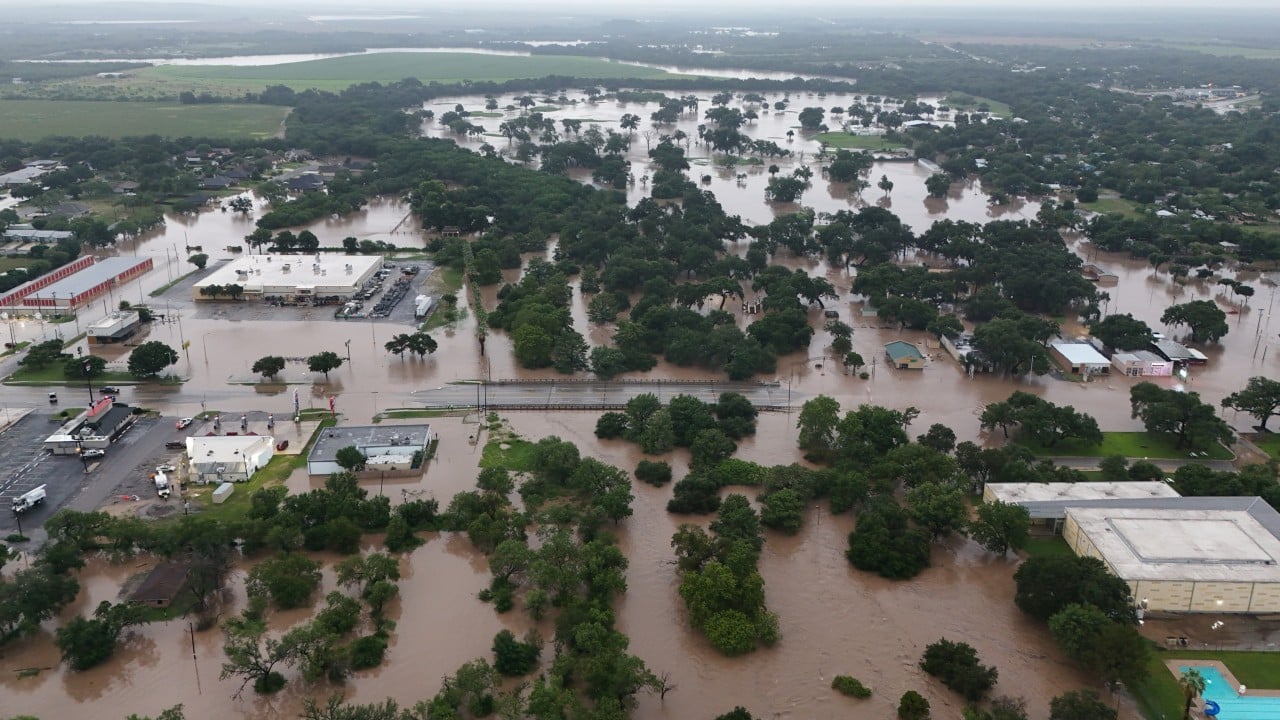
Texas is underwater. Again. Just a year after the horrific July Fourth floods of 2025 stole over a hundred lives across the state, the skies opened up once more. Two people are dead, hundreds have been pulled from raging waters, and the Guadalupe River is roaring like an angry freight train.
If you think this is just a run-of-the-mill bad weather week, you're missing the bigger picture. The Texas Hill Country is uniquely dangerous, an atmospheric and geographic funnel that turns routine summer storms into sudden, violent death traps.
Let's look at what actually happened over the last 48 hours, why this specific region is so incredibly vulnerable to flash flooding, and how ordinary residents managed to survive a disaster that came terrifyingly close to repeating last year's historic tragedy.
Anatomy of the July 2026 Deluge
The setup was a meteorological nightmare. A slow-moving, sluggish storm system stalled right over Central Texas. It tapped directly into deep, warm moisture flowing off the Gulf of Mexico. When those two ingredients collided with the rugged terrain of the Hill Country, it triggered a process meteorologists call "training."
Think of training like train cars passing over the exact same section of track. Instead of a storm system sweeping through and moving on, individual thunderstorm cells kept forming, dumping torrential rain, and dissipating, only to be replaced by new ones over the exact same neighborhoods.
The numbers are staggering. Parts of the region saw rainfall rates of 2 to 4 inches per hour. Some areas ended up buried under a foot of water in a single night.
Before dawn on Thursday, July 16, 2026, the headwaters of the Guadalupe River watershed simply couldn't hold any more. The river rose 16 feet in just 30 minutes in some spots. In less than an hour, it shot up 22 feet. That is not a rising tide. That is a solid, fast-moving wall of water charging downstream.
At Center Point, the river gauge recorded a staggering 32-foot rise in a four-hour window. In Comfort, Texas, the National Weather Service watched the water crest at 39 feet. To put that in perspective, the last time water reached that high in Comfort was July 16, 1900. We are talking about a once-in-a-century flood event happening right on top of a community that was still struggling to rebuild from last year's catastrophe.
The Human Cost and the Ghost of 2025
The physical damage is immense, but the loss of life is what stings the most. Texas Governor Greg Abbott confirmed two fatalities from this round of storms.
In Uvalde, a 74-year-old man was swept away while trying to drive on a flooded road. In Kerr County, 65-year-old John Mark Steward of Kerrville lost his life when the rising waters of Goat Creek lifted his entire mobile home off its platform and swept it down the Guadalupe River. His wife, Jennie Steward, was away visiting family when she got the call from a neighbor. The couple had just spoken on the phone hours earlier to celebrate their third wedding anniversary.
These stories are tragic, but the death toll could have been vastly higher. The memory of 2025 hangs heavy over the Hill Country. Last year, the July Fourth floods caught the region entirely off guard, claiming more than 100 lives, including 25 young campers and counselors at the historic Camp Mystic along the Guadalupe.
The pain of that disaster changed how people responded this time. Residents didn't wait for official orders.
Josiah Rodriguez, a Kerrville resident, woke up to the sound of pounding rain around 2 a.m. on Thursday. Instead of rolled eyes or going back to sleep, he immediately jumped into his truck, navigating rapidly flooding roads to pull his relatives out of harm's way.
Over at the Buck Wild Animal Rescue and Wildlife Rehab near Ingram, Katie Buck spent her night evacuating dozens of animals to higher ground as Lazy Creek burst its banks. She was grabbing porcupines with her bare hands in the dark.
Down the road at an RV park in Comfort, sirens wailed as the manager, Duke Earwood, rushed residents to move their trailers. Water quickly submerged the hoods of cars parked near the river.
The difference between last year and this year wasn't the severity of the rain. It was the collective trauma that forced everyone to take the danger seriously.
Why the Hill Country is Flash Flood Alley
To understand why this region floods so violently, you have to look beneath the soil. Or rather, the lack of it.
The Texas Hill Country sits on a massive limestone formation known as the Edwards Plateau. The soil layer here is incredibly thin, often just a few inches deep, sitting directly on top of solid, non-porous rock.
When heavy rain falls on a typical forest or grassland, the deep soil acts like a giant sponge, absorbing millions of gallons of water. In the Hill Country, that sponge saturates in about ten minutes. Once the thin soil is full, every single drop of additional rain becomes instant runoff.
Add the dramatic topography to the mix. The Hill Country is characterized by steep hills, sharp ridges, and deep, rocky canyons. When millions of gallons of runoff hit these slopes, gravity pulls the water down into narrow valleys and creek beds.
These creeks and rivers act like funnels. The Guadalupe, the Medina, the Blanco, and the Frio rivers are peaceful, shallow streams most of the year. But during a heavy storm, they collect water from thousands of square miles of surrounding hills in a matter of hours. The water has nowhere to go but up and out, creating high-velocity, destructive torrents that can sweep away concrete bridges, mature cypress trees, and entire homes.
Neighbors Saved Neighbors When the State Was Silent
One of the most revealing details of this disaster is how people actually received the warnings that saved their lives.
During the 2025 disaster, local officials faced intense criticism for failing to activate sirens, issue timely evacuation notices, or coordinate rescue efforts. This year, while the state deployed over 1,300 personnel, 800 vehicles, and 20 aircraft, the immediate lifesaving action happened at the hyper-local level.
Residents in Center Point noted that the sheer volume of personal text messages and phone calls among neighbors at 2 a.m. made the difference. People were literally running door-to-door in the pouring rain, shouting for their neighbors to wake up and move.
It is a stark reminder of a hard truth: in a fast-moving flash flood, you cannot rely solely on a government agency to save you. By the time a formal evacuation order is drafted, approved, and sent to your phone, the water might already be up to your porch.
How to Survive a Hill Country Flash Flood
If you live in or are traveling through Central Texas, you need to treat flood watches with absolute seriousness. Here is a practical, no-nonsense checklist of what to do when the water starts rising.
Never Drive Through Standing Water
It sounds like a cliché, but "Turn Around, Don't Drown" exists for a reason. Over half of all flood-related deaths occur in vehicles.
- The 12-Inch Rule: Just 12 inches of rushing water can easily carry away a small car. Two feet of water will sweep away almost any SUV or heavy pickup truck.
- Hidden Road Damage: You cannot see what is underneath the muddy water. Flash floods frequently wash out entire sections of asphalt or destroy low-water crossings. If you drive into it, you are driving off a cliff.
Know Your Elevation
Don't just rely on GPS or address coordinates. You need to know the physical elevation of your property relative to the nearest creek or river.
- If you live in an RV, a mobile home, or a low-lying structure near a waterway, have a pre-planned route to get to high ground on foot.
- Do not wait for the road to flood before you decide to leave. If a flash flood warning is issued for your basin, move immediately.
Establish a Neighbor Network
Do not assume your phone will work or that emergency services can reach you.
- Create a group chat with your immediate neighbors.
- Identify who has a lifted truck, who has a boat, and who might need extra help evacuating, such as the elderly or families with young children.
- Agree on a high-ground meeting spot where everyone can gather if the roads get cut off.
What Comes Next
The immediate threat is not over. While the heaviest downpours are starting to move out, floodwaters take days to recede as they travel down the Guadalupe towards the coast. The ground is entirely saturated, meaning even a brief afternoon shower over the next week could trigger immediate, localized flooding.
The long-term challenge is reckoning with the reality of living in Flash Flood Alley. As storms become more intense and unpredictable, the old infrastructure and outdated flood maps simply won't keep up. Relying on old assumptions about "100-year floods" is a dangerous gamble when those historic limits are being shattered year after year.
If you are in the affected zones, stay off the roads, keep your phone charged, and check on the people living right next door. Your neighbors are your best line of defense.