Your summer salad might be harboring an unwelcome guest. Right now, a quiet but aggressive outbreak of cyclosporiasis is sweeping across the United States. If you think a quick rinse under the kitchen tap makes your fresh produce safe, you're dead wrong. The federal government's official count of cyclosporiasis cases is already alarming, but the real situation on the ground is much worse than they're letting on.
The Centers for Disease Control and Prevention released a high-priority advisory alerting healthcare providers to a massive surge in infections. Since May 1, 2026, the CDC has logged 1,645 confirmed domestic cases of cyclosporiasis across 34 states.
That sounds bad enough. But here's the kicker.
Federal agencies are currently sitting on a backlog of more than 5,100 suspected cases that require further testing and interviews before they can be officially added to the tally. If you do the math, we're likely looking at nearly 7,000 Americans infected in just a little over two months.
The CDC Numbers Only Scratch the Surface of This Cyclosporiasis Outbreak
Public health databases are notoriously slow. The CDC openly admits there's roughly a six-week lag between when a person actually gets sick and when their case gets officially confirmed and reported to federal authorities.
Because of this delay, the official maps are always looking backward.
If we look at local state data, the gap between reality and federal reporting becomes even more obvious. While the CDC's official map lists confirmed cases in the hundreds for the worst-hit regions, state officials in Michigan recently revealed that more than 2,800 people have been sickened locally.
Many people who contract the parasite suffer through the symptoms at home without ever visiting a doctor. They assume they have a standard 24-hour stomach bug and wait it out. These individuals are never tested, meaning they never make it into the official databases.
The geographic footprint is expanding rapidly. Out of the 1,645 confirmed domestic cases, 141 people have been hospitalized. While no deaths have been reported so far, the sheer volume of severe gastrointestinal distress is placing a heavy burden on local clinics, especially across the Midwest and East Coast.
What Is Cyclospora and Why Is It So Hard to Stop
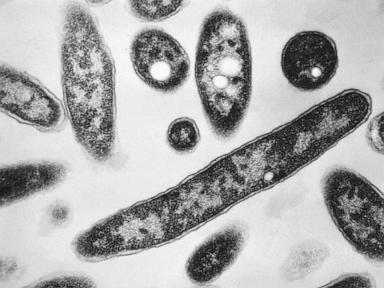
To protect yourself, you need to understand what you're actually fighting. This isn't a bacterium like Salmonella or E. coli. It's Cyclospora cayetanensis, a microscopic, single-celled parasite that targets the small intestine.
The parasite is spread through the fecal-oral route. Basically, a person gets sick by consuming food or water contaminated with microscopic traces of human feces containing the parasite.
It sounds incredibly gross. It is.
But there's an interesting biological twist. Unlike many other stomach bugs, you can't catch cyclosporiasis directly from an infected person. If your spouse gets sick, they won't pass it to you just by shaking your hand or sharing a room. The parasite's eggs (called oocysts) are non-infectious when they first leave the human body. They must spend one to two weeks in the environment—usually in warm, moist soil or water—to mature and become capable of infecting the next host.
This environmental delay is precisely why agricultural fields are the primary source of outbreaks.
If contaminated water is used to irrigate crops, or if farmworkers lack access to proper sanitation facilities, the parasite hitches a ride on fresh produce. Once those oocysts find their way onto a leaf of romaine lettuce or a fresh raspberry, they stick like glue.
Washing your greens helps, but it is not a perfect shield. The outer shell of a Cyclospora oocyst is incredibly tough. Standard chemical sanitizers and chlorine washes used in commercial packaging facilities often fail to kill them.
The Clues Pointing to Your Dinner Plate
Federal and state investigators are currently scrambling to pinpoint the exact food source driving this massive spike. While they haven't issued a formal nationwide recall yet, they have dropped some massive clues.
A major cluster of more than 400 cases has been identified across Michigan, Ohio, West Virginia, and Kentucky. Epidemiological investigations in this region are heavily focused on leafy greens. State and federal investigators are actively looking into whether lettuce distributed to Taco Bell locations in Michigan is a primary culprit.
Historically, these summer spikes are almost always tied to fresh, raw agricultural products. Past U.S. outbreaks have been linked to:
- Bagged salad mixes
- Fresh basil and cilantro
- Sugar snap peas
- Fresh raspberries
Because the U.S. relies heavily on imported produce during certain times of the year, tracking the supply chain back to a specific farm or processing facility is incredibly difficult. By the time health officials identify a cluster of sick people, the contaminated batch of produce has usually been eaten or thrown away.
How to Know If You Have It and What to Tell Your Doctor
How do you know if your stomach ache is just a passing issue or a full-blown parasite infection?
The timeline is the first major clue. Symptoms don't start immediately after eating. The incubation period is typically about one week, though it can range from two days to more than two weeks. If you ate a bad salad last night and woke up sick this morning, it's probably not Cyclospora.
When cyclosporiasis hits, it hits hard. The symptoms include:
- Frequent, highly watery, and sometimes explosive diarrhea
- Severe bloating, gas, and stomach cramps
- Loss of appetite and rapid weight loss
- Persistent low-grade fever and nausea
- Intense, bone-deep fatigue that leaves you exhausted
Without treatment, this isn't a quick three-day illness. The symptoms often follow a relapsing-remitting cycle. You might feel slightly better for a couple of days, only for the watery diarrhea and cramping to return with a vengeance. This cycle can drag on for weeks or even months.
If you go to an urgent care clinic or your primary doctor, you must advocate for yourself.
Standard stool tests, known as routine "ova and parasite" (O&P) exams, often miss Cyclospora entirely. The parasite is incredibly small and difficult to spot under a traditional microscope. You must explicitly ask your doctor to order a specific Cyclospora laboratory test, such as a molecular PCR test or an acid-fast stain.
If you test positive, the treatment is highly specific. Standard food poisoning remedies or over-the-counter anti-diarrheal medications won't cure the infection. The standard treatment is a 7-to-10-day course of the antibiotic trimethoprim-sulfamethoxazole, commonly known as Bactrim or Septra. If you have a sulfa allergy, make sure your doctor knows immediately so they can find an alternative treatment plan.
Concrete Steps to Protect Yourself Right Now
You don't need to completely stop eating fresh vegetables, but you do need to change how you handle your food until this outbreak season winds down in late August.
First, ignore the "pre-washed" or "triple-washed" labels on bagged salads. Wash all fresh produce thoroughly under clean, running tap water. While this won't guarantee 100% removal of the sticky parasite oocysts, vigorous rinsing and scrubbing physical debris off firmer produce significantly reduces your risk.
Second, keep an eye on local health alerts. If you live in the Midwest—particularly Michigan, Ohio, West Virginia, or Kentucky—be highly cautious about eating raw lettuce, fresh cilantro, or unpeeled fruits at restaurants. Opt for cooked meals when dining out in these areas until investigators find the source. Cooking food thoroughly kills the parasite.
Finally, keep a basic food diary if you dine out frequently. Because of the long incubation period, trying to remember what you ate two weeks ago when you suddenly fall ill is nearly impossible. Having a quick record of where you ate can help health department investigators track down contaminated distributors much faster.