The maritime border war between Washington and Tehran just took a bizarre and dangerous turn. For three consecutive nights, U.S. Central Command aircraft and naval vessels hammered targets inside Iran, responding to Iranian strikes on international shipping lanes. But the actual bombs are only half the story.
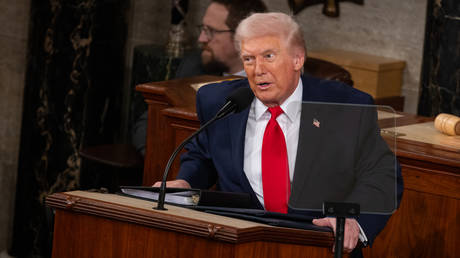
President Donald Trump fundamentally shifted the geometry of this conflict by announcing a renewed naval blockade on Iranian ports. More surprisingly, he announced that the U.S. will begin charging a mandatory 20% toll on all commercial cargo traversing the Strait of Hormuz to pay for American security operations.
If you think this is just standard geopolitical posturing, you're missing the bigger picture. We aren't looking at a temporary skirmish. We're looking at an open attempt by the U.S. to permanently rewrite international maritime law by force, and the global shipping industry is caught right in the crosshairs.
The Escalation Cycle on the Water
This latest explosive round started when an Iranian attack set a commercial container ship ablaze in the strait, leaving a crew member missing. Retaliation was swift. The U.S. military responded by dropping ordnance on roughly 140 Iranian targets, focusing heavily on radar installations, coastal air defense batteries, and Islamic Revolutionary Guard Corps (IRGC) fast-attack boats.
Tehran didn't back down. Instead, they expanded the strike zone, launching missiles and drones at regional targets across Bahrain, Kuwait, Qatar, Jordan, and Oman. While U.S. officials confirm that the majority of those weapons were intercepted with minimal damage to allied infrastructure, the sheer volume of incoming fire forced commercial shipping traffic to a grinding halt.
By Monday afternoon, CENTCOM forces launched their third straight night of strikes. The military goal is simple: degrade Iran's tactical capability to threaten civilian mariners. The political reality, though, is chaotic.
The Guardian of the Strait and the 20 Percent Toll
What separates this moment from previous flare-ups is the economic warfare strategy coming out of the White House. Trump declared that the U.S. will assume the role of the "Guardian of the Hormuz Strait".
Under the newly declared terms, the naval blockade—which originally ran from mid-April to mid-June before a short-lived ceasefire—is officially back on. U.S. warships will actively intercept, divert, or disable any vessel attempting to enter or leave an Iranian port. For everyone else, passage is theoretically open, but it comes with a massive catch: a 20% tariff on cargo values to reimburse the American military for policing the water.
"There is no legal basis through which to introduce mandatory tolls simply to transit through a strait," warned maritime legal experts analyzed by Lloyd's List.
Historically, the U.S. has spent decades defending the principle of free, untaxed navigation in international waterways. Charging a transit fee turns the U.S. Navy into something resembling a commercial security firm. Iran's Foreign Minister, Abbas Araghchi, quickly weaponized this logic, firing back on social media that while providing maritime security should indeed be compensated, Iran has always been the rightful guardian of the waterway.
Why the Interim Peace Deal Collapsed
This entire conflict kicked off back in February following surprise U.S. and Israeli airstrikes that killed Iran's Supreme Leader, Ali Khamenei. We are currently supposed to be halfway through a 60-day interim peace deal designed to negotiate a permanent end to the war. Instead, that framework is effectively dead.
Iran tried to use its geographical leverage to force concessions, leaning heavily on neighboring Oman to co-manage the strait and squeeze Western shipping lines. Tehran's negotiators assumed the U.S. wouldn't risk a full-scale energy shock. They guessed wrong.
Former CENTCOM Commander Gen. Frank McKenzie noted that the U.S. absolutely has the raw operational capacity to seize complete physical control of the waterway if necessary. By opting for a total blockade and a unilateral shipping tax, the administration is squeezing Iran's economy—which reportedly lost $500 million a day during the spring blockade—while daring international allies and adversaries alike to challenge American naval dominance.
Realities for Global Supply Chains
Brent crude oil prices jumped more than 3% immediately following the toll announcement, but the real pain won't just be felt at the gas pump. A 20% fee on cargo transit through a choke point that carries a fifth of the world's petroleum is a massive inflationary shock.
For commercial mariners currently operating in the Gulf of Oman, standard operating procedures are out the window. CENTCOM has instructed all commercial traffic to monitor bridge-to-bridge channel 16 and await formal routing directives.
If you run a logistics network or rely on Middle Eastern trade routes, expect immediate spikes in maritime insurance premiums. Shipping firms are already drawing up alternate routes around the Cape of Good Hope, bypassing the Middle East entirely. It adds weeks to transit times, but it beats paying a 20% premium or risking a drone strike in a war zone. The era of predictable, open global transit through the Persian Gulf is officially on pause.