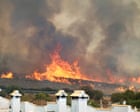
Twelve people are dead in Almería, and honestly, the terrifying speed of the Los Gallardos wildfire on Thursday shouldn't surprise anyone who follows climate science.
The blaze ripped through 3,800 hectares in Andalucía, trapping people in their cars as they tried to escape the ravine-scarred terrain of the Sierra de Bédar. Another 23 people remain missing.
It looks like a fallen power line sparked the fire, but blaming a single wire misses the entire point. The real killer is a toxic recipe of weather extremes, overgrown landscapes, and communities left totally exposed.
The Perfect Match for a Tinderbox
We need to talk about how the landscape became so explosive. This past winter and spring brought unusual amounts of rain to southern Spain. That sounds like a good thing, but it isn't. Rain triggers massive plant growth. When a brutal summer heatwave followed, with temperatures hovering near 42°C (107.6°F) after days of intense heat, all that fresh vegetation dried out completely.
It turned into fine, hyper-flammable fuel.
"In this area, just a few weeks without rain during the summer are enough for fine fuels to reach very high levels of flammability," notes Gustavo Saiz, a senior scientist at the National Institute for Agricultural and Food Research and Technology.
When you pair that dry brush with ferocious winds, a spark doesn't just start a fire. It creates an uncontainable inferno. Fire scientist Guillermo Rein from Imperial College London pointed out that the Los Gallardos wildfire faced the worst possible combination: an ignition point in a vast landscape of bone-dry vegetation, heavy winds, and a community caught off guard. 150 firefighters and the Military Emergencies Unit stood little chance of stopping the initial run toward homes.
The Emptying of Rural Spain
There's a critical piece of the puzzle most people overlook. It isn't just about rising thermometers; it's about who left the land behind.
For decades, young people have abandoned rural farms for jobs in big cities, a phenomenon locals call España Vaciada (Emptied Spain). When small farms and livestock disappear, nobody cleans the brush or grazes the hillsides. The forest grows unchecked, packing dense layers of fuel right next to rural towns.
Juan Picos, a forest fire scientist at the University of Vigo, stresses that the inertia of land abandonment and climate change is immense.
Worse, historical firefighting policies focused heavily on immediate fire suppression. By putting out every single small fire instantly, we prevented the natural clearing of undergrowth. Now, the fuels have built up so much that when a fire breaches containment, it transforms into an unstoppable mega-fire.
Smoke is the Silent Killer
When we think of wildfire casualties, we picture flames. But the data shows smoke is far more lethal.
The thick black smoke hanging over southern Spain carries a mixture of toxic particles that scar lungs and trigger cardiovascular failure. Last year's record-breaking fires across the Iberian peninsula killed 14 people directly, but a recent preprint study revealed that the resulting toxic smoke caused an estimated 2,000 early deaths across the region.
Global numbers are even worse. A 2024 study published in The Lancet Planetary Health found that wildfire smoke kills roughly 1.53 million people globally every single year. Air pollution travels across oceans, meaning a severe burning season in Spain or Canada compromises air quality thousands of miles away.
What Needs to Change Right Now
We can't keep acting shocked when these disasters happen. It's like climbing a mountain and feeling surprised that you're higher up than you were yesterday. If we keep ignoring the warning signs, tomorrow will only look worse.
If you live in or travel to fire-prone regions in southern Europe, relying on emergency services isn't enough. You need to take active steps to protect your property and your life.
- Create a defensible space: Clear all dead vegetation, dry leaves, and pine needles within 10 meters of your home. Cut back overhanging tree branches.
- Audit your home's weak points: Clean out gutters where embers can land and ignite the roof. Install fine wire mesh over vents to keep sparks out.
- Have an aggressive evacuation plan: Never wait for an official order if you see smoke or smell fire. The victims in Almería were caught in their cars because the fire moved faster than the evacuation orders. Know at least two exit routes out of your town.
- Track regional fire risks: Keep tabs on live mapping systems like the European Forest Fire Information System (EFFIS) during high-heat alerts.
The reality of 2026 is clear. We are dealing with faster, hotter, and unpredictable blazes. Waiting for a fire to start before deciding what to do is a fatal mistake.