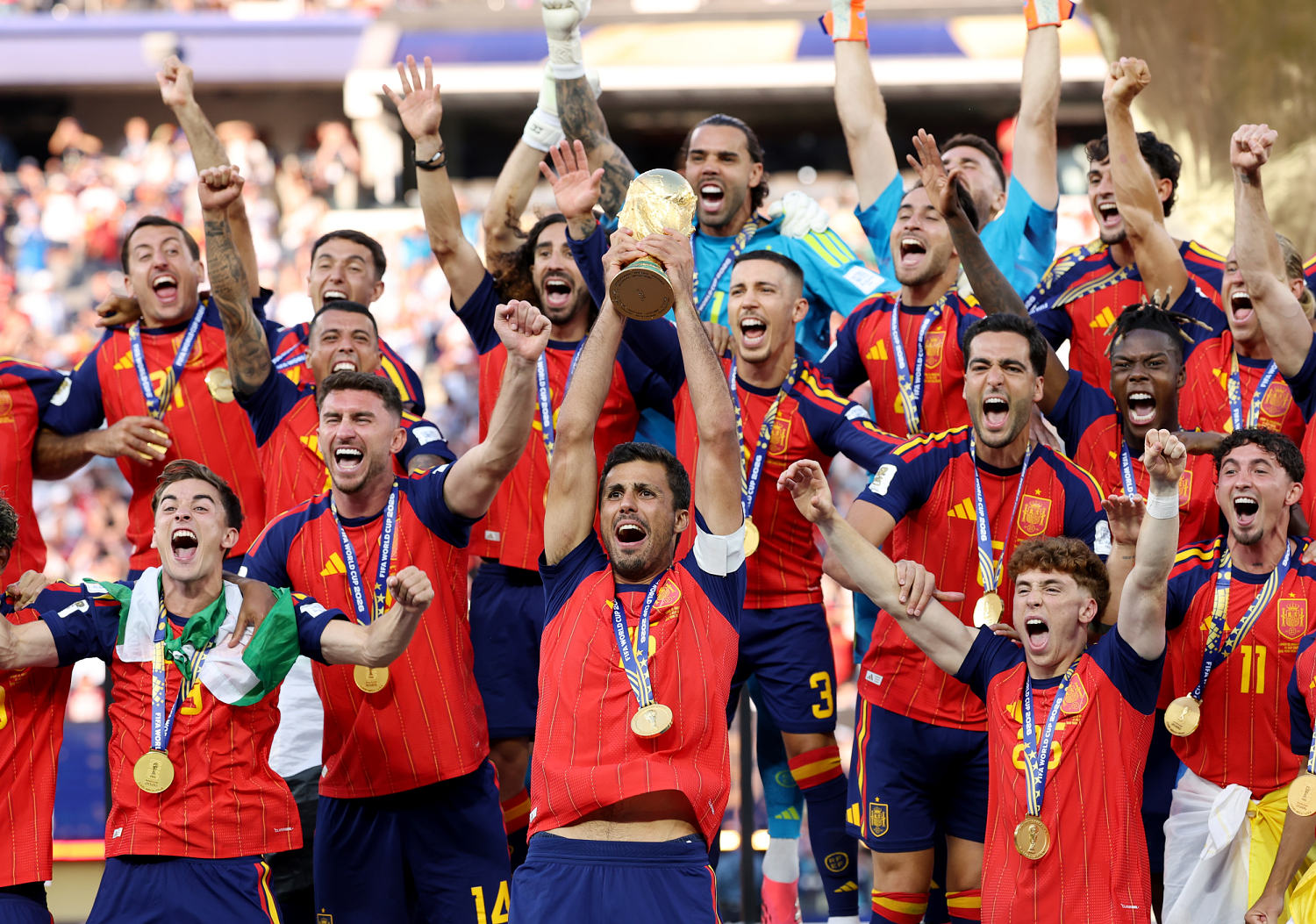
Spain is back on top of world football, but getting here wasn't a fluke or a simple repetition of past success.
When referee whistles signaled the end of the World Cup final, Spanish players collapsed onto the grass in sheer exhilaration. Fans across Madrid, Barcelona, and Valencia poured into the streets, setting off flares and chanting well into the morning hours. The national team didn't just win a trophy. They re-established a dominant footballing philosophy that many critics claimed was dead.
If you watched Spain early in tournament play, you saw a squad operating with scary precision. Their passing wasn't just safe possession for the sake of padding stats. It was deliberate, aggressive, and designed to wear opponents down until structural cracks appeared.
To understand why Spain rules world soccer today, you have to look beyond the immediate glory of the final whistle. The story spans youth academies, tactical shifts, and a willingness to abandon outdated dogmas while keeping what actually wins games.
The end of boring possession and the birth of direct control
For years after their legendary 2010 run, Spanish soccer fell into a trap. Teams took tiki-taka to an extreme, stringing together 800 passes a game without ever taking a shot. It was possession as a defensive crutch rather than an attacking weapon. Opponents figured out that if you sat deep in a low block, Spain would pass themselves into a corner and get caught on the counter.
That era is dead.
Today's Spanish side retains technical brilliance, but they pair it with vertical speed and high pressing. When they win the ball back in the middle third, they don't immediately cycle it back to the central defenders. They look forward. They look for space between the lines, using rapid wingers and dynamic midfielders to break defenses before they settle.
This tactical evolution created a team that can beat you in multiple ways. If you sit back, they'll dissect you with short combinations. If you press high, their goalkeeper and backline can clip balls over your first line of defense to run into space.
How La Masia and modern academies retooled their blueprint
You can't discuss Spanish football without talking about grass-roots development. La Masia gets most of the headlines, but academies at Athletic Bilbao, Real Sociedad, and Villarreal have been equally vital in shaping the modern Spanish player.
Years ago, scouts looked primarily for small, agile playmakers who could keep the ball in phone booths. Today, Spanish academies produce players who combine elite technical comfort with serious athleticism and tactical intelligence.
Consider the modern Spanish midfielder. They still possess that signature first touch where the ball drops dead at their feet. But now, they're running 12 kilometers a game, winning physical duels, and pressing relentless for 90 minutes.
- Speed of thought: Players learn to scan their surroundings three times before receiving the ball.
- Positional flexibility: Midfielders can slide to the wing or drop into defense without breaking team structure.
- Physical preparation: Modern sports science ensures younger players build functional strength early on.
This holistic development path creates tactical chameleons. When injuries hit during a tournament, the manager doesn't need to alter the game plan because the replacement player raised in the same system speaks the exact same tactical language.
Managing high-stakes pressure when everyone expects perfection
Winning when you're an underdog is hard. Winning when the entire country expects nothing short of a trophy is a completely different mental burden.
During the tournament, Spain faced moments where things almost fell apart. A tricky group stage match, an early goal conceded in the knockout rounds, or a fierce penalty shootout can destroy a squad's confidence. In past tournaments, Spanish teams collapsed under that psychological weight.
What changed? Mentality.
The current squad blends veteran calm with youthful fearlessness. Young talent coming through the ranks hasn't carried the trauma of past failures. They play with a freedom that infectious, while older stars keep the team grounded during chaotic moments.
When a team stops playing afraid to lose and starts playing hungry to win, they become almost impossible to break down.
What other national teams are getting wrong about tactical systems
Look at how other traditional giants approach international tournaments. Many load up on elite individual talents and hope those stars figure things out on the pitch. It creates flashy moments, but when they meet a well-drilled unit, the star-power approach falls apart.
Spain takes the opposite approach. The system is king.
That doesn't mean individual brilliance isn't allowed. It means individual brilliance is amplified because every player knows exactly where their teammates will be without looking up.
When you analyze how Spain sets up out of possession, it's a masterclass in spatial control:
- The immediate counter-press: The moment Spain loses the ball, the three nearest players immediately swarm the ball-carrier.
- Denying central lanes: They force opponents wide toward the touchlines where the pitch acts as an extra defender.
- High defensive line: The backline stays high, condensing the pitch to 30 yards and suffocating opposition playmakers.
If an opponent manages to bypass that initial press, Spain doesn't panic. They drop back into a compact shape and reset. It forces rivals into low-percentage long balls and crosses that Spanish defenders happily deal with all night.
The numbers that prove this wasn't an accident
Stats don't tell the whole story, but they definitely paint a clear picture of dominance. Throughout their championship campaign, Spain led almost every major statistical category that correlates with winning football.
They averaged over 60 percent possession, but more importantly, over 40 percent of that possession occurred in the opponent's half. They created more high-quality scoring chances per 90 minutes than any other nation in the tournament while allowing among the fewest shots on target.
Their defensive efficiency was equally striking. By keeping the ball in opponent turf, Spain cut down the time their defense spent under threat. The best way to prevent goals isn't having a great goalkeeper—it's ensuring the opposition rarely gets near your penalty box.
How to apply these tactical principles to your own team
Whether you're coaching a local youth side or managing an amateur team, Spain's resurgence offers clear lessons you can use on the training pitch right now.
First, stop prioritizing raw physical power over decision-making during early player development. A player who reads the game half a second faster than everyone else will beat a faster athlete almost every time.
Second, train under tight spatial constraints. Spain players excel because they grow up playing in tiny spaces where a heavy touch means losing the ball. Set up small-sided games with limited touches to force fast thinking.
Third, build a clear playing identity and stick to it. Don't change your entire tactical setup every week based on who you're playing. Refine your own strengths until opponents have to worry about adapting to you.
Study match film from Spain's knockout games. Watch off-ball movement from central midfielders. Notice how wingers stretch the pitch to open lanes inside. Take those patterns directly into your next training session and run them until they become second nature.