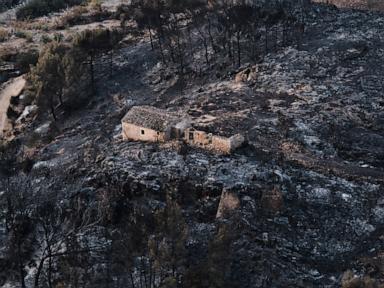
The tragic news out of Almería is a brutal reminder of how fast a crisis can outrun human instinct. As hundreds of firefighters continue to fight the wildfire in southern Spain that killed at least 12 people, a horrifying pattern has emerged from the ashes of Los Gallardos and Bédar. Most of the victims didn't die because they were trapped deep inside their homes. They died because they panicked and tried to run.
Emergency services confirmed that a shocking number of the fatalities occurred when residents ignored shelter-in-place instructions, abandoned their vehicles, or tried to forge their own escape routes through the brush. The fire, which ignited near the Sierra de Los Filabres mountains during a punishing heatwave, tore through more than 25 square miles of forest and agricultural land at a terrifying speed of 100 meters per minute.
When an inferno moves that fast, your survival instincts can easily become your death warrant. The disaster exposes a massive disconnect between official emergency protocols and how real people react when the sky turns black.
The Anatomy of the Almería Inferno
The blaze started late on a Thursday night in a semi-arid region packed with scattered homes, olive groves, and dense Mediterranean scrubland. Within hours, it transformed into a monster. By Friday, the Andalusian regional emergency services had deployed 150 firefighters alongside 220 soldiers from Spain’s Military Emergency Unit, backed by water-dropping helicopters and fixed-wing aircraft.
Even with light winds and a brief overnight spike in humidity helping crews establish controlled burn perimeters, the sheer scale of the destruction remains staggering. The burned area is roughly the size of Manhattan. The ground was already bone-dry from weeks of temperatures pushing past 40°C.
The vegetation in this part of Andalusia consists heavily of esparto grass and dry maritime brush. In extreme heat, this acts as a volatile fuel source. Justice Minister Félix Bolaños directly linked the ferocity of the blaze to the broader climate emergency gripping the Iberian Peninsula. When you combine tinder-dry soil with temperatures hitting 106°F, it takes nothing more than a spark—potentially from a collapsed power line, according to initial witness reports—to create a disaster that emergency services simply cannot contain on the first day.
The Lethal Trap of Fleeing on Foot
The true tragedy of the Almería fire lies in how the victims died. Regional authorities noted that the majority of those who lost their lives were foreign nationals, including a significant community of British expatriates and retirees who call the hills around Bédar home.
The grim details from the recovery operation tell a vital story about evacuation psychology:
- Seven victims died on foot after panicked decisions caused them to abandon their cars.
- Four victims, believed to be British citizens, perished together inside a right-hand-drive vehicle that was overtaken by the flames on a narrow road.
- Multiple individuals died after attempting to escape down a dry riverbed, which acted as a natural chimney for the heat and smoke, turning a supposed exit route into a fatal trap.
Contrast these tragedies with the harrowing escape of Jeffrey and Christine Kember, a couple living in a farmhouse in the Los Pinos area. They were alerted by emergency sirens while watching television. With the flames visibly advancing on their property, they leaped into separate cars. Jeffrey described driving directly through active walls of fire, unable to communicate with his wife because she lacked a phone. He survived by refusing to stop, eventually popping out of the smoke into clear sunshine.
The Kembers got incredibly lucky. Others who panicked, stopped their vehicles, or tried to run through the brush were overwhelmed by smoke inhalation and radiant heat within seconds.
Why Our Instincts Fail in a Fast Moving Fire
When you see flames approaching your home, the primal urge to run is almost impossible to suppress. But wildfire experts have known for decades that fleeing late is the single most dangerous thing you can do.
When a fire moves at 100 meters per minute, roads clog instantly. Thick, black smoke reduces visibility to absolute zero, causing accidents on winding mountain roads. The air temperature outside an air-conditioned vehicle can jump by hundreds of degrees in an instant.
If you get out of your car to run, your lungs are scorched by superheated gas before the flames even touch you. Spain’s emergency management systems frequently issue shelter-in-place orders for a reason. Modern concrete and brick homes in southern Europe can often withstand a passing fire front, protecting the occupants inside from radiant heat while the worst of the blaze roars past outside.
Leaving a structural shelter to step out onto a hillside covered in burning esparto grass is a gamble with impossible odds. The regional government had proactively evacuated 1,448 people from 11 distinct zones using designated, cleared routes. The people who died were almost exclusively those who broke protocol or waited too long to make their move.
The Mediterranean Powder Keg is Expanding
This isn't an isolated incident or a streak of bad luck. Europe is currently the fastest-warming continent on the planet, with average temperatures rising at double the global rate since the 1980s. Data from the European Union’s Copernicus Climate Change Service confirms that western Europe just endured its hottest June on record.
The resulting environmental conditions are brutal:
- A wet spring creates a sudden burst of fine vegetation growth.
- Consecutive, early-summer heatwaves completely desiccate that new growth.
- The soil moisture drops to near-zero levels by early July.
- High winds and low humidity create the classic fire triangle.
Spain is painfully familiar with this cycle. The previous fire season wiped out more than 971,000 acres across the country. While the Spanish government moved its annual fire prevention campaigns forward to January to adapt to the changing climate, buying more planes and deployment drones isn't enough when the underlying terrain is fundamentally altered. The semi-arid landscapes of southern Spain are becoming highly combustible zones where traditional seasonal assumptions no longer apply.
How to Survive a Fast Approaching Wildfire
If you live in or travel through fire-prone regions like southern Europe, the American West, or Australia, you can't rely on luck. You need an absolute blueprint for action before the smoke appears on the horizon.
Establish a Decisive Trigger Point
Never wait for an official evacuation order if you can see or smell smoke. Make a firm agreement with your household: if a fire is reported within a specific radius, you leave immediately. If you miss that window, you must commit to sheltering in place. The worst possible decision is leaving when the roads are already compromised.
Prepare a Defensible Structure
If you own property in a high-risk area, clear all dry brush, grass, and woodpiles at least 30 meters away from your home. Replace wooden shutters with fire-resistant materials. Keep your gutters completely clear of dead leaves. These small steps can keep a house standing even if the fire front sweeps directly over it.
Pack a Go Bag and Keep it in the Vehicle
Keep essential documents, cash, structural smoke masks, and primary communication devices in a single bag near your front door. If you have to evacuate, you shouldn't spend a single minute searching for items. Ensure your vehicle always has at least half a tank of fuel throughout the peak summer months.
Know the Survival Protocol if Trapped
If the flames cut off your escape route and you are forced to shelter inside your home, close all windows and doors but leave them unlocked for emergency crews. Shut off gas lines and fill bathtubs and sinks with water. Stay away from exterior walls and remain on the floor to avoid the worst of the smoke inhalation.
If you are trapped in a vehicle, park away from heavy vegetation, turn on all your headlights, close the vents, and lie on the floorboards covered by a blanket. Do not jump out of the car to run. The metal shell of the vehicle provides vastly more protection against lethal radiant heat than your clothing ever will.
The tragedy in Almería won't be the last wildfire disaster of the decade. As climate realities shift, surviving these events requires shifting our mindset from frantic flight to disciplined, immediate execution.