Washington doesn't stop for grief, but it sure slows down when power shifts overnight.
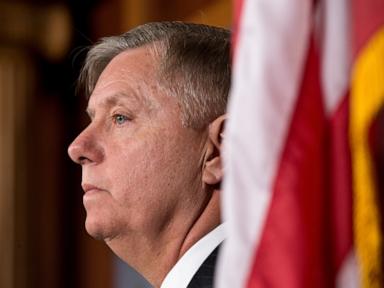
The sudden death of South Carolina Senator Lindsey Graham on July 11, 2026, has completely upended a chamber that was already hanging by a thread. Running on a paper-thin Republican majority, the Senate is returning to a chaotic legislative calendar with an empty seat, a missing leader, and an agenda that looks completely broken.
Graham died from a sudden aortic dissection just hours after returning from a high-stakes diplomatic trip to Ukraine. He was 71. His passing leaves a massive power vacuum in conservative foreign policy and halts several key domestic fights that Donald Trump wanted won by the end of the summer.
If you think this is just standard political mourning, you're missing the bigger picture. This creates an immediate crisis of math and momentum.
The Immediate Numbers Crisis Facing Senate Republicans
Let's look at the cold math governing the upper chamber right now. Before Graham's death, Republicans held a slim 53-47 majority. That looks comfortable on paper. It isn't in reality.
Former Majority Leader Mitch McConnell is currently away from the chamber, recovering from a severe fall that resulted in a hospitalization for pneumonia. With McConnell out and Graham gone, the active Republican voting bloc shrinks immediately. Every single piece of party-line legislation is now in severe jeopardy.
South Carolina Governor Henry McMaster will move quickly to appoint a temporary Republican replacement to hold the seat until January 2027. That will bring the head count back up. The problem is that a freshman appointee doesn't carry the weight, the relationships, or the institutional knowledge of a twenty-year veteran. You can't just drop a newcomer into a high-stakes legislative battle and expect them to whip votes like an old pro.
The timing couldn't be worse for the White House. This week, the Senate Judiciary Committee is scheduled to hold confirmation hearings for acting Attorney General Todd Blanche. Trump desperately wants Blanche confirmed to lead the Department of Justice. Graham was positioned to be Blanche's lead defender and strategist during what promises to be a brutal committee hearing. Without Graham anchoring the defense, Democrats on the committee have a much wider path to stall or block the nomination.
The South Carolina Election Mess and the Looming Legal Battles
The political fallout back in Graham's home state is a logistical nightmare. Graham had already secured the Republican nomination for a fifth term during the June primaries. He was widely expected to coast to an easy victory in November against his Democratic challenger, Dr. Annie Andrews.
His death instantly turns a safe Republican lock into an open-seat scramble.
Under South Carolina state election law, the state must pull together a rapid sprint primary election to select a new Republican nominee for the November ballot. The tentative schedule is dizzying. State officials are looking at a candidate filing period opening from July 21 to July 28, a special primary election on August 11, and a potential runoff election on August 25.
That tight timeline sets up a massive collision course with federal law. The federal Uniformed and Overseas Citizens Absentee Voting Act requires states to send out absentee ballots to military personnel and citizens living abroad at least 45 days before a general election. Compressing a filing period, a primary, and a runoff into a few weeks makes it almost impossible to meet those federal deadlines without triggering lawsuits.
The Scramble for the Ballot
Potential Republican contenders are already calculating their moves, even as they offer public condolences.
- Representative Ralph Norman: The prominent House Freedom Caucus member has long eyed the upper chamber. He admitted he's weighing a potential run but noted the tragic circumstances make the decision heavy. Norman represents the hard-right flank, and his entry would immediately draw national money.
- Lieutenant Governor Pamela Evette: A close ally of both Governor McMaster and Donald Trump, Evette has an existing campaign infrastructure that could be repurposed in days.
- Mark Lynch: Having just lost to Graham in the June primary after pouring significant personal wealth into his campaign, Lynch has expressed renewed interest in the open seat.
National Democratic strategists are quietly recalculating the entire Senate map. South Carolina hasn't elected a Democrat statewide in more than two decades, and nobody expected this seat to be competitive. Incumbency is a massive shield. Now that the shield is gone, national groups might pour millions into supporting Andrews, forcing Republicans to spend heavily to defend what should have been a safe zone. If a messy, expensive Republican primary runoff drags out through late August, Andrews gets a clear runway to build cash and momentum.
A Massive Void in Conservative Foreign Policy
You cannot talk about Lindsey Graham without talking about American foreign policy. He loved the international stage, and he loved the leverage it gave him. Alongside the late John McCain and Joe Lieberman, Graham was part of the self-styled "Three Amigos" who pushed for an aggressive, interventionist American footprint across the globe.
His final hours reflected exactly how he lived. He died shortly after returning from Kyiv, where he held a high-profile meeting with Ukrainian President Volodymyr Zelenskyy. It was his tenth wartime visit to the country. Graham was one of the few remaining traditional hawks in a Republican party that has increasingly turned toward isolationism. He consistently broke with the populist wing of his party to demand billions in military aid for Ukraine and Israel.
Zelenskyy expressed deep grief over the loss, calling Graham a true defender of freedom. Israeli Prime Minister Benjamin Netanyahu echoed those sentiments, noting that Israel had lost one of its fiercest allies in Washington.
The Fate of the Sanctions Bill and Global Aid
Right now, a massive White House request for emergency defense funding to support operations amid the ongoing Iran war is heading to the Senate floor. Graham was supposed to be the main salesman for that package. He had the credibility to look isolationist Republicans in the eye and tell them why the spending mattered, and he had the cross-aisle relationships to pull moderate Democrats along.
His absence leaves several major initiatives in limbo:
- The Blumenthal-Graham Sanctions Bill: Graham had spent over a year working with Democratic Senator Richard Blumenthal on a sweeping sanctions package targeting foreign adversaries.
- The Defense Appropriations Fight: As the leader of the appropriations subcommittee overseeing foreign policy spending, Graham controlled the purse strings. Without his leadership, the subcommittee faces a vacuum right when global conflicts demand swift funding decisions.
Democratic Senator Jeanne Shaheen has already called on Senate leadership to pass the Blumenthal sanctions bill immediately as a tribute to Graham's legacy. Whether that sentiment translates into actual votes remains to be seen. Without Graham's constant badgering of his colleagues, the momentum could dry up fast.
The Domestic Gridlock and the Budget Reconciliation Problem
Beyond foreign policy, Graham held the gavel of the powerful Senate Budget Committee. This put him directly in charge of the party's plan to muscle through the Save America Act.
Trump spoke with Graham on the phone just hours before the senator's death, explicitly discussing the legislative push for this bill. The administration's plan relied on using the complicated budget reconciliation process to pass parts of a national voter ID bill. Budget reconciliation is a powerful tool because it allows certain financial and economic bills to bypass the 60-vote filibuster threshold and pass with a simple majority.
But reconciliation is also a procedural minefield. It requires meticulous scheduling, intense committee cooperation, and flawless attendance.
With Graham gone, the Budget Committee loses its director. A new chairperson must be appointed, staff must be reorganized, and the strategy must be rebuilt from scratch. Every week spent restructuring the committee is a week lost on the legislative calendar. With the 2026 midterm elections fast approaching, time is the one commodity Senate Republicans don't have.
The Path Forward This Week
Washington doesn't give you time to process a shock. The Senate floor opens today, and the wheels are already turning. Here is what needs to happen immediately to keep the government functioning.
First, Governor McMaster must announce his interim appointment to fill the vacancy. Expect this announcement within forty-eight hours. The longer the seat sits empty, the higher the risk for Republican floor votes.
Second, Senate leadership must temporarily assign a new head to the Budget Committee to keep the reconciliation process from collapsing entirely.
Finally, the South Carolina State Election Commission must issue a formal determination on the primary timeline. They need to figure out how to navigate the conflict between their state-mandated August primary dates and federal overseas voting protections. Expect immediate legal challenges from both parties the moment that timeline is finalized.
The Senate wanted to spend this week confirming a new Attorney General and passing defense funding. Instead, they are staring down a messy combination of constitutional procedures, election law fights, and a completely fractured legislative strategy. The next few days will prove just how much the institution relied on the guy from South Carolina to keep the gears moving.