Most international schools in Hong Kong love to brag about their perfect test scores. They plaster top marks on massive billboards and flood parent newsletters with percentages. But high grades alone don’t make someone a great human being. They don't teach a kid how to look outside their own comfortable bubble or how to help someone who can't offer anything in return.
That is the exact trap Christian Alliance International School manages to avoid.
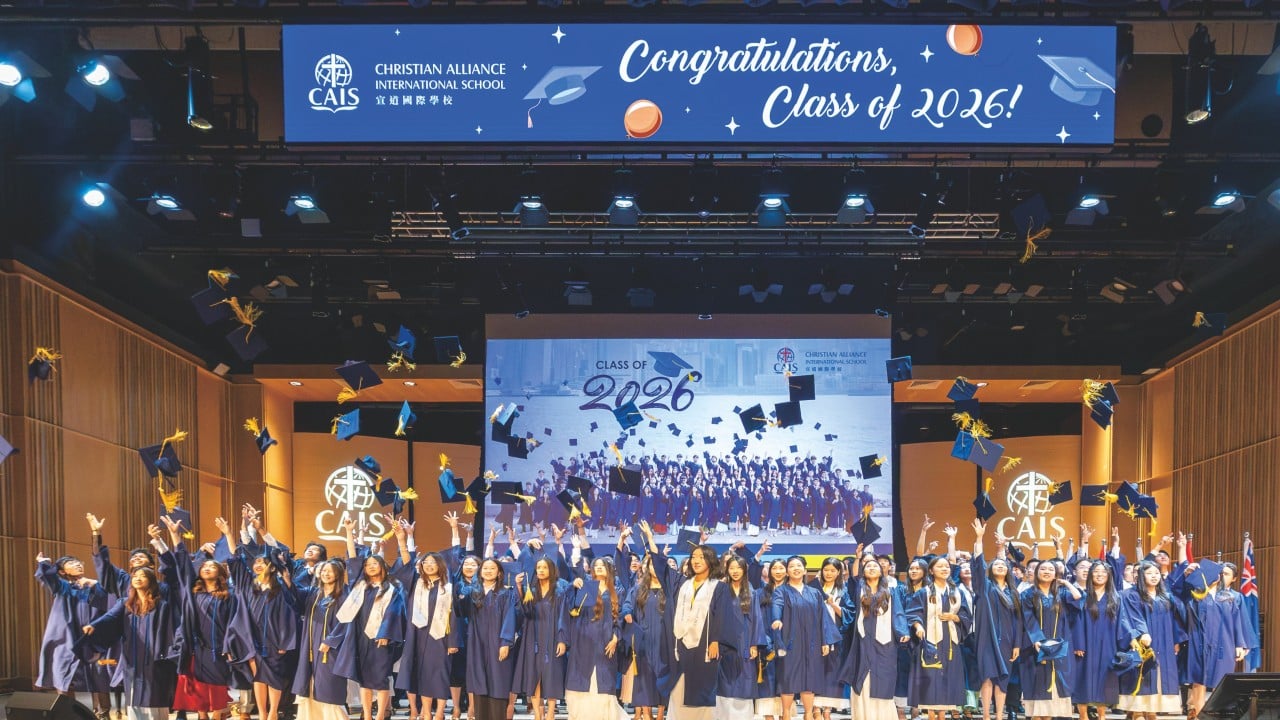
The school recently wrapped up its academic year with its biggest group of graduating students yet. The Class of 2026 didn't just smash previous academic records for the school. They also showed exactly what happens when you stop treating children like exam-taking machines and start treating them as whole people. If you look at where these graduates are heading, you'll see paths ranging from medicine and civil engineering to international relations, fine arts, and music.
But the real magic isn’t just in the university acceptance letters. It is in how they got there.
The Triple Academic Track Myth
Many parents assume a school has to choose one curriculum and stick to it. They think mixing systems causes confusion or waters down the quality. That is a total misconception.
Christian Alliance International School operates with three separate academic options under one roof. They offer the Canadian Alberta curriculum, Advanced Placement courses, and the International Baccalaureate Diploma Programme.
[Curriculum Track Options at CAIS]
├── Alberta (Canada) Curriculum (Base diploma pathway)
├── Advanced Placement (AP) Courses (Targeted university-level rigor)
└── International Baccalaureate (IB) Diploma Programme (Comprehensive global framework)
This triple-track approach gives families rare flexibility. Some kids thrive under the steady, continuous assessment of the Alberta system. Others want the hyper-focused, subject-specific challenge of AP courses to earn university credits early. Then you have those who prefer the deep research and broad requirements of the IB diploma.
Offering all three isn't just about giving people options. It creates an environment where different types of intelligence are valued equally. A student brilliant at creative arts isn't forced into the exact same rigid mold as a math prodigy. They can each pick the framework that lets them shine without feeling left behind.
Real Growth Beyond the Numbers
Head of School Daniel Schick noted that this year’s group achieved the strongest academic results in the history of the campus. This is the fourth group of IB graduates the school has turned out, and their average scores have risen every single year.
Steady growth like that doesn’t happen by accident. It happens because the school focuses heavily on relationships and spiritual foundation alongside textbooks. When students feel safe and supported by the adults around them, their stress levels drop. When their stress levels drop, their performance naturally climbs.
Take a look at one specific milestone from this year's Alberta Diploma graduates. One of them secured a spot in the highly selective Dual Undergraduate Degree Programme in Economics run jointly by the Chinese University of Hong Kong and Tsinghua University.
This isn't your standard exchange program. Students alternate their studies directly between CUHK and Tsinghua University, which are two of the most prestigious academic institutions across Asia. When they graduate, they walk away with two distinct bachelor's degrees. It takes immense drive and sharp critical thinking to even get a foot in the door of a program like that, let alone survive its selection process.
The Valedictorian Who Didn't Focus on Trophies
Look at Hugo, the Alberta curriculum valedictorian for the Class of 2026. On paper, his achievements look intimidating. He co-founded the Chinese Debate Club. He led the school International Chess Club. He successfully conquered AP Calculus BC, which is notoriously one of the toughest advanced courses a high school student can take.
You might look at that resume and expect a teenager completely obsessed with his own GPA. But you would be wrong.
During his valedictorian graduation speech, Hugo stood in front of his peers and told them something unexpected. He explicitly reminded them that at the end of the day, what matters most isn't your trophies, your grades, or the name of the university you attend. What actually matters is the people around you who can lend a shoulder when you need it.
That mindset comes directly from how Hugo spent his time outside the classroom. For over twelve years, he has quietly volunteered at a rural orphanage in Xi'an, China. He didn't just show up for a weekend photo opportunity to pad his college applications. He spent over a decade supporting orphaned children and actively working to build sustainable, long-term opportunities for that local community.
Service is Not an Extracurricular Activity
Most schools treat volunteer work as a box to check. They require twenty hours of community service, sign a form, and never speak of it again. That approach is broken. It teaches kids that helping others is a chore to complete for a reward.
At this campus, service runs through everything they do. They don't treat it as a side project. They weave it into the school culture through several specific channels.
Discovery Days
Every year, high school students step away from regular classes to participate in local and overseas service projects. They get their hands dirty, see how other communities live, and tackle real-world problems firsthand.
Student Ambassadors
This program puts students in genuine leadership roles where they have to look out for others, welcome new families, and run community events. It forces them to think about hospitality and leadership from a young age.
Student-Led Clubs
Instead of teachers handing down volunteer assignments, students have to notice a need, design a solution, and organize their peers to fix it. This is how you build actual initiative.
When you give teenagers that much autonomy, they stop waiting for permission to do good. They just go out and do it.
The True Meaning of a Christ-Centered Campus
Christian Alliance International School was established in 2017 with a clear spiritual foundation. For some people, the idea of a faith-based education sounds restrictive. They worry it means sheltering kids from the real world or focusing entirely on dogmatic rules.
The reality here looks completely different. The school defines true success as something that goes much deeper than visible results or material gains. They aren't just trying to produce rich executives or high-flying lawyers who care only about their own bank accounts.
Daniel Schick made it clear that while the faculty members are proud of the exceptional academic marks, they are even more proud of the character of the young people behind those scores. The goal is to send graduates into the world who possess equal measures of competence, confidence, and integrity.
The school explicitly states its core vision is to be the best for Hong Kong, for the world, and for Christ. Notice that wording carefully. It doesn't say to be the best in the world. It says to be the best for the world. That minor shift in language changes everything. It turns education from a selfish pursuit of personal status into a tool for broad, compassionate service to humanity.
Practical Next Steps for Hong Kong Parents
If you are trying to choose the right international environment for your child, stop looking exclusively at average exam numbers. Those charts don't tell you if a school will support your child when they hit a wall.
Here is what you should do instead when evaluating options.
First, look closely at the curriculum flexibility. Ask if the school forces every single student down the exact same path, or if they offer different tracks to match different learning styles.
Second, examine their service programs. Find out if the community work is driven by the students themselves or if it is just a top-down requirement managed by staff. Look for long-term commitments rather than quick trips.
Third, look at the culture of the student body. Watch how the older students talk about success. Do they talk exclusively about their future salaries and university rankings, or do they talk about community, relationships, and supporting each other through tough times?
The Class of 2026 proved that you don't have to sacrifice top-tier academic success to raise kind, grounded, and deeply compassionate human beings. You just have to build a culture that values the student far more than the scorecard.