You are driving down the highway in Maui, past the beaches and the palm trees, when a massive sign slaps you in the face. It reads, in bold and completely unapologetic letters, "Very Rich Dead People's Things For Sale."
It sounds like a joke. It isn't.
Tucked away in an industrial pocket of Kahului near the airport, and with a secondary footprint down in Kihei, sits a massive retail warehouse overflowing with the leftover luxuries of the ultra-wealthy. This is the brainchild of David Ross, an 83-year-old veteran of the trade who grew up around his family's pawn shops in San Francisco. Five years ago, Ross decided to drop the store's original, polite name—Endangered Pieces—and call his inventory exactly what it was.
His business tripled overnight. Everyone wanted to see what the wealthy left behind.
The Two Dollar Filter and the Chaos Inside
If you want to walk into this monument of high-end hoarding, you have to hand over a two-dollar admission fee. Some tourists get furious about paying to enter a retail store. Ross doesn't care. He even posted a sign at the entrance that tells people to kindly shop elsewhere if two bucks is a problem. He likes to say he will happily pay certain people two dollars just to stay out.
The fee turns the warehouse into a pseudo-museum. It keeps out the casual loiterers who just want to blast the air conditioning without any intention of buying a 500-pound marble statue.
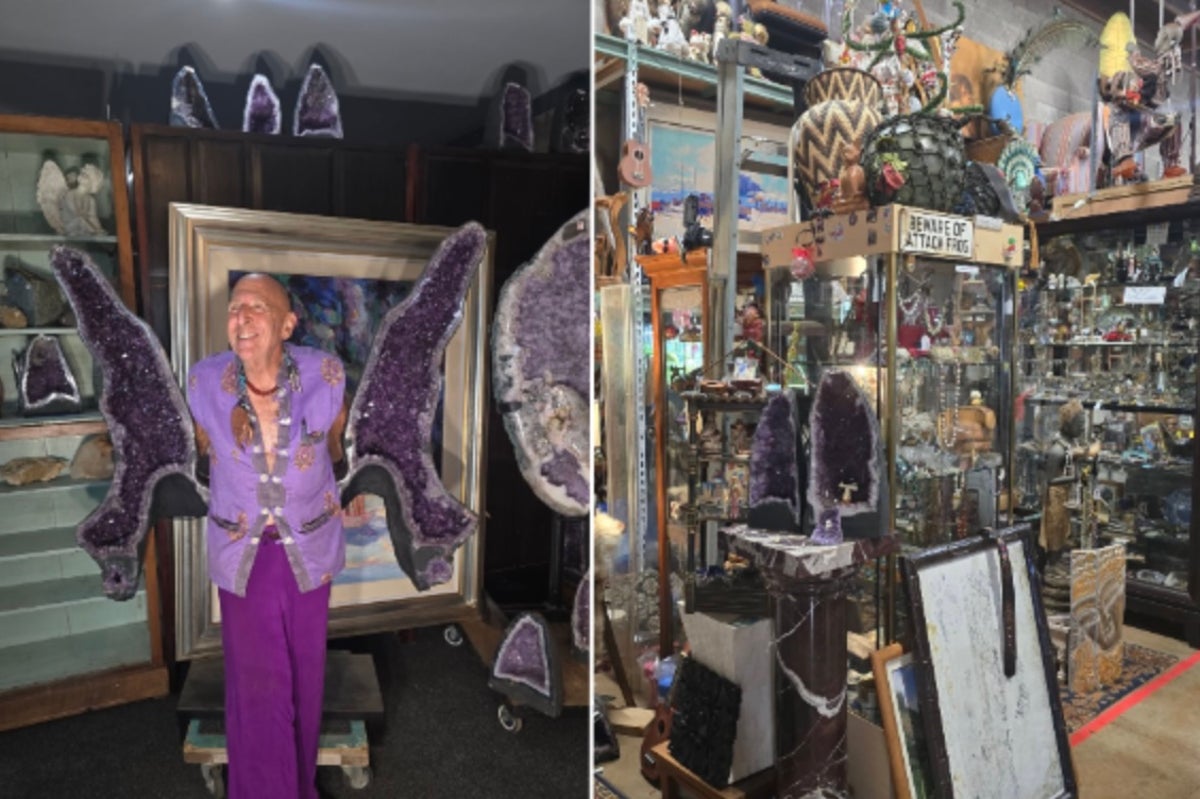
Step through the doors and any expectation of a clean, organized showroom vanishes. The warehouse operates on pure visual overload. Items are packed wall to wall and stacked straight to the corrugated steel ceiling. There is no discernible logical flow. You weave through tight aisles where an authentic 18th-century European dining set sits jammed against a rack of vintage Hawaiian shirts. Glassware, estate jewelry, oriental rugs, obscure books, and massive oil paintings compete for every square inch of space.
It feels exactly like the Room of Requirement from the movies, provided that room was owned by an eccentric billionaire who forgot to write a will.
Inside the Vault of Millionaire Oddities
Ross estimates that his shop holds over a million individual items. Most of it comes directly from the estates of millionaires and billionaires who lived out their final days in luxury enclaves like Wailea or Kapalua. When an wealthy resident passes away, their families often live thousands of miles away in places like Baltimore or Chicago. They don't want to fly to Hawaii, spend weeks sorting through a massive mansion, and figure out how to ship heavy overseas furniture back to the mainland.
So they call Ross. He makes a flat offer on the entire estate, cuts a check, moves everything out, and sorts through the chaos later.
That buying strategy leads to an inventory that ranges from the sublime to the deeply weird. The warehouse has become famous for a few legendary pieces that Ross refuses to part with or prices with an intentional shrug.
The Crystal Room and the Famous Amethyst
Deep inside the warehouse lies the dedicated crystal room, home to more than 200 massive amethyst geodes. Some of these purple crystals stand over ten feet tall. Towering above them all is Ross's prize possession, an almost four-foot-tall amethyst geode that is unmistakably shaped like a piece of male anatomy. Dubbed the Penisaurass, it has become a viral tourist attraction. Ross completely refuses to sell it. He enjoys watching people take photos with it too much.
Right next to it sits another towering geode that Ross values at $250,000, though he openly admits to reporters he would probably take $85,000 if someone showed up with the cash. To add a bit of surreal flavor, a classic Barbie doll in a matching purple gown sits perched directly on top of the quarter-million-dollar crystal.
Pop Culture Relics and Aviation Furniture
The store acts as a graveyard for Hollywood history and local celebrity artifacts. Hanging on the racks, you can find the actual pink jacket worn by the character Armand during the chaotic first season of HBO hit show The White Lotus, which filmed right down the road on the island. Nearby hangs a glittering, heavily sequined jacket that once belonged to late TV star and longtime Oahu resident Jim Nabors.
Look down, and you might notice a massive dining table listed for $10,000. Look closer, and you realize the tabletop is a fully restored airplane wing taken directly from a 1939 DC-3 Gooney Bird. For reasons known only to Ross, a life-sized grey alien statue sits right in the center of the wing as a permanent centerpiece.
The Celebrity Regulars
The store does not just cater to bargain hunters and curious tourists. It is a known playground for rock stars and wealthy locals who populate Maui's exclusive gated communities.
Rock legends like Steven Tyler, Mick Fleetwood, and Alice Cooper are regular visitors. They don't just pop in for ten minutes. Fleetwood has been known to spend half a day wandering the aisles, digging through old records and odd furniture. Ross frequently winds up delivering large truckloads of goods directly to their multi-million-dollar estates.
The relationship goes both ways. When these high-profile residents want to redecorate or clear out their own overflow, Ross gets the call. He once acquired a Maserati from an estate and sold it directly to Alice Cooper. He has flipped high-end luxury vehicles, including a Lamborghini Urus, to his rock-star clientele right from his warehouse lot.
Why the Island Ecosystem Feeds the Trade
There is a specific economic reason why a store like this thrives on Maui compared to the mainland. Hawaii is an isolated island chain. Shipping large, heavy, custom furniture across the Pacific Ocean costs an absolute fortune.
When wealthy buyers purchase a multi-million-dollar home on Maui, the property often comes fully furnished with high-end, custom-made luxury items. Sometimes it is a $15,000 hand-carved leather couch from Spain or a massive dining set imported from Indonesia. But the new owners rarely want the previous owner's style. They want a clean slate.
Because shipping that heavy furniture back to the mainland to sell it is financially nonsensical, the new owners need it gone immediately. Ross steps into that gap. He shows up with a moving truck, empties the house, and feeds the endless cycle of luxury secondary markets.
Other times, people move to the island with grand illusions of bringing their entire mainland lives with them. They pack a 40-foot shipping container with heavy oak furniture, arrive at their new tropical villa, and realize that massive, dark wood looks ridiculous in a bright, open-air beach house. The tropical humidity starts warping the wood, they run out of space, and those items wind up sitting on Ross's shelves.
What to Keep in Mind Before You Visit
Do not walk into this warehouse expecting typical thrift store prices. This is not a charity shop. Ross knows exactly what high-end items are worth, and he prices things according to their original luxury status and the sheer rarity of getting them onto an island. While you can find small trinkets, old record albums, and vintage jewelry for reasonable prices, the heavy hitters carry real price tags.
If you plan to visit, leave your rigid shopping list at home. The warehouse rewards those who love the hunt and have the patience to look behind three layers of old paintings to find a hidden treasure.
Bring cash for the admission fee to avoid annoying the staff at the front desk. Give yourself at least two hours to explore. Wear comfortable shoes because you will be dodging tight corners, stepping over rogue statues, and navigating a maze that makes absolutely no sense but somehow works perfectly. Look up at the ceiling and down at the floorboards. The best stuff is rarely at eye level.