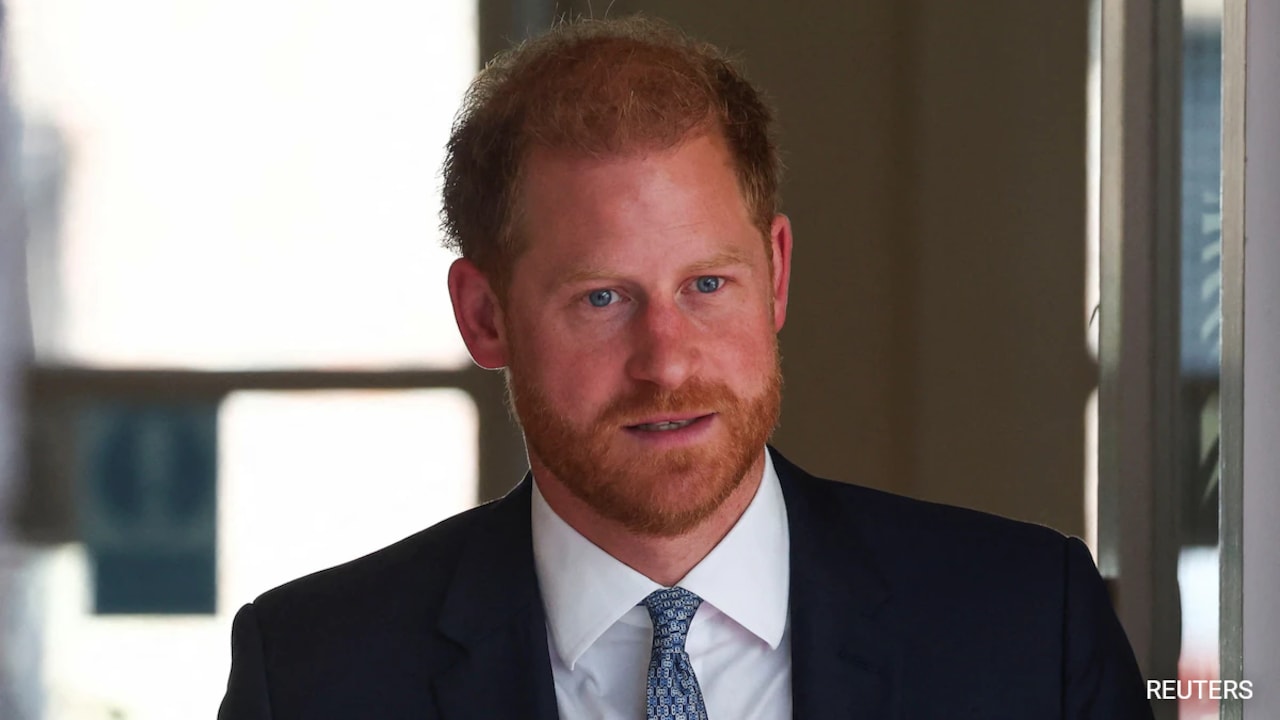
Suspion isn't proof. That's the brutal lesson Prince Harry just learned in a London courtroom. For years, the Duke of Sussex has positioned himself as a lone warrior fighting a holy war against the British tabloid press. He's blamed them for his mother’s tragic death, accused them of destroying his mental health, and claimed they made his wife Meghan's life an absolute misery.
But his grand crusade just crashed into reality.
In a massive 436-page ruling, High Court Judge Matthew Nicklin completely dismissed Harry’s high-profile privacy lawsuit against Associated Newspapers Ltd (ANL), the publisher of the Daily Mail and Mail on Sunday. Harry, alongside big names like Elton John and Elizabeth Hurley, alleged that the publisher used "dark arts"—think phone bugging, car tapping, and paying off cops—to track their lives from the 1990s up until 2011.
The judge didn't buy it. He didn't say the tabloids were angels. He simply pointed out that Harry’s legal team relied on broad guesses and circumstantial mosaics rather than hard evidence. The decision effectively brings Harry’s multi-year litigation campaign to a grinding, expensive halt.
The Mosaic That Fell Apart
If you want to win a massive civil trial in the UK, you can't just show up with a list of private details that made it into print and say, "They must have hacked me." You have to prove how they did it.
Harry’s legal team tried to build what media lawyers call a mosaic case. They argued that because certain published details were intensely private, and because the publisher couldn't immediately produce a paper trail for a source decades later, the info must have been stolen via illegal surveillance.
Justice Nicklin rejected that approach entirely. He wrote that it is simply not permissible to assume an article was unlawfully sourced just because the information inside was private.
During the grueling 46-day trial, ANL’s legal defense did something clever. Instead of staying quiet, their journalists took the stand. They named names. They pointed to publicists, royal aides, and chatty friends. They proved that Harry's social circles weren't as secure as he thought. When a reporter can show an article came from an official palace spokesperson or an old acquaintance, the hacking argument evaporates.
What Most People Get Wrong About This Verdict
Don't mistake this for a total vindication of tabloid ethics. The court didn't rule that British newspapers never cross the line. This came down to the strict, unforgiving burden of proof in a court of law.
When you look back at Harry’s previous courtroom win against Mirror Group Newspapers in 2023, the difference is night and day. In that case, there were clear, undeniable records of phone hacking and internal corporate admissions. The evidence was right there on paper.
With the Daily Mail suit, the alleged offenses were old, and the evidence was thin. The judge noted that the more serious and less likely an allegation is, the more convincing the evidence needs to be. Harry leaned heavily on emotion and past trauma, but the court wanted cold data.
The Shocking Bill for a Complete Whitewash
Harry didn't take the loss quietly. In a joint statement with anti-racism activist Doreen Lawrence—another claimant in the suit—Harry called the ruling a complete and obvious whitewash. He claimed the court went to shocking lengths to exonerate the Mail.
ANL, on the other hand, called it an overwhelming victory and a magnificent vindication of their journalism.
The immediate fallout isn't just a bruised ego for the prince; it’s a staggering financial hit. Industry insiders put the combined legal costs for both sides at over 50 million pounds ($67 million). Because Harry and his fellow claimants lost the case in its entirety, they could be left holding the bag for those massive legal bills.
Even for a royal and a rock star, that hurts.
Where Does the Duke of Sussex Go From Here
This defeat reshapes everything. Harry has spent the last few years treating the UK courts like a personal accountability tribunal for the press. With his claims against Rupert Murdoch’s News Group Newspapers already settled or restricted, this ANL ruling essentially kills his final major legal offensive.
If you are following this media war, understand that the legal avenues are tapped out. The next steps don't involve more court dates. Instead, watch how the Duke pivots his media strategy back to the US, where he has more control over his narrative through production deals and public appearances.
For anyone looking to take on a major media institution in a legal arena, the takeaway is clear. Moral certainty doesn't win cases. If you can't prove exactly how a story was obtained, the court will side with the journalists almost every single time.