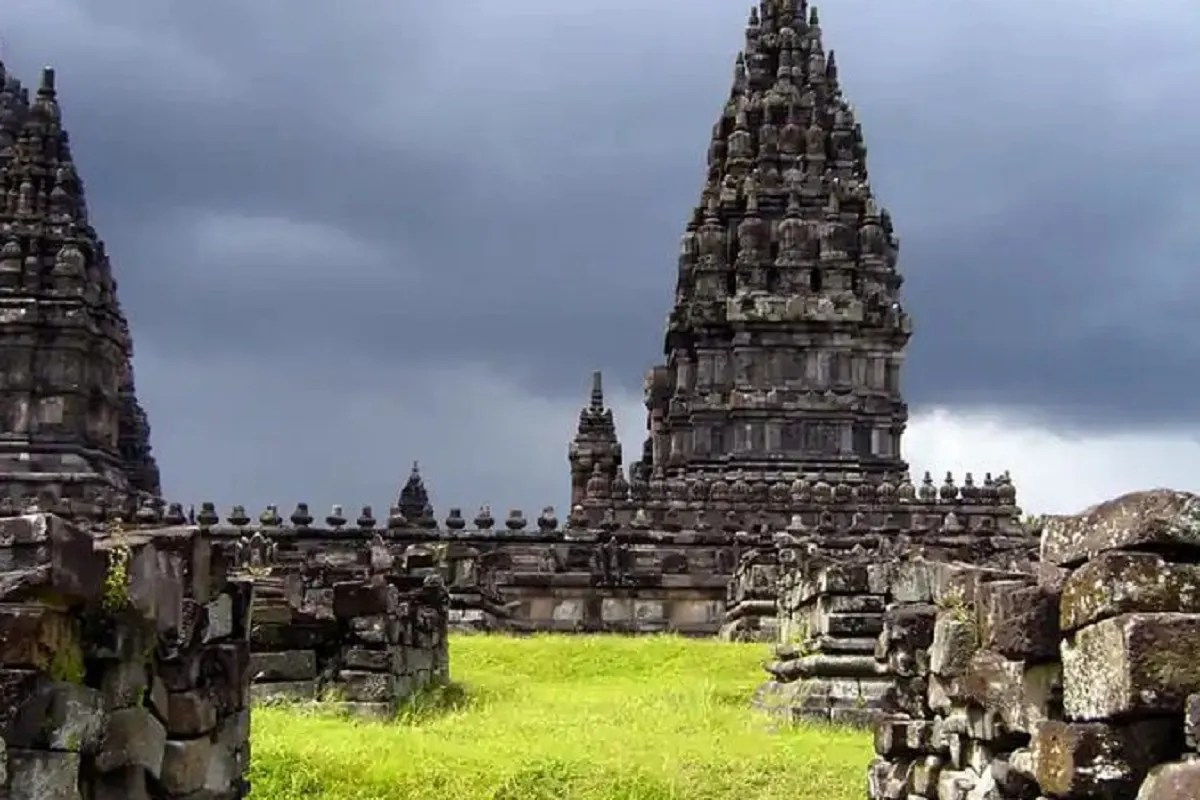
PM Modi just stood before the soaring, intricate stone spires of the Prambanan Temple complex in Yogyakarta alongside Indonesian President Prabowo Subianto. Many media outlets are covering this as just another standard diplomatic stop during a routine state visit. They're missing the bigger picture. This moment isn't just about handshake diplomacy or securing trade routes in the Indo-Pacific. It marks a major milestone in India's cultural diplomacy, explicitly built on the back of a new treaty to restore and conserve one of the greatest Hindu monuments on earth.
The two leaders officially signed off on a Letter of Intent that brings the Archaeological Survey of India right into the heart of Java to rebuild smaller shrines within this massive site. If you think India's foreign policy is only about defense deals and technology transfers, you're looking at the wrong map. Civilizational bonds are the real foundation here.
The Ancient Identity of Prambanan Temple
To understand why this visit carries so much weight, you have to look at what Prambanan actually represents. Built in the 9th century during the peak of the Hindu Mataram Kingdom, it was originally named Siwagrha, meaning the House of Shiva. The rulers of the Sanjaya dynasty built it as a grand statement of their devotion. It was also a direct political answer to the nearby Buddhist Borobudur monument.
The scale of the place is staggering. It spans nearly 40 hectares and originally housed around 240 temples. The central courtyard features three towering structures dedicated to the Trimurti. Lord Shiva stands in the middle, flanked by Lord Brahma and Lord Vishnu. The Shiva temple alone reaches 47 meters into the sky, covered in detailed stone reliefs that narrate the Ramayana.
These aren't just old stones. They're physical proof of how Indian philosophy, art, and spirituality traveled across maritime trade routes over a millennium ago, blending perfectly with Javanese culture. Even today, local artists perform the Ramayana Ballet right outside the temple walls under the night sky. The connection never died. It just needed a renewed push.
Ruin and Rediscovery
Prambanan didn't stay a bustling spiritual hub forever. By the 10th century, the Mataram Kingdom shifted its power base to East Java. Historians blame political friction and violent eruptions from the nearby Mount Merapi volcano. The jungle swallowed the complex. Earthquakes brought down the towering spires.
For centuries, locals knew the ruins existed, embedding them into folklore like the legend of Roro Jonggrang. British and Dutch colonial officers stumbled upon the site in the early 19th century and began crude attempts at clearing it. True scientific restoration didn't start until 1913, and the main Shiva temple wasn't fully reconstructed until 1953.
UNESCO declared it a World Heritage Site in 1991, but the job was never truly finished. Hundreds of outer shrines, known as Pervara temples, still sit as piles of scattered stones. That's exactly where the new partnership between New Delhi and Jakarta comes into play.
How India is Rebuilding Global Heritage
This current project in Indonesia isn't an isolated event. The strategy of using heritage restoration to rebuild geopolitical alliances has been quietly rolling out for over a decade. The Archaeological Survey of India has evolved into an international heritage task force.
Look at Vietnam. India stepped in to restore the My Son Sanctuary, a crucial Shaivite temple complex belonging to the ancient Champa Kingdom. In Cambodia, Indian experts spent years stabilizing the structural integrity of Angkor Wat and Ta Prohm. In Myanmar, the ASI took on the heavy lifting of restoring the Ananda Temple and a dozen historic pagodas in Bagan after a devastating earthquake shattered the region in 2016.
Even closer to home, India put up millions of dollars to restore the earthquake-damaged Seto Machhindranath Temple in Nepal and funded the revival of the ancient Thiruketheeswaram Temple in Sri Lanka.
When the ASI arrives at Prambanan, they aren't trying to change the monument or claim ownership. They bring specialized engineering experience in dry-stone masonry, structural stone preservation, and anastylosis, which is the precise archaeological method of rebuilding ruined monuments using the original architectural elements. It's tedious work. It takes years. But it creates an unbreakable bond between nations.
The Geopolitical Undercurrents of Act East
Let's look past the cultural pride for a moment. This visit serves a massive geopolitical purpose. Indonesia sits at the absolute center of the Indo-Pacific region, commanding the vital Malacca Strait. As India pushes its Act East policy, building a deep, trust-based relationship with Jakarta is essential for regional balance.
President Prabowo Subianto, who previously attended India's Republic Day celebrations as the chief guest, shares this view. By launching this conservation project together, both leaders are making a public statement: our partnership isn't just a modern trade agreement signed on paper. It's written in the very architecture of our ancestors.
During his speech at the site, PM Modi pointed out his personal connection to these revival efforts, linking the work at Prambanan to major domestic heritage updates like Kashi Vishwanath, Kedarnath, and Ujjain Mahakal. The message is clear. Heritage preservation is a core element of national identity, whether inside India or across the seas.
Your Next Steps to Experience This History
If you want to understand this connection yourself, don't just read the news reports. Plan a trip to Yogyakarta.
Fly into Yogyakarta International Airport. Dedicate a full afternoon to Prambanan, making sure to arrive by 3 PM to catch the sunset hitting the main Shiva spire. Book your tickets for the outdoor Ramayana Ballet in advance. Watching the ancient epic performed against the backdrop of the illuminated 9th-century temples will show you exactly why this architectural bond matters. Keep an eye on updates from the ASI as they begin rebuilding the outer structures, because you're going to witness history being physically pieced back together.