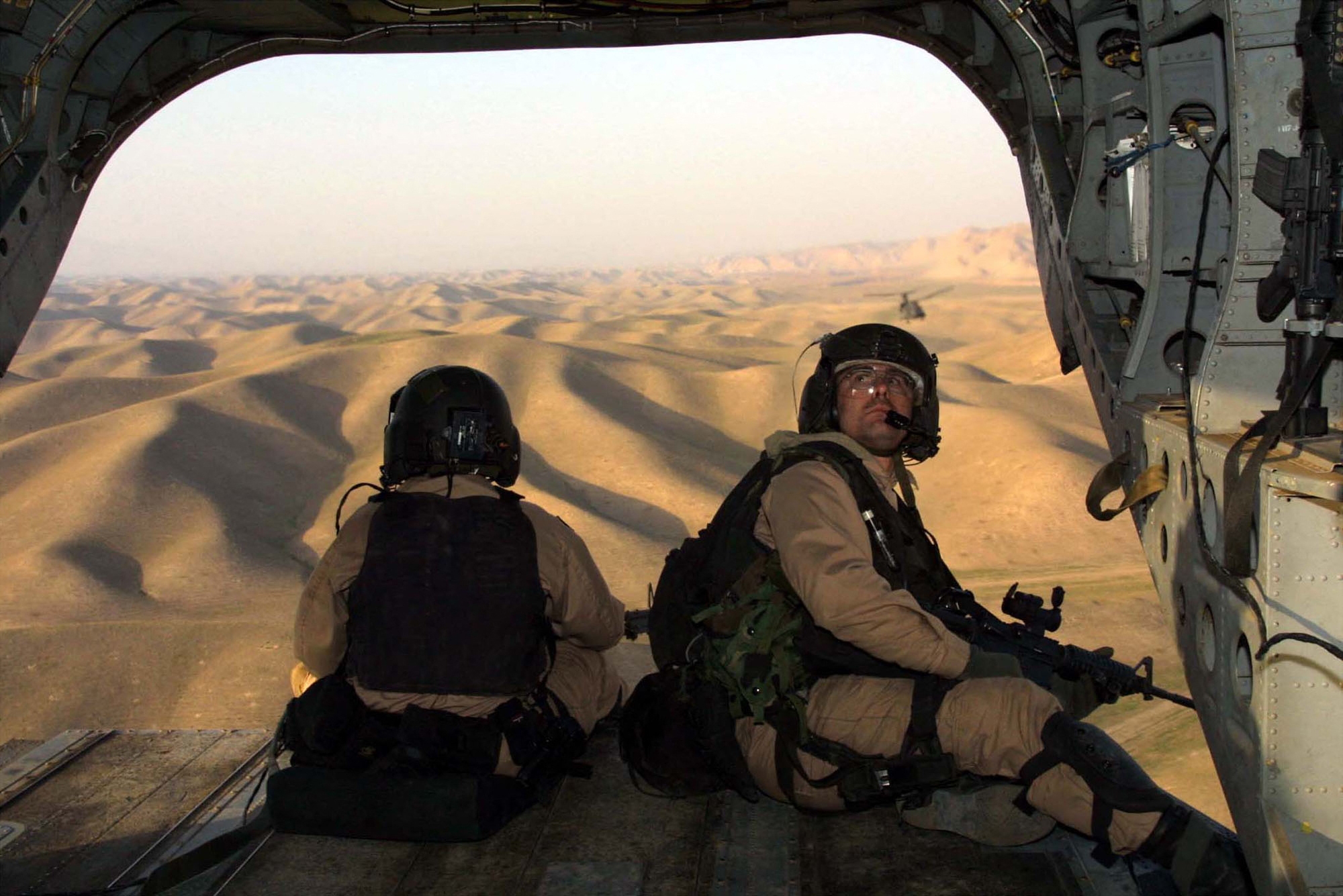
The United States has spent trillions of dollars building the most terrifyingly advanced military machinery in human history. We have stealth bombers that vanish from radar, satellite networks tracking individual vehicles from orbit, and precision munitions that fly straight through windows from a hundred miles away. Yet, if you look at the track record of the last twenty-five years, that staggering investment hasn't bought victory.
From Afghanistan to Iraq, and now to the grueling conflict with Iran, the pattern keeps repeating. The initial strike is a masterclass in raw power. We blow past conventional defenses in days. Then, the gears grind to a halt. The political goals evaporate, the occupations turn into endless quagmires, and Washington eventually looks for an exit ramp.
Why does a nation with absolute command of the skies and seas struggle so profoundly to secure a lasting win?
The answer isn't a lack of firepower. It's a deep, systemic failure to understand what war actually is in the modern era. We treat war like a technical problem with a military solution. It isn't. It's a human, political struggle, and our top-tier hardware cannot fix a broken strategy.
The Myth of Overwhelming Might
Most people look at the defense budget and assume victory is a simple math equation. Spend more money, build better tech, deploy more troops, and the enemy must capitulate. This thinking is completely backward.
In the opening weeks of a conflict, American forces are unmatched. We saw this clearly when the military ousted the Taliban in 2001 and toppled Saddam Hussein in 2003 in mere weeks. The conventional phase of war is where the Pentagon excels. We smash state armies, dismantle air defenses, and capture capital cities with astonishing speed.
National security analyst Peter Bergen, author of the book All The Presidents' Wars, points out a glaring truth. We are remarkably good at breaking things and killing people at the very beginning of a conflict. The trouble starts immediately after the initial dust settles.
Conventional Victory -> Occupation -> Asymmetric Quagmire -> Strategic Retreat
When you destroy a government, you create a power vacuum. If you don't have a meticulous, realistic plan to fill that vacuum, someone else will. Usually, it's an insurgent group or a regional rival. The United States repeatedly fails to plan for the day after the shooting stops. We treat the destruction of the enemy's regular army as the end of the game, when it's actually just the opening whistle.
Imperial Appetite with a Tourist Approach
There is a fundamental contradiction in how Washington approaches global intervention. Middle East analyst Paul Salem famously noted that the United States possesses an imperial appetite but approaches these conflicts with a tourist's mindset.
True empires of the past understood that holding territory requires generational commitment. It demands that your personnel learn local languages, live among the population, understand deep tribal and sectarian histories, and stay deployed for decades. The British and Roman empires didn't run on six-month deployment rotations. They built deep, permanent administrative structures.
The American public has zero desire to be an actual empire. We want quick, clean results. We send troops on short tours, rotate command structures constantly, and rely on insular military bases that separate our forces from the people they are supposed to be governing or protecting.
This tourist approach creates a massive disadvantage. Local populations and insurgent networks know they can outlast us. They live there. Their families live there. They aren't going anywhere. They understand that if they can keep the conflict costly enough for long enough, the political will in Washington will eventually dissolve. It always does. You can't build stable democracies in regions with fragile institutions by dropping in for a few years and hoping for the best.
The Disconnect Between Ends Ways and Means
When military campaigns fail, civilian leaders love to blame the troops or intelligence failures. The real culprit is almost always a catastrophic mismatch between political goals and the military tools chosen to achieve them.
Retired Army Lieutenant General Douglas Lute, who managed the conflicts in Iraq and Afghanistan as the White House war czar, has highlighted this persistent disconnect. We routinely launch operations with maximalist goals like regime change, total democratization, or the complete elimination of a rival's infrastructure while refusing to commit the actual resources or strategic patience required to get there.
Look at how the current conflict with Iran has played out. The political rhetoric demands huge shifts, wanting to dismantle their nuclear ambitions, replace their governance, and wipe out their regional influence. Yet, the execution relies heavily on air campaigns and drone strikes to avoid American ground casualties.
Lute makes it clear that launching a bombing campaign while expecting a massive outcome like regime change is a fool's errand. You're essentially relying on pure luck. Bombing an adversary can degrade their hardware, but it rarely forces a proud, dug-in regime to hand over the keys to their country. When the goals are infinite but the willingness to suffer costs is finite, failure is guaranteed.
How Cheap Tech Defeats Expensive Hardpower
We love our multi-million dollar platforms. Our adversaries love whatever works. This asymmetric gap is where American military dominance goes to die.
In Iraq and Afghanistan, ragtag insurgencies successfully bogged down the world's finest military using improvised explosive devices made from old artillery shells and cheap garage door openers. They didn't need to win a single dogfight or tank battle. They just needed to bleed American resources and patience through a thousand small cuts.
In the conflict with Iran, this dynamic has evolved significantly. Iran didn't try to build a blue-water navy to challenge American carrier strike groups in a traditional battle. Instead, they focused on mass-producing low-cost swarming drones and ballistic missiles.
Think about the economics of modern warfare. An adversary can build and launch a dozen explosive drones for the price of a single American air-defense missile used to shoot one down. They can shut down critical shipping lanes like the Strait of Hormuz using inexpensive, asymmetrical tactics even after their traditional naval fleets have been heavily damaged. High-tech superiority doesn't matter when the enemy makes your weapons systems economically unsustainable to operate.
Sidelining the Diplomats
You can't shoot your way to a political settlement. War is supposed to be an extension of politics by other means, yet the United States consistently treats diplomacy as an afterthought or a sign of weakness.
During the planning and execution of these major interventions, the State Department is routinely pushed to the fringes. Paul Salem points out that expert advice from diplomats is often brushed aside by Washington decision-makers who view diplomatic nuance as wimpy or ineffective. We see this exact mistake playing out in real-time today.
When you sideline your diplomats, you lose the ability to build genuine regional coalitions or negotiate realistic exit strategies. The 1991 Gulf War succeeded precisely because it had clear, strictly limited goals and a massive diplomatic coalition backed by the United Nations. President George H.W. Bush knew that invading Baghdad and overthrowing Saddam Hussein would destroy the coalition and create an unmanageable mess. He stopped when the limited objective was met.
Modern Washington has forgotten that lesson. We enter conflicts with vague, sweeping declarations, ignore our own diplomatic corps, and then wonder why we can't find a partner willing to sign a peace treaty on our terms.
What Needs to Change Right Now
If the United States wants to stop losing wars, our entire foreign policy establishment needs an immediate reality check. We have to change how we define, plan, and execute military actions.
First, stop chasing regime change. Overthrowing governments without a multi-decade plan to rebuild them from scratch is a proven recipe for disaster. If a political objective cannot be achieved through limited, realistic military pressure combined with aggressive diplomacy, the military should not be sent in the first place.
Second, rebalance the budget away from pure hardware and toward human expertise. We need more regional experts, linguists, and diplomats who understand the cultural underpinnings of the areas we operate in. Knowing the local language and tribal dynamics of a province is far more valuable for long-term stability than having another squadron of stealth fighters.
Third, align ends and means realistically. If the public and the political system will not tolerate ground casualties or a thirty-year occupation, do not adopt political goals that require them. Stop hoping to get lucky with a few weeks of airstrikes.
We must accept the limits of military muscle. Until Washington aligns its strategic ambitions with the stark realities of asymmetric warfare and human geography, the world's most expensive military will continue to fight expensive, unwinnable wars.