Kim Jong Un wants to turn his bilateral partnership with Vladimir Putin into a three-way pact.
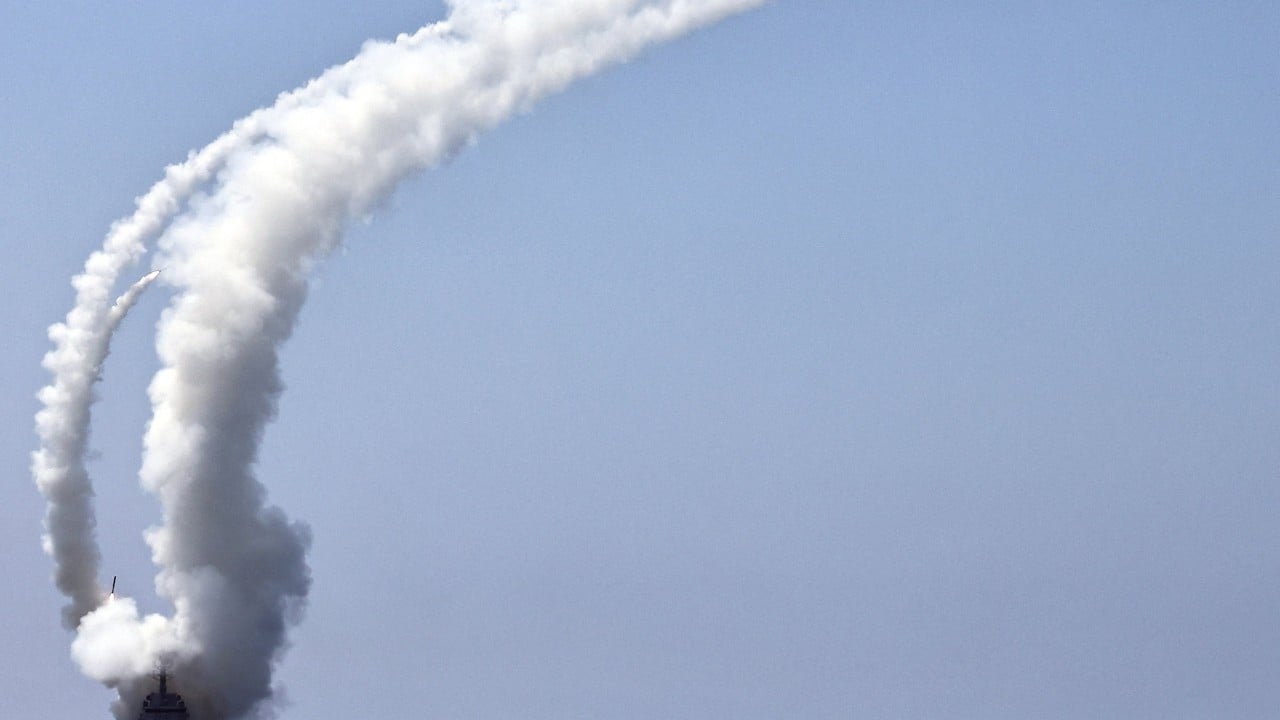
When North Korea fires cruise missiles from a newly repaired 5,000-ton destroyer, the world looks at Washington or Seoul for a reaction. That's a mistake. Kim's latest naval weapons test isn't just a warning to the United States. It's a blatant audition tape for Beijing and Moscow.
As the Chinese and Russian navies launch their Joint Sea-2026 war games off the coast of Qingdao, Pyongyang is practically banging on the door to get in. North Korea wants to turn those bilateral drills into a trilateral front.
But it's not going to be that easy.
The Audition on the East Sea
North Korea recently flexed its naval muscle by test-firing strategic cruise missiles from the Kang Kon, a 5,000-ton destroyer that state media claims is now ready for active duty. This comes right after the commissioning of another massive warship, the Choe Hyon.
For years, Kim focused almost entirely on land-based ballistic missiles. Now, he's building a nuclear-armed navy.
The timing here isn't random. Beijing and Moscow just kicked off their massive maritime maneuvers in the Yellow Sea. By showing off a warship capable of firing nuclear weapons, Kim is trying to prove his military can actually add value to Chinese and Russian operations. He wants to show he's a capable partner, not just a liability.
Why Kim Craves Trilateral Drills
- Ultimate Legitimacy: Joining regular exercises with two UN Security Council members destroys any Western effort to isolate Pyongyang.
- Advanced Tech: The Kang Kon was likely rebuilt with Russian assistance. Getting into actual joint war games opens the door for better data-sharing and hardware.
- A Solid Bloc: It locks in a formal northeast Asian alliance to counter the growing US-Japan-South Korea trilateral partnership.
China's Reluctance and the Russia Factor
While Russia is happy to embrace North Korea—especially since Moscow needs artillery and ammunition for its grinding war in Ukraine—China is playing a much more cautious game.
President Xi Jinping wants to challenge US dominance, but he doesn't want to get dragged into Kim's nuclear brinkmanship. Beijing values regional predictability. In fact, when China recently test-launched a submarine-launched ballistic missile into the Pacific Ocean, the Kremlin immediately defended it as a sovereign right that threatens no one. China prefers to look like a responsible superpower, even while expanding its military footprint.
Bringing North Korea into official, combined naval maneuvers ruins that image. It forces Seoul and Tokyo to militarize even faster, which is the last thing Beijing wants.
What Happens Next
Don't expect North Korean sailors to join the Joint Sea exercises next month. Beijing will likely keep Pyongyang at arm's length for formal drills to avoid completely blowing up its remaining diplomatic ties with Europe and the West.
However, watch for low-level, unannounced intelligence sharing between the three nations. Kim will keep launching missiles and building bigger ships until he gets the seat at the table he thinks he deserves. If Russia pushes hard enough, we might see small-scale trilateral search-and-rescue or patrol exercises before the year ends.
If you want a deeper look at how these regional dynamics are playing out on the water, check out this report on Russia and China launching joint military drills near Japan, which highlights the growing friction causing nearby nations to scramble their defenses.
Keep your eyes on the Yellow Sea. The traditional alliance structure in Asia is shifting, and Pyongyang is determined to force its way into the big leagues.