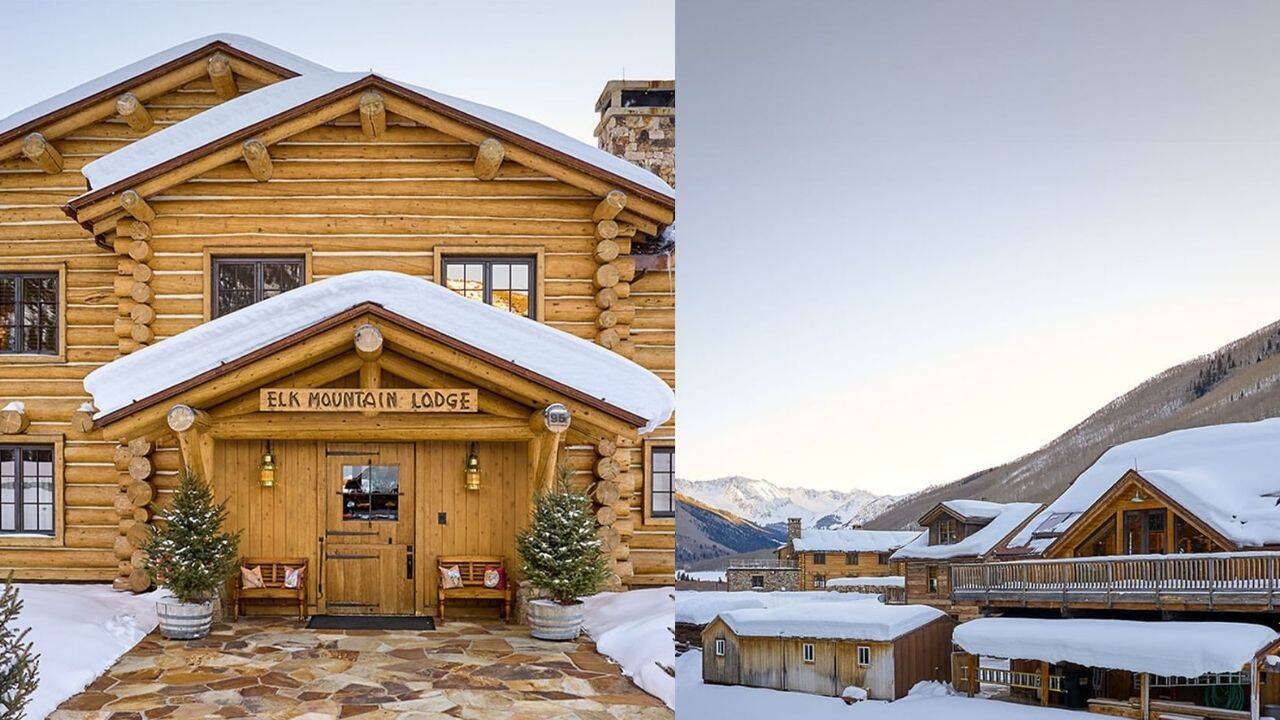
When oil heir and billionaire collector Bill Koch put his 52-acre Aspen estate on the market for $125 million, he set a record asking price for Colorado residential real estate. Eighteen months later, after zero takers, a $26 million price cut, and an intense luxury auction run by Concierge Auctions in July 2026, the high bid landed at $33.515 million.
That is a $91.5 million haircut from his original dream price.
If you're wondering how a mountain retreat featuring eight buildings, 15 bedrooms, 19 bathrooms, and two private ponds can end up selling for roughly 27% of its initial asking price, you aren't alone. The saga of Elk Mountain Lodge says a lot about the top end of mountain real estate, local zoning laws, and what happens when ultra-wealthy sellers mistake personal nostalgia for market value.
The Reality Behind Elk Mountain Lodge
Situated roughly 11 miles from downtown Aspen along Castle Creek Road, Elk Mountain Lodge isn't your average luxury ski chalet. Koch purchased the former dude ranch and event space back in 2007 for $26.5 million. Over the next decade and a half, he dumped tens of millions of dollars into turning the compound into a multigenerational family hideaway.
The numbers attached to 125 Rooney Circle are staggering on paper:
- Total living space: 25,277 square feet spread across eight distinct structures.
- Main lodge: A 16,631-square-foot timber behemoth boasting 30-foot ceilings, oversized stone fireplaces, and floor-to-ceiling windows.
- Guest quarters: Seven separate cabins, including one converted into a high-end gym.
- Outdoors: River frontage, private hiking trails, two hot tubs, and an eight-car garage.
During peak travel seasons, Koch even rented the property out for $35,000 a night or $300,000 a month. Yet, when it came time to sell the whole pie, buyers simply walked away.
Why a $125 Million Asking Price Was Dead on Arrival
To understand why this property sat on the market for over 500 days, you have to look at how the luxury real estate market in Aspen actually operates.
During the post-2020 real estate surge, Aspen saw record-breaking land and home values. Sellers began testing the limits of what ultra-high-net-worth individuals were willing to pay. But super-compounds like Elk Mountain Lodge run into three distinct problems that cap their buyer pool.
1. The Compound Trap
Most billionaires looking in Aspen want a sleek, modern, low-maintenance home near the mountain base or downtown. They don't necessarily want to manage an entire village. Taking care of 25,000 square feet across eight buildings requires a full-time property manager, round-the-clock maintenance staff, and massive annual carrying costs.
2. Zoning Regulations and Legacy Square Footage
Elk Mountain Lodge exists at a scale that pitkin County zoning rules no longer permit for new builds. While marketing materials praised the property as "irreplaceable," that cut both ways. For many buyers, an irreplaceable 1990s log-cabin aesthetic feels dated, and altering or redeveloping a non-conforming compound under modern county land-use codes is an administrative nightmare.
3. Overestimation of Personal Value
Koch originally tried offloading the compound back in 2015 for $100 million, then cut it to $80 million in 2016 before pulling it off the market. In 2020, he sold off a 31-acre slice of the original land for $14.5 million. Bringing the remaining 52 acres back to market in early 2025 for $125 million looked less like market-driven pricing and more like test-ballooning.
When listing agent Steven Shane of Compass reduced the price to $99 million in late 2025, buyers still stayed on the sidelines. By summer 2026, heading to auction was the only realistic mechanism left to force true price discovery.
What the $33.515 Million Sale Means for Aspen Real Estate
When the auction clock ran out on July 17, 2026, the $33.515 million winning bid hit the real estate community like a cold shower.
Does this mean the Aspen luxury market is crashing? Not quite. Average single-family home prices in Aspen still hold strong around $4.75 million, with prime downtown properties commanding extreme per-square-foot rates. What this auction actually signals is a correction in price expectations for oversized, specialized estates.
Original Asking Price (Jan 2025):  $125,000,000
Reduced Price (Dec 2025):          $99,000,000
Auction Winning Bid (July 2026):   $33.515,000
Total Discount from Peak Price:    ~73.2%
Even with the massive discount, Koch didn't exactly lose his shirt on the initial land purchase. After buying the original parcel for $26.5 million in 2007 and selling off a portion for $14.5 million in 2020, his net basis in the remaining land was relatively low. Once you factor in nearly two decades of renovations, taxes, and maintenance, his net returns are debatable, but in terms of gross cash, he cleared a profit over his initial acquisition cost.
What Sellers and Buyers Can Learn from the Deal
If you're dealing with unique, high-value assets—whether in real estate, art, or private businesses—the Elk Mountain Lodge sale offers clear takeaways.
- Bigger isn't always better: Multi-building compounds limit your exit options. The smaller your pool of prospective buyers, the less pricing power you hold.
- Auctions force reality: When traditional listings stall for over a year, absolute or non-reserve auctions eliminate seller vanity and establish real market value fast.
- Renovation costs weigh down legacy homes: Buyers spending eight figures often prefer to build from scratch rather than pay a premium for someone else's custom log design.
Moving forward, expect ultra-luxury sellers in high-end resort towns like Aspen, Jackson Hole, and Vail to rethink aggressive launch pricing. The era of slapping an arbitrary nine-figure sticker on a legacy estate and waiting for a trophy hunter appears to be officially over.