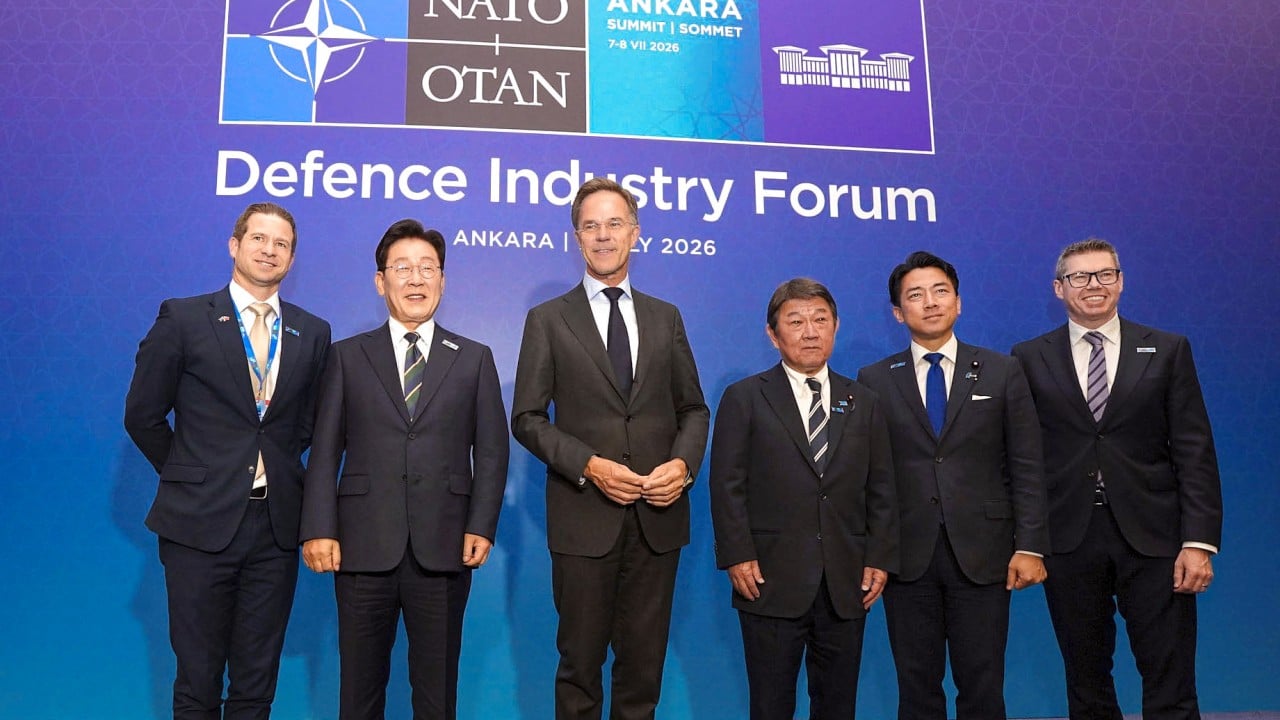
Geographic borders don't mean what they used to in global security. If you still think NATO only cares about the North Atlantic, the recent alliance summit in Ankara, Türkiye, should completely change your mind.
The security of Europe and the Indo-Pacific is now deeply intertwined. NATO Secretary General Mark Rutte met with representatives from the "Indo-Pacific Four" (IP4)—Japan, South Korea, Australia, and New Zealand—on the sidelines of the summit. They didn't just exchange pleasantries. They forged a concrete commitment to sync up their defense industries, share advanced technology, and build a unified front against a rapidly tightening authoritarian axis.
What's driving this isn't just standard diplomatic outreach. It's flat-out alarm. Moscow, Beijing, Pyongyang, and Tehran are collaborating at a level that has completely upended traditional defense planning.
The Eurasian Axis Rewriting the Rules
For years, Western analysts treated threats in Europe and Asia as separate issues. You had Russia threatening Eastern Europe, and you had China asserting dominance in the South China Sea. Today, those boundaries have evaporated.
North Korean artillery shells and ballistic missiles are pounding Ukrainian positions. Chinese dual-use technology and components keep Russia's military-industrial complex running despite massive Western sanctions. Iranian drones fill the skies over Kyiv. In return, Moscow is suspected of transferring sensitive military technology to Pyongyang and sharing intelligence with Beijing.
Japanese Foreign Minister Toshimitsu Motegi summarized the situation clearly during the Ankara talks, noting that the security of the Euro-Atlantic and the Indo-Pacific is entirely inseparable.
When a conflict in Europe relies on manufacturing pipelines in East Asia and the Middle East, a regional alliance like NATO can't afford to look only at its own backyard. The Ankara meeting wasn't about expanding NATO's legal borders to Asia—nobody is talking about extending Article 5 collective defense to Tokyo or Seoul. It's about building a massive, interconnected network of democratic states to match the defense industrial output of their adversaries.
Moving From Small Talk to Serious Defense Integration
The IP4 countries have been showing up at NATO summits since 2022, but those early visits were mostly symbolic. Ankara marks a shift from political consultation to actual operational integration.
The agreement focuses on three specific areas where traditional diplomatic bodies usually move too slowly:
- Defense Industrial Collaboration: Standardizing ammunition, expanding manufacturing capacity, and ensuring supply chain resilience so that democratic nations can actually out-produce an authoritarian coalition in a prolonged crisis.
- Cybersecurity and Intelligence: Setting up faster data-sharing mechanisms to counter state-sponsored hacking campaigns and election interference that target both European capitals and Pacific democracies.
- Advanced Technological Sharing: Coordinating on the military applications of artificial intelligence, quantum computing, and space-based surveillance to maintain a tactical edge.
South Korean President Lee Jae Myung, the only head of state from the IP4 to attend the Ankara summit in person, pointed out on social media that the global security environment is changing too fast for any single nation to handle alone. South Korea's presence is particularly significant. Seoul has quietly become one of the world's most efficient defense exporters, supplying tanks, howitzers, and aircraft to NATO members like Poland. By integrating South Korean manufacturing speed with European defense frameworks, the alliance is securing a vital backup generator for its depleted weapons stockpiles.
Real Friction Inside the Alliance
It's easy to read official communiqués and assume everyone is on the same page. They aren't. While the US and several Eastern European members want a highly institutionalized, aggressive stance against China's backing of Russia, other European allies are urging restraint.
Countries like France and Germany have historically worried that pushing NATO too far into Asia will dilute its focus on defending Europe, or needlessly provoke Beijing into a direct economic confrontation. This has led to what strategic experts call a "minilateral" approach. Instead of creating a massive, clunky, all-encompassing treaty, NATO and the IP4 are working through targeted, issue-specific projects. They're bypassing the typical institutional gridlock by focusing strictly on functional areas like subsea cable protection, supply chain bottlenecks, and maritime domain awareness.
Beijing, unsurprisingly, views this entire evolution with intense hostility. The Chinese government has repeatedly accused NATO of attempting to build an "Asian version of NATO" to encircle China. But the reality is much more defensive. NATO isn't looking to send warships to the Taiwan Strait; it's trying to stop Chinese logistics from keeping the war in Ukraine alive indefinitely.
Your Next Steps to Understand the Shift
This isn't a temporary diplomatic trend. It's a fundamental restructuring of international security that will affect global tech supply chains, national defense budgets, and international trade for the next decade.
To stay ahead of how this geopolitical shift impacts international policy and tech markets, you should monitor these three specific indicators over the next few months:
- Watch the Export Controls: Keep an eye on joint regulatory updates from the US, EU, Japan, and South Korea regarding semiconductor equipment and dual-use AI chips. The tech sharing agreed to in Ankara will directly influence how tightly these nations police their commercial tech sectors.
- Track South Korean and Japanese Defense Contracts in Europe: Look for new procurement deals between East Asian manufacturers and European NATO members. If you see more countries following Poland's lead in buying Korean hardware, it means defense industrial integration is moving from policy papers to actual factory floors.
- Monitor Joint Cyber Exercises: Watch for the inclusion of IP4 cyber defense units in NATO's annual "Cyber Coalition" exercises. This will give you a clear indication of how fast real-time intelligence integration is actually moving.