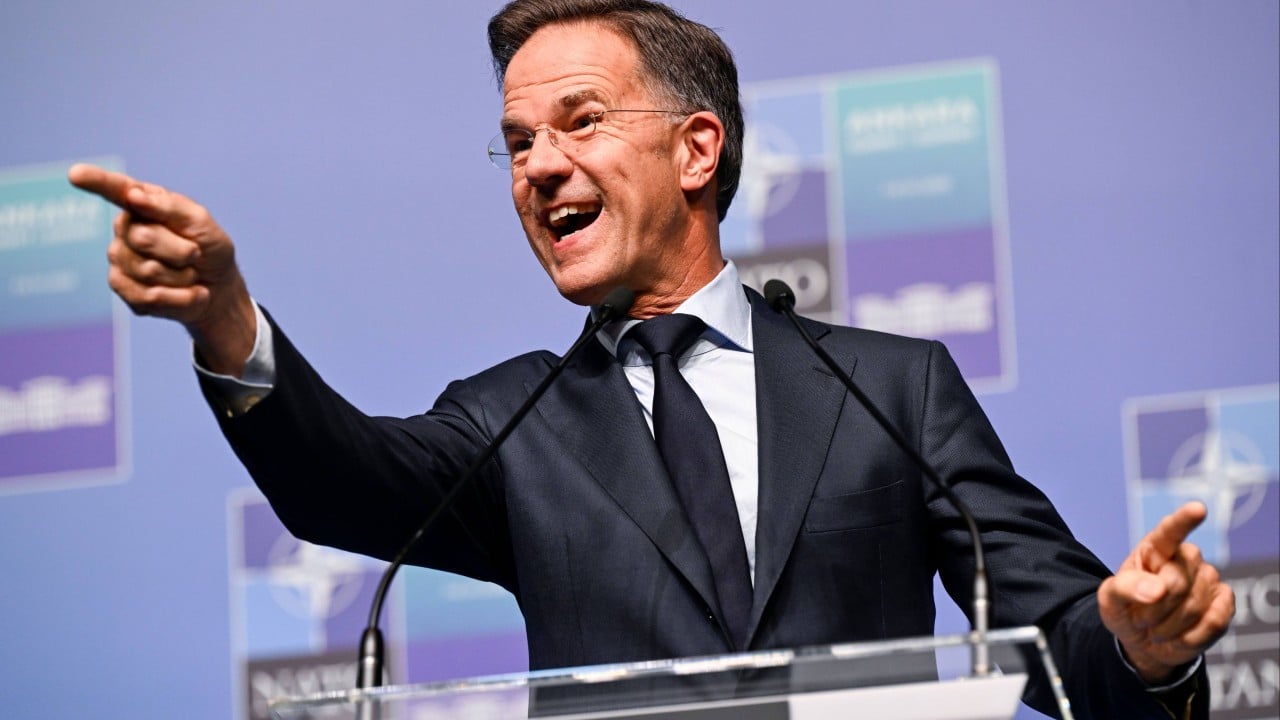
Beijing just sent a nuclear-powered submarine missile screaming across the Pacific Ocean for the first time since 1982. It wasn't a drill to ignore. Hours later, on the eve of the Ankara Summit, NATO Secretary General Mark Rutte made it clear that the Euro-Atlantic alliance is officially done pretending that Asia is someone else’s problem. The old days of separating European defense from Asian security are dead.
When Rutte announced that NATO can't be naive about China, he wasn't just recycling standard diplomatic talking points. He was acknowledging a cold reality that Western leaders avoided for too long. China is now a direct driver of European instability. If you want to understand why your defense bills are skyrocketing, look straight at the growing alliance between Moscow and Beijing.
The security of the West is completely tied to the Indo-Pacific. What happens in the South China Sea directly impacts the frontlines in Ukraine. This isn’t a theoretical future conflict. It is happening right now.
The Indo Pacific and European Theaters Are Now Intertwined
For decades, European policymakers treated Asian security like a distant economic issue. They focused on trade routes and supply chains while leaving the military heavy lifting to the United States. That strategy failed.
The latest Chinese submarine test proves that Beijing is rapidly expanding its global reach. You can't separate the Atlantic from the Pacific when the weapons systems, satellite intelligence, and industrial supply lines are identical. Rutte rightly pointed out that these two distinct geographic regions are deeply connected.
Look at the hardware. Russian factories are pumping out drones, missiles, and armored vehicles at a rate that defies Western sanctions. How are they doing it? They are relying on Chinese microelectronics, machine tools, and raw materials. Beijing claims neutrality, but its economic lifeline keeps the Russian war machine running.
The alliance goes beyond factories. European intelligence agencies recently confirmed that China secretly trained hundreds of Russian military personnel inside its borders. Some of those troops went straight to the front lines in Ukraine. When a foreign power trains the army invading a European neighbor, that power is no longer a distant trading partner. It is an active adversary.
Why Western Leaders Finally Dropped the Diplomacy
Western officials spent years trying to coax Beijing into becoming a responsible global stakeholder. They believed that trade would naturally encourage democratic values and peaceful coexistence. It was a massive mistake.
The shift in tone from NATO leadership is dramatic but necessary. Rutte’s blunt warning marks a permanent departure from the soft language of the past. The alliance is finally watching every single move with total precision.
The old consensus is gone because the threat is too obvious to hide. Consider the current military cooperative actions. Russian and Chinese strategic bombers are flying joint patrols over the Sea of Japan and the East China Sea. These maneuvers force Japan and South Korea to scramble their fighter jets constantly.
At the same time, China is building a massive nuclear arsenal at a speed that has caught Western planners completely off guard. The submarine launch on July 6 is a clear demonstration of power aimed directly at Washington and its allies. It says that Beijing can strike anywhere, anytime, and it won't ask for permission.
The True Cost of True Defense
Europeans are finally paying their own bills. For years, American presidents complained that European allies were freeloading on US security guarantees. Donald Trump made it a central focus of his foreign policy, demanding that Europe step up or get left behind.
The message finally sank in. Rutte revealed that European allies and Canada are now spending roughly 4 percent of their GDP on defense and security. That is a massive jump. Just a few years ago, most European nations struggled to hit a mere 2 percent.
This spending surge is a direct response to the twin threats of Russia and its Asian backers. The alliance is aiming for a 5 percent target by 2035. This money isn't going toward paperwork or bureaucratic committees. It is going toward real, tangible military power.
- Tens of billions of dollars are being poured into new defense contracts for ammunition, air defense systems, and artillery.
- European factories are expanding production lines to ensure they don't run out of shells in a prolonged conflict.
- Naval investments are increasing to protect critical undersea cables and maritime trade routes from sabotage.
Rutte admitted that the older version of NATO was completely unsustainable. Expecting 350 million Americans to protect 600 million Europeans while Europe enjoyed comfortable welfare states was a fantasy. That fantasy is over.
The Axis of Hard Power
We are witnessing the formation of a highly functional, dangerous partnership. It isn't a formal treaty like NATO, but it functions effectively where it matters. Russia, China, North Korea, and Iran are operating with clear mutual agreements.
They know exactly who does what for whom, and they know what they are getting in return. North Korea provides millions of artillery shells and ballistic missiles to Russia. In exchange, Moscow gives Pyongyang advanced missile and satellite technology that threatens South Korea and Japan.
Iran supplies thousands of suicide drones that rain down on Ukrainian cities. In return, Tehran gets advanced air defense systems and cyber warfare capabilities from Russia.
China sits at the center of this network as the ultimate financial and industrial backer. Without Beijing's economic support, the entire system would collapse under the weight of global sanctions. China provides the financial cover, the dual-use technology, and the diplomatic shield at the United Nations.
This means NATO is no longer just fighting a rogue state in Eastern Europe. The alliance is facing a global coalition of autocracies that want to dismantle the current international security order.
Real Steps to Confront the New Security Reality
Platitudes won't stop a strategic missile or an artillery shell. If the West wants to survive this era of global competition, it needs to shift from words to immediate action.
First, European nations must lock in their defense spending increases permanently. The current 4 percent GDP investment cannot be a temporary spike that drops when political winds change. It must become the new baseline for continental security.
Second, Western nations must aggressively decouple their critical defense supply chains from Chinese suppliers. It is insane to build advanced weapons systems that rely on microchips, rare earth elements, and raw materials controlled by your primary geopolitical rival.
Third, NATO must deepen its operational ties with its four core Indo-Pacific partners: Japan, South Korea, Australia, and New Zealand. This means joint military exercises, shared intelligence networks, and integrated defense production. If the autocracies are cooperating globally, the democracies must do the same.
Stop treating Asia and Europe as separate problems. The sooner the West accepts that it is fighting a single, connected global challenge, the safer it will be. Naivety is a luxury we can no longer afford.