Imagine hitting your morning commute on a crisp Tuesday, only to find one of the city's main arterials completely gridlocked. You look up, and there is a guy dangling off a 140-meter concrete pylon. He is not doing maintenance. He is painting a giant cartoon bird and broadcasting the entire stunt to thousands of laughing followers on Instagram.
This exact scenario paralyzed Melbourne on July 7, 2026. The Bolte Bridge became the stage for a bizarre, hours-long standoff that quickly transformed from a traffic nightmare into a social media circus. A 22-year-old man scaled the massive structure, painted a notorious graffiti tag, and refused to come down until his demands were met.
The internet found it hilarious. The commuters trapped in gridlock did not.
Look past the initial absurdity of the situation, and you find a deeply troubling incident. This stunt was not a harmless prank by a rogue street artist. It represents a massive security breach of critical infrastructure, a failure of the judicial system, and a stark reminder of how social media rewards dangerous behavior.
The Morning the Bolte Bridge Stood Still
The chaos began long before the morning rush hour. Around 2:30 AM, a security alarm tripped in a restricted area of Melbourne's Docklands. Someone had breached the perimeter of the Bolte Bridge, a massive cantilever structure that serves as a vital link for thousands of drivers daily.
The intruder knew exactly what he was doing. Reports suggest he covered a nearby CCTV camera with a black bag to hide his movements. Some officials believe he gained access to the inside of the pylon through an entry door left unlocked at the lower level. From there, he began the grueling climb up the 460-foot eastern tower.
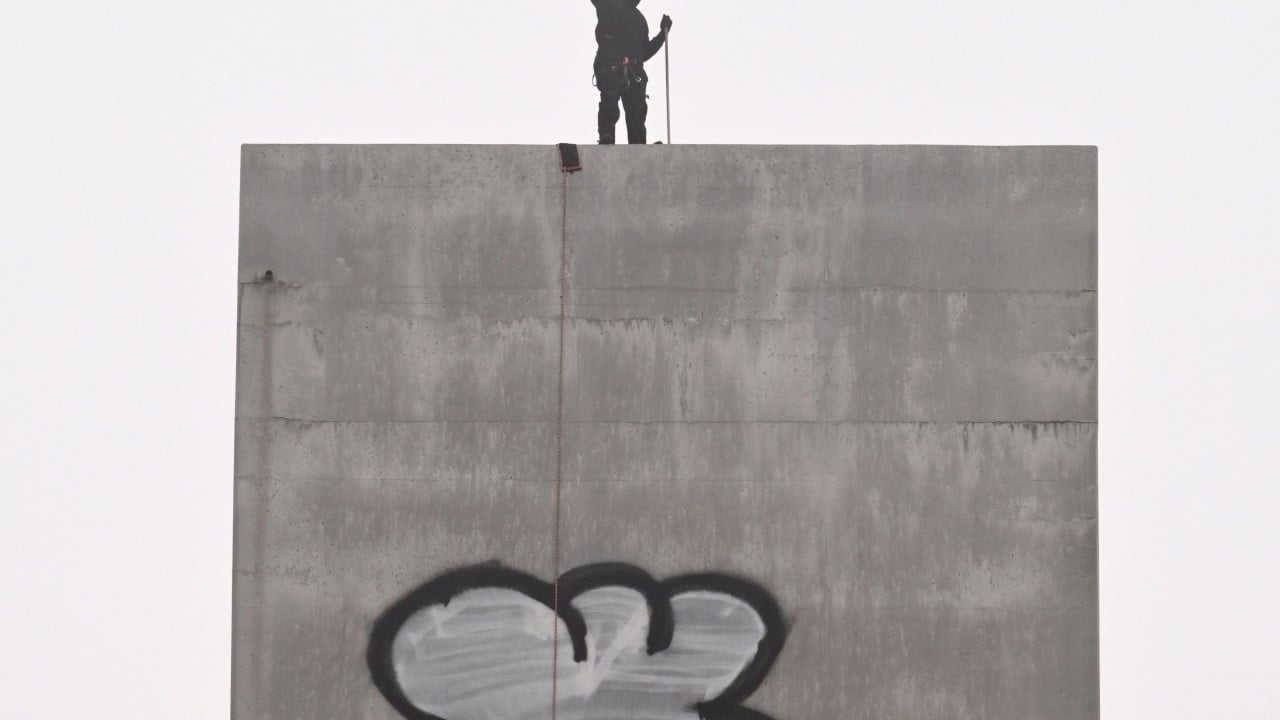
By the time the sun came up, the man had abseiled down the side of the concrete pillar. He pulled out his spray cans and got to work. Commuters rubbing the sleep from their eyes were greeted by a massive, freshly painted cartoon bird staring down at the highway.
Traffic ground to a sudden halt. Police scrambled to the scene, including specialized rescue units and negotiators. Out of caution, authorities shut down an entire lane of the bridge, sending shockwaves of delays through Melbourne's transport network.
The Infamous History of Pam the Bird
The giant cartoon spray-painted onto the concrete pylon was instantly recognizable to anyone living in Victoria. It was Pam the Bird. This specific graffiti tag has been appearing across Melbourne for years, defacing everything from ordinary brick walls to heritage-listed landmarks.
The man on the bridge was identified as Jack Gibson-Burrell, a 22-year-old resident of Yarraville. He is not a new face to the local police department. Honestly, he is one of the most prolific alleged serial vandals in recent city history.
Previous Alleged Pam the Bird Damages:
- Total charges: 209 offences
- Key target: Flinders Street Station clock tower (July 2024)
- Total estimated financial damage: $700,000
Gibson-Burrell has built a reputation for reaching the most inaccessible, dangerous locations in the city just to leave his mark. In July 2024, he allegedly broke into the iconic Flinders Street Station and abseiled up its historic clock tower to paint the signature bird.
His antics have cost the public a fortune. Before the bridge incident, he faced charges for over 200 offences, racking up an estimated $700,000 in property damage. Yet, despite the massive scale of his alleged vandalism, he was walking the streets.
When Negotiation Tactics Involve Lunch Orders
What turned a standard vandalism arrest into global news was the absolute absurdity of the standoff. Gibson-Burrell did not just hide at the top of the tower. He actively engaged with the public through a newly created Instagram account under the handle @pambirdofficial.
He turned the top of the 140-meter pillar into a live broadcast studio. He posted video stories showing his view from the dizzying height, using the hashtag #notcomingdown. Within hours, his account exploded, gaining over 26,000 followers who tuned in to watch the drama unfold in real time.
Then came the demands.
Instead of asking for a getaway car or immunity, Gibson-Burrell used his platform to demand a snack. He posted a caption that read: "Lower the taxes and drone me some f--ken food! Let's go boys and girls!"
He specified exactly what he wanted. He demanded that a peanut butter sandwich and a glass of milk be delivered to the top of the bridge tower via drone before he would even consider surrendering to the police officers waiting below.
At one point during the standoff, he abseiled down the pillar, waved mockingly at the police and media helicopters below, and then climbed back up to his perch. He told his followers he would surrender peacefully at noon. He came down a bit early, voluntarily climbing down the pylon just after 11:00 AM to give himself up to the officers on the embankment.
The Dangerous Allure of Social Media Clout
This incident highlights a frustrating trend in modern urban culture. Stunts like these are no longer just about the graffiti itself. They are carefully engineered spectacles designed to maximize social media engagement.
Gibson-Burrell knew exactly what he was doing when he opened that Instagram account. He used the high-stakes environment of a police standoff to build an audience. Every minute the police spent trying to coax him down was another minute his follower count ticked upward.
This creates a terrible incentive structure. When a person can shut down a major bridge, rack up millions of dollars in societal delays, and be rewarded with tens of thousands of digital fans, we have a problem. The dopamine rush of internet fame completely overrides any fear of legal consequences or physical danger.
It was an incredibly precarious situation. Acting Inspector Darren Wallis pointed out that the climber put himself in severe danger. One slip, one sudden gust of wind, and the stunt would have ended in tragedy. The emergency workers who had to scale the structure to negotiate were also put at unnecessary risk, all for a piece of content.
A Massive Failure of the Judicial System
The most infuriating part of this entire story is that it should never have happened. Gibson-Burrell was out on bail.
He had been granted bail in May 2026 while awaiting a future trial in the County Court for his previous 209 vandalism offences. The legal system had already recognized him as a high-risk serial offender. They put strict conditions on his freedom, including:
- A $30,000 financial surety.
- A nightly curfew to keep him off the streets.
- An explicit ban on possessing any graffiti or abseiling equipment.
- A travel ban preventing him from leaving the state or country.
Clearly, those conditions did not work.
He violated his curfew, acquired abseiling gear, grabbed spray paint, and targetted one of the most visible structures in the entire city. The current bail system failed to protect public infrastructure from a known, repeat offender. When the conditions of bail are treated as optional suggestions by defendants, the credibility of the entire justice system takes a hit.
The True Cost Paid by the Public
It is easy to laugh at a guy demanding a peanut butter sandwich from a drone, but the financial hangover of this stunt is massive. The public is the one picking up the tab.
First, consider the police resources. This was a protracted, hours-long operation that required standard patrol officers, specialized rescue squads, negotiators, and aerial support. Those are resources diverted away from actual emergencies across Melbourne.
Second, look at the economic hit from the traffic delays. When you close a lane on a major arterial bridge during the morning peak hour, you delay thousands of workers, freight trucks, and delivery vehicles. Time lost in traffic translates directly into lost economic productivity.
Finally, there is the cleanup cost. Removing graffiti from a 140-meter concrete pylon is not as simple as sending a worker with a pressure washer. It requires specialized high-angle crews, safety rigging, and lane closures. Acting Inspector Wallis confirmed that the damage to the Eastern Tower of the Bolte Bridge will result in a considerable cost to taxpayers.
Securing Critical Infrastructure Against Chaos
We need to treat our major transport links with the same security seriousness as airports or power plants. It is deeply embarrassing that an individual with a backpack and a black bag can easily stroll into a restricted area of a major bridge, cover a CCTV camera, find an unlocked door, and climb to the top unchallenged.
Security measures must be updated immediately to prevent copycat stunts.
Upgrade Physical Access Controls
Simple padlocks and standard doors are not enough for high-consequence structures. Access points to the interior towers of bridges need heavy-duty, tamper-proof electronic access control systems. Alarms should trigger an immediate, high-priority police response the moment a perimeter is breached.
Implement Smart Surveillance
Covering a camera with a plastic bag shouldn't blind a security team. Modern surveillance networks use artificial intelligence to detect when a camera view is obscured or blocked, instantly alerting operators to video loss or tampering. Thermal imaging and perimeter intrusion detection sensors should catch trespassers before they even reach the base of a structure.
Enforce Stricter Consequences for Clout Stunts
If the primary motivation for these acts is online attention, the legal system needs to strike where it hurts. Courts should consider mandatory asset forfeiture of the digital accounts used to broadcast illegal acts. If you use a social media page to coordinate or profit from a crime, you should lose that page permanently.
The Melbourne bridge standoff was a wake-up call. We cannot let our city's vital infrastructure be turned into a playground for clout-chasing vandals. It is time to lock the doors, fix the bail system, and stop treating reckless stunts like harmless jokes.