Regional sports networks have been crashing into a brick wall for years. If you've tried watching your favorite hockey team locally without paying for an overpriced cable tier or dealing with buggy apps, you already know the frustration. Regional networks went bankrupt, dropped teams, or left fans in complete blackout dark zones.
Now the league is finally taking matters into its own hands. If you liked this post, you might want to read: this related article.
Starting with the 2026-27 NHL regular season, NHL Productions will directly produce and distribute local games for four major franchises: the Carolina Hurricanes, Columbus Blue Jackets, Minnesota Wild, and St. Louis Blues. More teams are expected to join the fold before opening night.
This isn't just a minor technical adjustment behind the scenes. It's a massive structural pivot in how local sports media operates. Here is what actually prompted this decision, what it means for your game-night experience, and where local sports broadcasting goes next. For another angle on this development, refer to the recent coverage from Bleacher Report.
Why the Regional Sports Network System Collapsed
For three decades, regional sports networks (RSNs) held a complete monopoly on local games. Cable companies paid astronomical subscriber fees to carry networks like Bally Sports, passing those costs straight to customers. Even if you never watched a single minute of hockey, your monthly cable bill subsidized local game rights.
That money machine broke down hard.
Millions of households cut the cord. Cable subscriptions plunged, taking the reliable revenue stream down with them. Diamond Sports Group, the owner of Bally Sports, plunged straight into Chapter 11 bankruptcy. Teams suddenly faced terrifying financial uncertainty. Production crews didn't know if they'd have jobs next month. Fans were left scrambling across fragmented apps, direct-to-consumer feeds, and blacked-out channels just to find a Tuesday night puck drop.
The traditional middleman failed. The league realized relying on third-party regional operators was no longer safe.
What the NHL Centralized Production Move Means Right Now
Instead of waiting for outside media companies to sort out their bankruptcies, the league is stepping into the truck itself.
NHL Productions—the Emmy-winning team behind major national events like the Winter Classic and Stadium Series—is building out a centralized system. They're stepping in to handle the heavy technical lifting for local club broadcasts.
High End Production Tools for Every Local Broadcast
Centralizing operations gives local games access to league-level broadcast infrastructure. We aren't talking about generic feeds here. The league is bringing upgraded camera setups, custom replay technology, advanced graphics packages, and full engineering oversight to local feeds.
"Our Emmy Award-winning production team has a long track record of delivering world-class content," said Steve Mayer, NHL President of Events and Content. Adding live local production allows the league to deploy new camera concepts and visuals that bring viewers closer to the ice.
Unlocking Distribution Flexibility for Teams
Under the old regional network setup, teams were locked into restrictive regional exclusivity agreements. They couldn't easily strike deals with local over-the-air television stations or sell direct streaming packages without getting sued by their cable partners.
Taking production in-house strips those restrictions away.
As David Proper, NHL Chief Media Officer, pointed out, this shift expands the pool of potential distribution partners. Clubs don't have to depend on third-party production vendors anymore. They can manage broadcast investments direct while pitching their live games to local television networks, free over-the-air channels, and digital streaming platforms simultaneously.
How This Impact Will Be Felt by the First Four Teams
The four teams selected for the initial rollout—the Hurricanes, Blue Jackets, Wild, and Blues—share a common thread. All four suffered major disruption during the collapse of their former regional broadcast partners.
Carolina Hurricanes
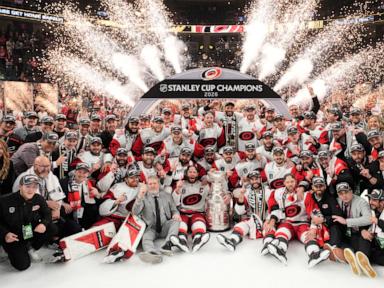
The Hurricanes are coming off strong championship-contending seasons, yet local fans repeatedly ran into broadcast headaches due to regional carrier disputes. Shifting to league-backed production stabilizes their local product and ensures their passionate fan base in North Carolina actually gets to watch games without constant channel blackouts.
Columbus Blue Jackets
Columbus faced total regional television uncertainty heading into the 2026-27 season. Marc Gregory, Vice President of Business Intelligence and Broadcasting for the Blue Jackets, openly welcomed the move, noting that partnering with the league's central production arm lets them tell better stories while working out new, accessible distribution deals for local viewers.
Minnesota Wild and St. Louis Blues
In traditional hockey strongholds like Minnesota and Missouri, local ratings remain massive, but cord-cutting stripped thousands of loyal viewers of their cable access. By centralizing production, both franchises can focus on reaching rural and suburban cord-cutters through a mix of free local broadcast TV and dedicated streaming platforms.
The Real Winner Here Is the Fan
Let's cut through the corporate jargon. Why should you care about who operates the broadcast truck outside the arena?
Because the old model actively punished local fans.
When regional sports networks controlled games, they held your fandom hostage to preserve $100-a-month cable bundles. If you lived 150 miles away from the arena, local blackouts often blocked you from watching games online even if you bought a league streaming pass.
In-house production changes the incentive structure completely.
The league and individual teams want maximum reach. They want young fans, cord-cutters, and casual viewers tuning in every night. When the league produces the live feed, teams can easily bundle games into free local over-the-air broadcasts (like the Vegas Golden Knights and Utah Hockey Club successfully did) while offering a clean, standalone digital subscription for cord-cutters.
Fewer blackouts. Better visual quality. Cheaper streaming options. That's the actual goal.
Will Other Major Sports Leagues Follow This Blueprint
The NHL isn't working in a vacuum. Major League Baseball had to take over local broadcasts for teams like the San Diego Padres and Arizona Diamondbacks when their regional sports networks collapsed.
However, the NHL taking proactive control for four franchises before they hit total crisis mode sets a strong precedent.
Expect more NHL franchises to opt in before the season starts. Once the initial infrastructure is operational, scaling up from four teams to twelve or sixteen is mostly a matter of adding trucks and crew bandwidth. Within three years, the traditional regional sports network model in hockey will likely be entirely dead, replaced by league-produced local feeds distributed over free TV and low-cost streaming platforms.
What You Should Do Next if You Want to Watch Your Team
If you're a fan of the Hurricanes, Blue Jackets, Wild, or Blues, here is how you should prepare for the 2026-27 season.
- Hold off on renewing long-term regional sports cable packages until your team releases its official channel lineup for the upcoming season.
- Invest in a simple indoor digital antenna. Many teams adopting centralized production are placing live games on free, over-the-air local channels.
- Watch for your team's standalone streaming announcements. Centralized production allows clubs to offer direct, team-specific digital passes without requiring a bulky TV bundle.
The era of regional sports networks holding fans hostage is over. The league taking direct control of local broadcasts is the long-overdue fix hockey fans needed.