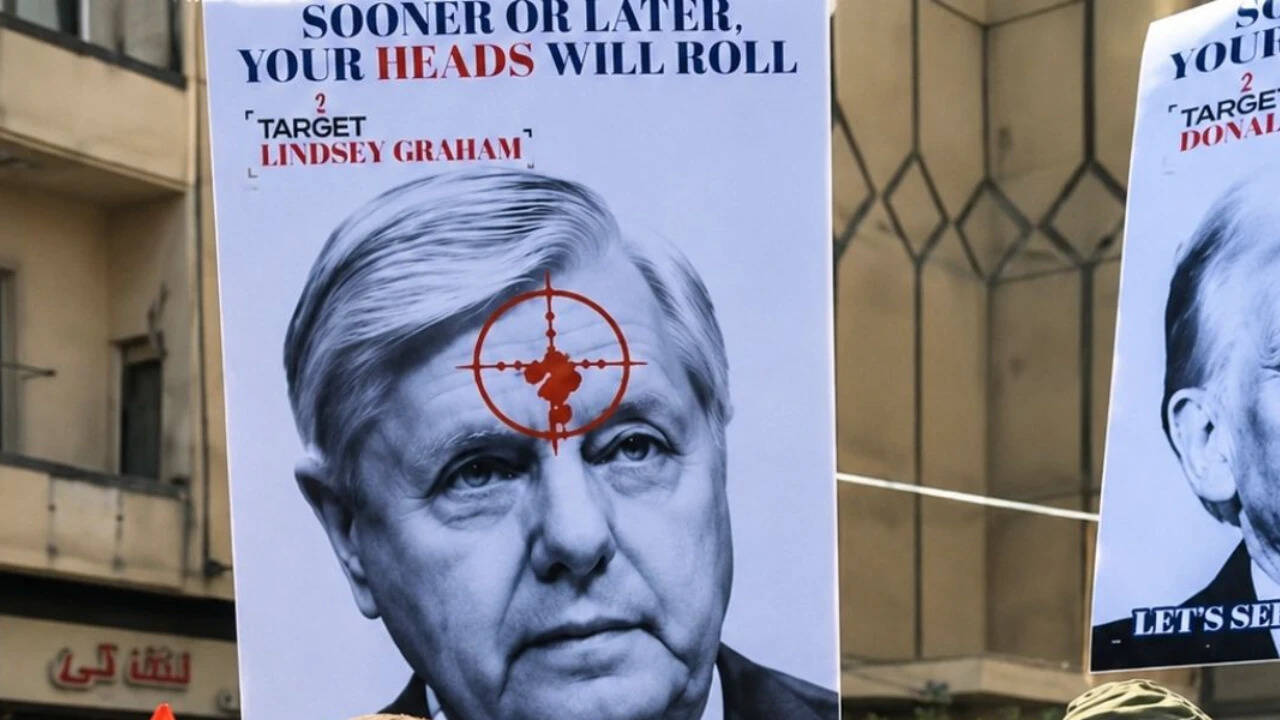
When news broke on Saturday evening that United States Senator Lindsey Graham had passed away suddenly at age 71, the immediate reactions couldn't have been more polar opposite.
In Washington and Jerusalem, top officials expressed genuine grief. President Donald Trump posted a heartfelt statement calling Graham a true patriot and a person he loved like family. Israeli Prime Minister Benjamin Netanyahu released a statement mourning a trusted ally who consistently championed American aid and military support for Israel. Across the Atlantic, Ukrainian President Volodymyr Zelenskyy recalled Graham's ten distinct visits to Kyiv during the war against Russia, praising his steadfast commitment to Ukraine's defense.
Turn the dial to Tehran, though, and you'd think a major holiday had just been declared.
State-run Iranian news outlets and television anchors broke into open celebration. On live Iranian television, a presenter literally smiled on air and remarked that the news was so sweet he was going to read it twice. Hardline outlets like Tasnim ran headlines declaring that the war-mongering senator had gone straight to hell, taking his dreams of crushing Iran with him. Regime supporters on social media posted graphics showing Graham's face crossed out with a giant red mark, signaling that one of their fiercest American adversaries was officially gone.
That stark split isn't just dramatic television. It tells you everything you need to know about how Lindsey Graham operated on the world stage. He wasn't a cautious backbencher who hid behind vague diplomatic statements. He took massive swings, antagonized entire foreign regimes, and actively pushed for aggressive American intervention wherever he saw fit.
A Sudden Loss That Shook Washington and Kyiv
Graham's death came completely out of nowhere. Just twenty-four hours before his passing, he was on the ground in Kyiv meeting directly with Volodymyr Zelenskyy to discuss military support and long-term security strategy. He flew back to Washington on Friday night and was scheduled to appear on Sunday morning political talk shows.
By Saturday night, emergency medical personnel were dispatched to his Capitol Hill home following a report of cardiac arrest. His office released a brief statement confirming that the South Carolina Republican had died following a brief and sudden illness, asking for privacy on behalf of his family.
You don't often see a single senator's death cause this kind of diplomatic ripple.
Trump quickly ordered all American flags at federal buildings to remain at half-staff through the end of the week. Speaking to reporters, Trump admitted he was in complete shock over the news. Netanyahu echoed those exact feelings, calling Graham one of the best friends Israel ever had in the United States Congress.
Why did he matter so much to these leaders? Because Graham was one of the few remaining foreign policy hawks who could bridge the gap between traditional hawkish Republicans and Trump's America First base.
How Iran Saw Its Fiercest American Enemy
To understand why Tehran celebrated Graham's death so openly, you have to look at what he pushed for over the last few years.
Graham wasn't just critical of Iran's leadership—he actively called for regime change. During an Iranian opposition event in Munich earlier this year, he stood in front of crowds and openly stated that he chose the Iranian people over the ruling clergy, declaring that it was time for the supreme leader to go. He regularly met with exiled Iranian figures like Reza Pahlavi, who affectionately referred to the senator as Uncle Lindsey for his unwavering backing of anti-regime movements.
When military tension escalated between the US, Israel, and Iran earlier this year, Graham proudly took credit for advising the White House on taking hardline direct action. He openly defended bombing runs and military strikes against Iranian targets, shrugging off warnings from critics who feared a wider regional conflict.
When the news of his death hit Iranian state media on Sunday, the reaction was immediate and blunt. Seyed Mohammad Marandi, a well-known professor at the University of Tehran and frequent regime spokesperson, tweeted out a post mocking Graham's death. He wrote that it was a shame Graham died before getting to see Monday's oil prices.
That kind of open hostility toward a deceased foreign official isn't common, but it highlights just how much of a thorn in Tehran's side Graham had become.
The Transformation from Trump Critic to Core Confidant
It is almost easy to forget that Lindsey Graham was once one of Donald Trump's most aggressive party rivals.
Back in 2015 and 2016, when both men were competing for the Republican presidential nomination, Graham held back nothing. He famously called Trump a xenophobic religious bigot on national television and publicly warned that choosing Trump as the party leader would destroy the Republican Party.
So how did he go from that level of public hostility to playing weekend golf with Trump and shaping White House foreign policy?
Graham realized early on in Trump's first term that if he wanted to influence American foreign policy, sitting in the corner and complaining wasn't going to work. He adapted quickly. He began golfing with the president, offering direct advice, and positioning himself as an essential sounding board on global issues.
By 2021, Graham was brutally honest about his political reality. He publicly admitted that the Republican Party couldn't move forward or win elections without Donald Trump.
That partnership yielded enormous influence for Graham. When Trump needed advice on handling complex defense decisions in the Middle East or negotiating aid for Eastern Europe, Graham was often the first person called to the Oval Office or invited to Mar-a-Lago. He kept classic Republican interventionism alive inside an administration that leaned heavily toward non-interventionism.
Why Israel Lost Its Biggest Ally in Congress
If you look at the track record of foreign aid and military defense packages passed in Washington over the last twenty years, Graham's fingerprints are everywhere.
He wasn't just a vote for pro-Israel legislation—he was often the primary author or champion of those bills. Whenever Israel faced international pressure or criticism at the United Nations, Graham was usually the first member of the Senate to step up to a microphone and defend Jerusalem's actions.
His relationship with Benjamin Netanyahu spanned decades. He traveled to Jerusalem repeatedly, meeting with military commanders, intelligence chiefs, and political leaders across the spectrum.
When Hamas attacked Israel on October 7, 2023, Graham didn't mince words. He immediately called for Israel to destroy Hamas using any means necessary. While other American politicians urged restraint or debated conditional aid, Graham consistently argued that Israel should be given total freedom of action.
Netanyahu's public statement following Graham's death reflected that decades-long bond. The Israeli leader noted that Israel hadn't just lost a supporter in Washington—it had lost its single best friend in the United States Senate.
Walking the Tightrope on Ukraine and Russia
While Graham's hardline stance on Iran aligned closely with Trump's base, his stance on Ukraine put him in a much trickier position.
Graham was an unapologetic supporter of Ukrainian sovereignty. When Russia launched its full-scale invasion, Graham didn't hesitate. He visited Kyiv ten separate times, frequently meeting with President Zelenskyy to reassure him that American aid would keep flowing.
This wasn't always popular with the isolationist wing of his own party. Many populist conservative commentators criticized Graham for prioritizing foreign defense spending over domestic issues.
Yet Graham managed to maintain his standing with Trump while remaining Ukraine's most reliable advocate in the GOP. He argued that helping Ukraine destroy Russia's military capability without risking American troops was the most cost-effective defense investment the US could ever make.
Zelenskyy acknowledged that delicate balancing act in his tribute. He highlighted Graham's willingness to show up in Kyiv during the darkest moments of the war, calling him a true defender of global freedom.
What Happens to Senate Foreign Policy Now
Graham's sudden passing leaves a massive power vacuum in Capitol Hill foreign policy.
For years, Graham acted as a primary bridge builder. He could talk to neoconservative hawks, national security Democrats, and MAGA populists all in the same afternoon. Without his presence, passing major defense spending bills and foreign aid packages is going to get significantly harder.
Here is what political observers and foreign policy watchers need to track in the coming weeks.
The Fight for Senate Foreign Relations Leadership
Graham held enormous informal and formal influence over committee assignments and national security debates. His absence opens up senior positions on key committees. Watch closely to see whether his successor leans into Graham's interventionist style or adopts a strict isolationist approach.
The Shift in US Middle East Diplomacy
Without Graham whispering in Trump's ear to maintain maximum pressure on Iran and unwavering support for Israel, the dynamic in Washington could shift. Foreign leaders in the Middle East no longer have that direct, informal conduit to the White House.
Future Aid Packages for Kyiv
Ukraine has lost its most effective Republican defender in the Senate. Future debates over military funding will likely face stiffer resistance from fiscal conservatives and non-interventionists who no longer have Graham pushing back against them from inside the party.
Practical Steps to Monitor the Political Aftermath
If you want to stay ahead of how this leadership change impacts national security and international affairs, keep these steps on your radar.
- Track the South Carolina Appointment: South Carolina's governor will appoint a temporary senator to fill Graham's seat. Pay close attention to whether the appointee aligns with Graham's foreign policy worldview or represents a shift toward strict non-interventionism.
- Watch Key Senate Committee Votes: Monitor upcoming votes on foreign assistance and defense appropriations. The margin of victory on these bills will show you immediately how much leverage foreign policy hawks have lost.
- Follow Diplomatic Statements Out of Tehran and Jerusalem: The contrasting reactions to Graham's death mark a volatile moment in Middle Eastern politics. Keep an eye on how state media in Tehran and official statements in Jerusalem adjust their messaging as Washington reorganizes its foreign policy team.
Lindsey Graham built a political career on being loud, decisive, and unapologetic about American power. The joy in Tehran and the mourning in Washington prove that whether you loved him or hated him, he left an undeniable mark on world politics.



_03.jpg)