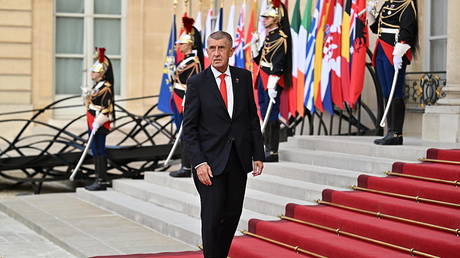
When Lebanese President Joseph Aoun walks into the White House on Tuesday to meet Donald Trump, he isn't carrying diplomatic pleasantries. He carries a written proposal and the heavy weight of a broken nation.
Lebanon is bleeding. Months of brutal war between Israel and Hezbollah have left over 4,000 people dead and 1.2 million displaced. Whole villages across the south stand in ruins. Infrastructure is wrecked. For an alternative look, see: this related article.
Aoun's goal in Washington is clear and urgent. He needs Trump to force Israeli military units to pack up and leave southern Lebanon. But getting Israeli troops off Lebanese soil requires solving an equation that has stumped diplomats for decades. How do you disarm Hezbollah without triggering a devastating civil war?
This isn't a theoretical exercise. It's a high-wire act where one wrong step resets the clock on total regional chaos. Similar analysis regarding this has been published by NBC News.
The Reality Behind the June 26 Framework Agreement
On June 26, 2026, Washington brokered a tentative framework agreement between Beirut and Tel Aviv. On paper, it looks like a breakthrough. The deal outlines a phased withdrawal of Israeli forces from southern Lebanon. In return, the Lebanese Armed Forces must deploy into the vacated border zones and strip Hezbollah of its weapons.
It sounds clean. In practice, it's messy.
Israel and Lebanon have been formally at war for nearly 80 years. They don't have direct diplomatic relations. Expecting a fragile Lebanese state to enforce peace on a battle-hardened non-state military actor like Hezbollah is a massive ask.
The framework is "not ideal," as Aoun himself admitted during a recent interview. Yet, it reflects the cold reality on the ground. Israel holds the military advantage in the south. Lebanon's official government accepts that it must deal with Washington to get anything back.
Testing the Waters in the Pilot Zones
To get the plan moving, the U.S. State Department announced operations across three southern villages acting as a "pilot zone". These villages are Froun, Srifa, and Zawtar al-Gharbieh.
The Lebanese army has already begun setting up checkpoints and patrolling near these areas. But the security situation is precarious.
Take Zawtar al-Gharbieh. Part of the village remains under Israeli military control. Roads are bulldozed, homes are flattened, and utilities don't exist. Civilians want to return, but local mayors warn that nobody can stay while Israeli armor sits in neighboring hills.
Israeli officials say they will adjust their troop positions to let the Lebanese army operate. But Israeli leadership has also signaled a desire to maintain a long-term "security zone" along the border. That directly contradicts what Aoun needs to show his people. If Israeli soldiers stay, Aoun's government looks like it signed a surrender document rather than a peace framework.
The Hezbollah Problem and the Civil War Threat
You can't talk about southern Lebanon without talking about Hezbollah.
The Iran-backed group has spent decades building an underground military empire in the south. They reject the U.S.-mediated framework entirely. They view direct talks with Israel as a betrayal.
During a meeting earlier in the week, U.S. Secretary of State Marco Rubio didn't pull punches. He noted that Lebanon will never know real peace until Hezbollah is stripped of its military arsenal. Rubio's solution? Replace Hezbollah with a central government strong enough to hold a monopoly on arms.
That's much easier said than done.
Lebanon runs on a delicate, highly sensitive sectarian political system. Power is split among Maronite Christians, Sunni Muslims, Shiite Muslims, and Druze communities. The Lebanese military is composed of soldiers from all these communities.
If the government orders the Lebanese army to forcefully disarm Hezbollah, the army could break apart along sectarian lines. Nobody in Beirut has forgotten the 15-year civil war that destroyed the country between 1975 and 1990.
Aoun, who commanded the Lebanese army before taking office as president, knows this danger better than anyone. He insists he won't let his soldiers bleed in an internal battle that destroys the state from within. His plan relies on international leverage—specifically Trump's influence—to force Israel's exit first, giving the state the credibility it desperately needs to handle domestic armed groups.
Why Trump Holds the Strategic Keys
Why is Aoun coming to Washington now? Because Beirut believes Donald Trump is the only leader with enough clout to push Israeli Prime Minister Benjamin Netanyahu into pulling back.
Trump has already shown a willingness to tell Netanyahu to shift positions. Reports indicate Trump recently told the Israeli Prime Minister to redeploy forces out of southern Syria and Lebanon, warning that a permanent occupation creates unnecessary volatility.
Trump's foreign policy approach relies on quick, high-impact dealmaking. He wants regional stability that allows economic trade and normalization projects to move forward. A prolonged, grinding counter-insurgency war in southern Lebanon doesn't fit that vision.
Aoun is presenting Trump with a concrete roadmap:
- A structured schedule for Israeli troop withdrawals.
- Guaranteed international backing and funding for the Lebanese Armed Forces.
- A realistic phased plan to decommission heavy weapons held by non-state actors.
- Direct financial aid and foreign investment to rebuild destroyed southern towns.
Without international dollars, the Lebanese state cannot function. The economy collapsed years ago, and the army relies heavily on foreign assistance just to pay basic soldier salaries. Rubio acknowledged this reality, stating that peace requires attracting U.S. and international investment into Lebanon's battered infrastructure.
Crucial Misconceptions About the Lebanese-Israeli Negotiations
Many news outlets present these talks as a standard peace negotiation between two neighboring countries. That misunderstands the entire situation.
First, this is not a normalization deal. Lebanon is not signing an agreement akin to the Abraham Accords. Beirut treats this strictly as a security arrangement to secure its sovereign borders and stop the destruction of its towns.
Second, the Lebanese army isn't weak because of a lack of resolve. It's starved of resources. The soldiers are well-trained, but they lack heavy equipment, modern air defenses, and stable funding. Expecting them to fight Hezbollah and police the Israeli border simultaneously without major international military backing is completely unrealistic.
Third, Hezbollah isn't just a militia; it's deeply embedded in Lebanese society and politics. You cannot eliminate its influence purely through military commands. It requires a functioning state that offers security, basic services, and economic growth so citizens don't turn to non-state actors for support.
Actionable Next Steps for Tracking the Washington Summit
If you want to know whether this White House summit actually achieves anything, ignore the photo opportunities and look for these key indicators over the coming days:
- Watch the Pilot Zones in the South: Track whether Israeli defense forces actually pull out of Zawtar al-Gharbieh to let Lebanese units take sole control. If troop positions don't change, the June 26 framework is stalled.
- Monitor U.S. Security Funding Announcements: Look for concrete dollar figures pledged to the Lebanese Armed Forces. Without direct funding for salaries and equipment, LAF deployment in the south is unsustainable.
- Observe Hezbollah's Domestic Signals: Pay attention to statements from Hezbollah leadership regarding the Lebanese army's deployment in border towns like Srifa and Froun. Any direct military friction between army units and militia members in those pilot areas will signal immediate trouble.
- Follow Reconstruction Pledges: Watch whether Gulf nations or international donors commit money for southern Lebanon's reconstruction, which depends entirely on a verified ceasefire.
The meeting in Washington represents Lebanon's best shot at restoring sovereignty along its southern border. Whether Trump uses his leverage to force a real withdrawal remains the ultimate test.