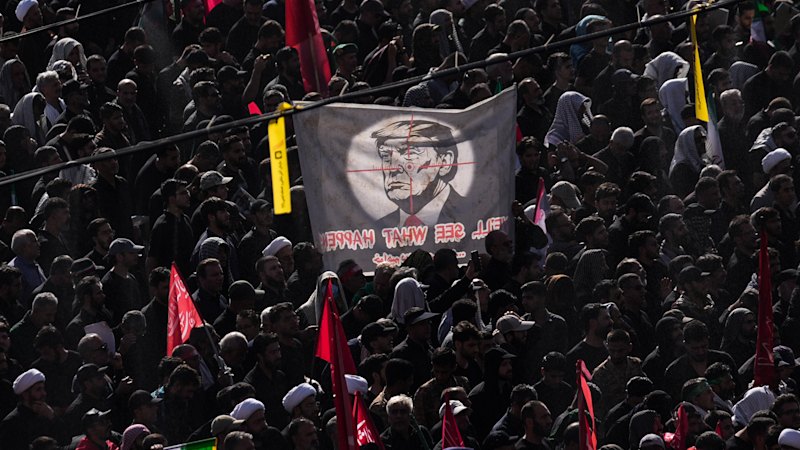
When the bombs tore through the Khatam-al Anbiya Central Headquarters in Tehran on February 28, the mood in Washington and Tel Aviv was nothing short of ecstatic. Donald Trump hopped onto social media to brag about the unparalleled precision of American intelligence. Benjamin Netanyahu took to the airwaves to hint that the head of the snake had finally been severed. They had just done what no Western leader had ever dared to do. They assassinated a sitting head of state, the 86-year-old Supreme Leader of Iran, Ayatollah Ali Khamenei.
The strategic calculation behind the strike was simple. Take out the aging autocrat, and the decades-old Islamic Republic would shatter under the weight of its own internal contradictions. The regime would implode, the Iranian people would rise, and the axis of resistance would wither away.
It was a beautiful theory. It was also completely wrong.
Fast forward to today, and the reality on the ground looks terrifyingly different from what was envisioned in the situation rooms. Instead of a collapsed regime begging for terms, the world is witnessing a chillingly unified, hyper-aggressive, and younger Iranian leadership that has effectively backed the West into a corner. By removing the old guard, Trump and Netanyahu did not destroy their enemy. They accidentally cleared away the final bureaucratic obstacles for a far more reckless generation of hardliners to take absolute control.
Tactical brilliance has once again birthed a massive strategic disaster.
The Illusion of the Decapitation Strategy
Western military doctrine loves decapitation strikes. The underlying philosophy assumes that highly centralized, authoritarian regimes depend entirely on the singular will of a dictator. Remove the dictator, and the system freezes. We saw this line of thinking when the U.S. killed Qasem Soleimani in 2020, and we saw it again during the opening hours of the offensive this past February.
What this approach consistently ignores is institutional resilience. The Islamic Republic is not just a cult of personality centered around one man. It is a highly institutionalized bureaucratic state backed by a massive military-industrial apparatus in the form of the Islamic Revolutionary Guard Corps.
Ali Khamenei was an ideological hardliner. No one is disputing that. He spent over three decades screaming "Death to America" and funding militant proxies across the region. But he was also a profoundly cautious, deeply calculating political actor.
To understand why his absence has made Iran more dangerous, you have to look at the history of the regime. Khamenei lived through the brutal eight-year war with Iraq in the 1980s. He watched Iran lose a million soldiers and see its economy get pulverized. That experience left him with a specific mentality. For him, the ultimate goal was always the survival of the regime itself. He believed in pushing boundaries, but he also knew exactly when to pull back.
Under his watch, the regional proxy network was meant to act as a shield. It was a ring of defense designed to keep any potential conflict far away from Iran’s actual borders. He explicitly forbade a direct, all-out confrontation with the United States. He knew Iran would lose a conventional war against America. When Israel or the West pushed too hard, Khamenei was willing to swallow the bitter pill of strategic patience to keep his regime alive.
By erasing him from the equation, Trump and Netanyahu eliminated the only man in Tehran who had both the authority and the historical inclination to practice restraint.
Enter Mojtaba and the Rise of the War State
With the old ayatollah gone, the power vacuum did not last long. Power quickly consolidated around his son, Mojtaba Khamenei, alongside a younger cadre of military commanders who do not share the old guard's caution.
This new leadership group did not grow up in the shadow of the ruinous Iran-Iraq war. They grew up during an era of Western hesitation, observing America's chaotic withdrawals from Iraq and Afghanistan. They do not view the United States as an unstoppable superpower. They view it as a declining empire that is deeply allergic to sustained military conflict.
The internal political dynamic in Tehran has shifted fundamentally. The old debates between the so-called reformists under President Masoud Pezeshkian and the ultra-hardliners are basically over. The state funeral for the elder Khamenei was intended to project national unity, but behind the scenes, it served as a stage for a quiet, internal coup.
Hardliners have successfully weaponized the assassination to silence anyone advocating for diplomatic compromise. Prominent figures who suggested continuing talks with Washington have been branded as traitors to the memory of the martyred leader. The state-run media outlets are now dominated by a single, uncompromising message. Retribution is not just a policy preference, it is a national requirement.
How Tehran Called the American Bluff
The most immediate consequence of this political shift became obvious when the 60-day memorandum of understanding between Washington and Tehran collapsed. The interim deal was supposed to create breathing room for diplomacy. Instead, the new leadership in Tehran decided to test Donald Trump's limits.
They did not hide in bunkers. They went on the offensive.
Iranian-backed forces renewed their attacks on commercial shipping in the Strait of Hormuz, throwing global energy markets into absolute chaos. When the U.S. military responded with a series of airstrikes inside Iran, the new regime did something Ali Khamenei would have considered suicidal. They launched retaliatory strikes against U.S. allies in the region, targeting installations in Bahrain, Jordan, Kuwait, and Qatar.
This aggressive pushback put the White House in an incredibly difficult position. Donald Trump recently fired off a late-night social media post warning that 1,000 American missiles are locked and loaded, threatening to destroy Iran if they attempt to assassinate him or other high-ranking officials. He even authorized a directive allowing the military to strike back with overwhelming force.
But look past the bluster. Look at what is actually happening.
Despite the fierce rhetoric, American negotiators are still trying to keep channels open in Oman. Why? Because the administration knows that a full-scale conventional war with an unhinged, highly motivated Iranian military would require hundreds of thousands of ground troops, trillions of dollars, and would likely plunge the global economy into a massive depression.
By showing that they are willing to risk everything, the new leaders in Tehran have effectively neutralized the threat of American maximum pressure. They realize that Trump’s political brand relies on ending foreign entanglements, not starting massive new ones. The assassination was meant to project absolute Western strength. Instead, it exposed the limits of Western deterrence.
The Flawed Expectation of Domestic Collapse
The biggest mistake made by Western planners was assuming that the Iranian public would use the chaos of the assassination to overthrow the theocracy.
It is true that the domestic situation in Iran is bleak. The economy is facing brutal inflation approaching 70 percent. For millions of ordinary citizens, their daily paychecks can barely cover the cost of basic food. The regime is deeply unpopular, especially among a younger generation that is sick of social restrictions and political repression.
However, Western strategists consistently misunderstand how societies react to external aggression. When a foreign superpower drops bombs on a nation’s capital and kills its leadership, the immediate reaction is rarely a democratic revolution. The more common reaction is a surge of defensive nationalism.
The regime has masterfully exploited the strikes to wrap itself in the Iranian flag. They have turned the public squares into state-sponsored mourning hubs, providing food and nationalistic spectacles to keep supporters mobilized. The message to the broader public is simple. If the regime falls right now, the country will be carved up by American and Israeli bombs. For many citizens who hate the theocracy, the fear of turning into the next Iraq or Syria is enough to keep them off the streets.
The opposition has no weapons, no unified leadership, and no clear path to power. The security forces, conversely, have machine guns, absolute authority, and a clear mandate from the new Supreme Leader to crush dissent. Expecting a peaceful democratic transition in the middle of an active military conflict is a fantasy.
What Happens When the Smoke Clears
The Middle East is now trapped in an incredibly volatile environment where the old rules of engagement no longer apply. The guardrails are gone.
If you are tracking this conflict, stop looking for signs of a sudden regime collapse in Tehran. It is not happening. Instead, look for these specific indicators to see where this dangerous escalation is heading next:
- The Status of the Strait of Hormuz: Watch whether Iran attempts to formalize its control over the waterway by demanding transit fees from international vessels. This will be the ultimate test of whether the West is willing to fight a naval war to keep global trade flowing.
- The Acceleration of the Nuclear Program: With the old diplomatic frameworks completely dead, the new military leadership has every incentive to rush toward a usable nuclear weapon as the ultimate insurance policy against future assassinations.
- The Transformation of the Proxy Network: Keep an eye on how the IRGC reshapes its regional alliances. Instead of using groups like Hezbollah or the Houthis as defensive shields, they may begin utilizing them as offensive tools to keep Western forces permanently off balance.
The assassination of Ali Khamenei will likely be studied for decades as a classic textbook example of tactical success leading directly to a strategic failure. Trump and Netanyahu wanted to project power and eliminate a long-time adversary. Instead, they managed to replace a predictable, cautious enemy with an unpredictable, hyper-aggressive adversary that is more than willing to watch the region burn.