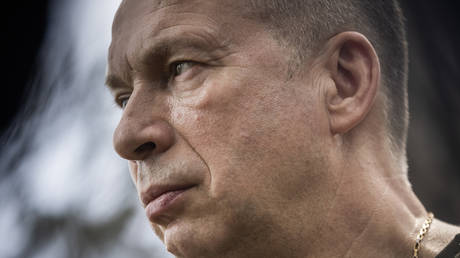
When Hamas announced Khalil al-Hayya as its new top political leader following a multi-month wartime election, nobody expected him to pull punches. Two days later, in his first official speech as head of the movement, al-Hayya laid out a firm stance. He demanded an immediate shift from fragile temporary truces to a permanent Gaza ceasefire, complete Israeli military withdrawal, and a massive push for reconstruction.
His address comes at a breaking point for the region. While an October 2025 ceasefire exists on paper, the situation on the ground tells a very different story.
       [2024]                  [Oct 2025]             [July 2026]
  Assassination of          Fragile Truce Signed     Khalil al-Hayya Elected
  Yahya Sinwar &            Gaza Divided by          Calls for Permanent
  Ismail Haniyeh            "Yellow Line"            Ceasefire & Reconstruction
What the New Hamas Leader Demanded in His Speech
Khalil al-Hayya didn't mince words during his first formal address. He made it clear that temporary pauses in fighting aren't working for Palestinians living under bombardment.
His core demands centered on four main pillars.
First, he called for a complete and permanent end to the war, rejecting any arrangement that allows Israeli forces to resume operations at will. Second, he insisted on the full withdrawal of Israeli troops from all parts of Gaza, including the restricted access zones that have sliced through the enclave. Third, he demanded the immediate opening of all border crossings to accelerate reconstruction and allow vital aid to flow freely. Finally, he rejected any plans that involve the forced displacement of Palestinians or foreign governance over Gaza, calling instead for unified Palestinian decision-making.
The timing of this speech isn't accidental. It marks a clear strategic position from Hamas's new leadership following the death of former chief Yahya Sinwar in late 2024.
The Reality Behind the Fragile Gaza Truce
To understand why al-Hayya is pushing so hard for a permanent deal, you have to look at what has been happening since the truce was signed in October 2025.
The agreement was meant to bring relief, but local monitoring groups and humanitarian organizations report that violence hasn't stopped. Over 1,100 Palestinians have been killed in Gaza during the temporary ceasefire period alone, with thousands of violations recorded by local officials.
The Expanding Yellow Line
A major point of friction is the "Yellow Line"—concrete markers placed by the Israeli military after the truce to mark off buffer zones.
Instead of remaining fixed, these demarcation lines have repeatedly shifted westwards into civilian areas. According to UN data from the Office for the Coordination of Humanitarian Affairs (OCHA), restricted military zones expanded to cover nearly 65 percent of the Gaza Strip by mid-2026.
When yellow blocks are moved a few hundred meters in places like Deir el-Balah or the Zeitoun neighborhood, entire families lose their homes and agricultural lands overnight. That isn't a working truce. It's a slow-motion expansion that leaves millions of displaced people trapped with nowhere left to go.
Why al-Hayya's Leadership Choice Matters
Khalil al-Hayya isn't a new face in Palestinian politics, but his ascension to overall leader changes the political dynamic. Born in Gaza in 1960 and an active member of Hamas since its founding in 1987, al-Hayya served as the chief negotiator during previous diplomatic rounds in Cairo and Doha.
Unlike field commanders operating inside Gaza's underground network, al-Hayya has spent years operating in diplomatic hubs like Qatar. That gives him direct access to regional mediators in Egypt, Turkey, and Iran.
In the internal run-off election against Khaled Meshaal, al-Hayya won support across different factions within the group, including delegates in Gaza, the West Bank, Israeli prisons, and the diaspora. Israeli officials often view him as a uncompromising negotiator with tight links to Tehran, while regional diplomats see him as the main figure capable of delivering a binding agreement.
His personal history also carries weight within Gaza. Al-Hayya has lost multiple immediate family members to Israeli airstrikes over the past two decades, including four of his children. His stance reflects both personal loss and the institutional line of a group trying to survive intense military pressure.
Key Differences Between Temporary Truces and a Permanent Deal
Media coverage often treats all ceasefire proposals as identical, but the practical differences between a temporary pause and a permanent agreement are massive for people on the ground.
- Security vs. Uncertainty: Temporary truces leave troops stationed inside buffer zones, keeping populations under constant threat of renewed strikes. A permanent deal requires full troop withdrawals.
- Reconstruction Efforts: International donors won't fund heavy rebuilding projects or repair critical infrastructure while fighting can resume at any moment. Permanent peace is a prerequisite for long-term aid.
- Displacement: Short-term pauses leave people stuck in makeshift tent camps along the coast. A permanent end to hostilities allows displaced families to return to their original neighborhoods and rebuild.
What Needs to Happen Next
Talk is cheap in international diplomacy, and speeches don't rebuild ruined cities by themselves. If this call for a permanent ceasefire is going to yield actual results, several concrete steps must follow immediately.
International mediators in Qatar and Egypt need to use this leadership transition to reset negotiations with concrete guarantees, rather than vague pledges. The United States must push for clear enforcement mechanisms that stop the gradual expansion of military buffer lines. Finally, regional powers need to prioritize opening border points so medical supplies and construction materials can reach the communities that need them right now.
Without those real steps, calls for peace will remain just another speech while conditions on the ground continue to deteriorate.