You can't freeze reality, no matter how hard a political coalition tries. The Israeli Supreme Court made that abundantly clear on Wednesday by immediately blocking a highly controversial law aimed at shielding ultra-Orthodox draft dodgers from arrest. It’s a whiplash development that has pushed the country's delicate balance of religious exemption and national survival to a breaking point.
Just twenty-four hours earlier, Prime Minister Benjamin Netanyahu’s right-wing coalition managed to push a bill through the Knesset to ban the arrest, investigation, and prosecution of Haredi draft evaders. The plan was clear: freeze the legal system for seven months to buy time until the October 27 general election. But Supreme Court Justice Ofer Grosskopf shut it down almost instantly, issuing a temporary freeze and demanding the government explain why the law shouldn't be permanently struck down.
This isn't just another dry legal debate. It’s a high-stakes standoff where the survival of a government is clashing directly with the survival of an army.
The Law That Failed in Twenty-Four Hours
The legislation passed by the Knesset was a blatant political band-aid. Had it survived the week, it would have halted all enforcement measures against ultra-Orthodox men who refuse their military conscription orders until November 30. Due to the legal mechanics of upcoming elections, that freeze would have effectively stretched into February 2027.
The government’s excuse? They claimed the law was meant to provide time to build "agreement within Israeli society".
But let's be honest. Nobody bought that.
The opposition, led by Yair Lapid and Avigdor Liberman, filed immediate petitions to the High Court. Their argument was simple and devastating: the law is explicitly discriminatory. It pauses the law for one specific demographic while leaving non-Haredi draft evaders fully subject to criminal prosecution. Justice Grosskopf agreed that these arguments carried "significant weight," citing the court's long history of demanding equality in military service.
An Army Out of Breath
To understand why this court battle is so vicious, look at the state of the Israel Defense Forces (IDF). We're in 2026, and the military is facing a brutal manpower crisis after years of multi-front conflicts across Gaza, Lebanon, and Syria.
The numbers tell the story:
- The IDF is actively short of about 8,000 combat troops.
- There are roughly 72,000 eligible ultra-Orthodox men aged 18 to 24 who are not serving.
- Reservist turnout, which historically held the line, has seen significant strain as citizens face endless deployments.
Before the vote, IDF Chief of Staff Lt. Gen. Eyal Zamir took the rare step of publicly blasting the proposed law. He called the legislation "inconceivable" and warned that it threatened to break the concept of the IDF as the "nation's army". When the top general warns that the military could face structural collapse because a political class refuses to share the burden of war, the debate stops being academic. It becomes an existential threat.
The Political Math Behind the Maneuver
Netanyahu isn't pushing these laws out of deep theological conviction. He's doing it because his political life depends on it.
His coalition relies entirely on ultra-Orthodox parties like Shas and United Torah Judaism. For decades, these parties have treated total draft exemption as a non-negotiable condition for their participation in any government. Earlier this week, the coalition even passed a symbolic Basic Law declaring Torah study a "fundamental value" of the state, trying to build a legal fortress around these exemptions.
The immediate reaction from the government to the court's freeze shows how desperate things have become. Communications Minister Shlomo Karhi went so far as to call on the police and authorities to completely ignore the Supreme Court’s order, claiming the judiciary has no authority to suspend laws. When government ministers openly advocate for ignoring the highest court in the land, you're no longer just dealing with a draft crisis—you're looking at a full-blown constitutional breakdown.
What Happens Next
The temporary freeze is only the first round. The Supreme Court is rushing to hold a full hearing on the petitions as quickly as possible.
Here's how the next few months will realistically play out:
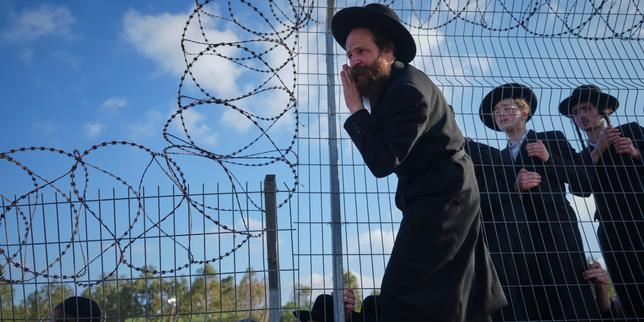
- Escalating Street Protests: Expect rapid, volatile unrest from both sides. Secular groups and reservist organizations are ready to mobilize to ensure the draft is enforced, while the ultra-Orthodox community has already demonstrated that it will shut down highways and clash with police to protect its status quo.
- A Polarized Election Campaign: The October general election will become a referendum on the military draft. The opposition will campaign entirely on equal service, while Netanyahu will double down on shielding his religious base to secure their loyalty for a post-election coalition.
- An Open Judicial Rebellion: If the government follows through on threats to ignore the court's rulings, Israel enters uncharted legal territory where law enforcement agencies will have to choose between obeying the cabinet or the High Court.
The strategy of kicking the can down the road has officially run out of road. You can't run a multi-front defense strategy with a severe troop shortage while telling a massive, growing segment of the population that their only duty is to watch from the sidelines. The Supreme Court just forced the country to look in the mirror, and the reflection isn't pretty.