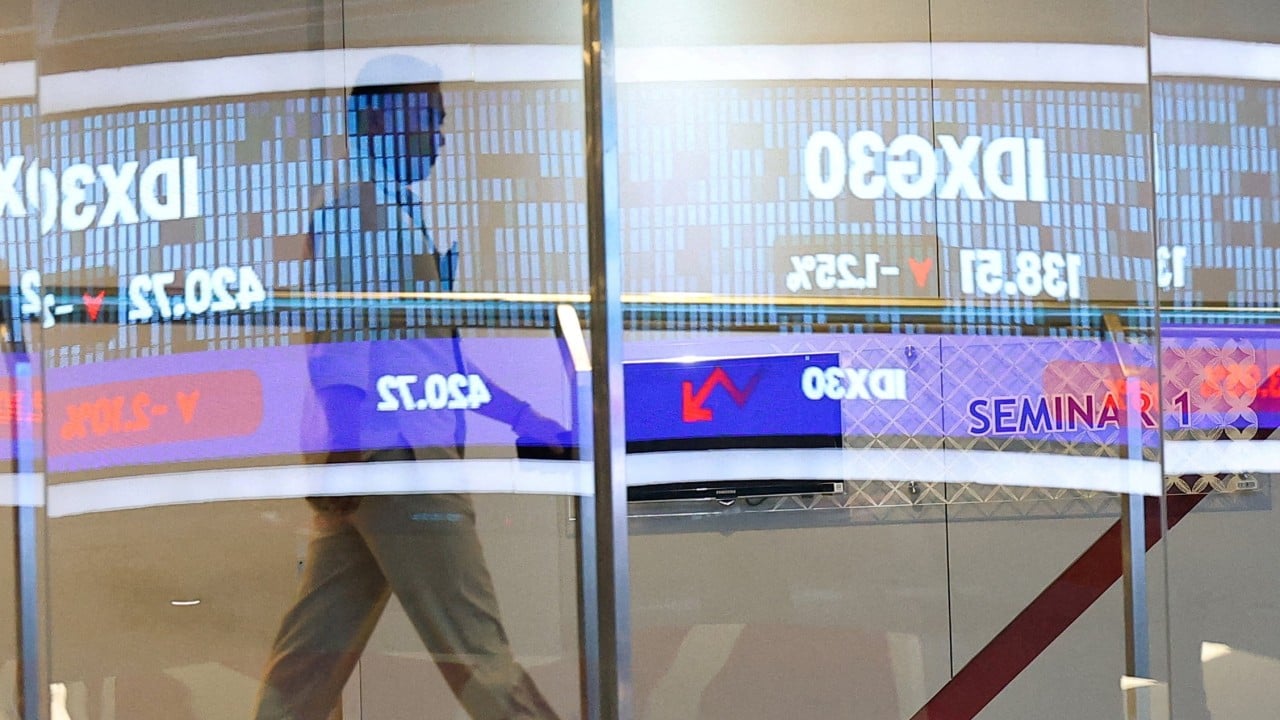
When MSCI warned early in 2026 that Southeast Asia's largest economy could get demoted to frontier market status, the shockwaves erased roughly $120 billion in Jakarta stock market capitalization within weeks. Foreign capital fled, the Jakarta Composite Index stumbled by double digits, and regulators in Jakarta faced a harsh reality: global fund managers were tired of market opacity.
The Financial Services Authority (OJK) and the Indonesia Stock Exchange (IDX) didn't just sit on their hands. They rushed out a series of aggressive structural changes to satisfy MSCI's market accessibility criteria before the index provider's June market classification review. Read more on a connected topic: this related article.
The immediate disaster was averted. MSCI preserved Indonesia's Emerging Market status in its mid-2026 review. Yet anyone celebrating this as a final victory is missing the point. MSCI kept an index freeze active on key Indonesian equities and made it clear that if execution stalls, a formal downgrade consultation could still hit by November 2026.
Here is what really happened behind the scenes, why these market reforms matter so much for global investors, and where Jakarta's financial market goes next. Further analysis by Financial Times highlights related views on the subject.
What Triggered the MSCI Downgrade Warning
Global index providers like MSCI, FTSE Russell, and S&P Dow Jones don't judge stock exchanges solely by market capitalization or GDP growth. They care deeply about market mechanics, transparency, and operational ease for institutional investors holding billions of dollars in passive funds.
For years, institutional capital moving into Jakarta encountered persistent friction points. MSCI flagged two glaring vulnerabilities in particular: missing clarity around ultimate beneficial ownership and coordinated trading patterns that obscured true share availability.
Hidden Share Concentrations
In many Indonesian listed companies, a tiny cluster of insiders owned massive chunks of shares while only a fraction traded publicly. Worse, identifying who actually controlled those shares was frustratingly difficult. When global funds tried to buy or sell large positions, they ran into severe liquidity bottlenecks or unusual price movements that didn't reflect broader economic trends.
The Problem of Low Free Float
Indonesia previously maintained a minimum free float requirement of just 7.5% for listed companies. In practice, this meant a company could list on the IDX, maintain multi-billion-dollar market caps on paper, and leave only a paper-thin fraction of tradeable shares available for the open market. Foreign pension funds and passive tracking vehicles faced huge risks of price manipulation under those rules.
When MSCI signaled that these issues put Indonesia at risk of being downgraded from Emerging Market to Frontier Market, the stakes became existential for domestic markets. A downgrade to frontier status would force hundreds of institutional funds—which are legally mandated to hold only emerging market securities—to dump Indonesian equities simultaneously.
How OJK and IDX Responded to International Pressure
Faced with a devastating exodus of capital, Indonesian financial regulators launched a blitz of market reforms designed to answer every specific criticism raised by MSCI.
Slashing Ownership Disclosure Thresholds
Previously, investors in Indonesia only had to disclose their identity if they held 5% or more of a listed company's stock. Regulators chopped that threshold down to 1%. Under the new framework, anyone holding 1% or more of a public company's shares must be fully disclosed to the market.
This single move targeted the "shadow ownership" problem head-on. By lowering the threshold to 1%, OJK effectively exposed hidden concentrations of wealth and brought domestic equity holdings into line with international standards used in developed European and Asian markets.
Doubling the Minimum Free Float
To fix artificial price movements and thin liquidity, regulators ordered a phased doubling of the minimum free-float threshold. Companies listed on the main board must now scale up tradeable public shares from 7.5% to 15%.
IDX gave existing listed firms up to three years to comply, but new initial public offerings face strict enforcement immediately. Regulators backed this rule with harsh penalties, including public warnings, suspension of trading, and mandatory delisting for companies that refuse to comply.
Publishing High Shareholder Concentration Lists
In April 2026, OJK took the unusual step of publishing targeted watchlists identifying stocks with extreme shareholder concentration. The goal was simple: warn international investors about stocks prone to artificial price swings and pressure controlling shareholders to unload equity onto the open market.
OJK Chief Capital Market Supervisor Hasan Fawzi emphasized that these regulatory steps put Jakarta's transparency rules on par with—or even ahead of—regional peers.
Direct Outreach in New York
Regulators didn't rely on press releases alone. A delegation led by OJK official Friderica Widyasari Dewi traveled to New York to meet directly with MSCI executives. They presented concrete roadmaps, showcased technical upgrades at the Central Securities Depository (KSEI), and promised routine technical working groups between Jakarta and MSCI engineers.
Why MSCI Spared Indonesia in June but Kept the Pressure On
The regulatory blitz worked well enough to prevent an immediate catastrophe. On June 24, 2026, MSCI released its annual Market Classification Review and confirmed that Indonesia would remain in the Emerging Markets category.
However, a closer look at the review reveals that Indonesia isn't out of the woods.
MSCI noted the positive reform efforts by OJK and IDX, but it also pointed out two key areas where the country still received negative marks:
- Information Flow: Foreign institutional investors still experience delays in receiving English-language corporate disclosures simultaneously with local language filings.
- Foreign Exchange Market Liberalization: Hedging mechanisms and foreign exchange accessibility remain restricted compared to major emerging markets like Taiwan or South Korea.
Because of these remaining issues, MSCI maintained its index freeze on select Indonesian stocks. That means even though the country kept its overall category, MSCI is holding back on adding or expanding weights for certain equities until it sees consistent execution.
MSCI explicitly warned that if measurable progress isn't visible by its November 2026 Index Review, a formal consultation to reclassify Indonesia to Frontier Market status could be back on the table.
The Real Stake: Emerging vs. Frontier Status
To understand why Indonesian officials worked overtime to fix these rules, you have to look at how global money flows work.
When an asset manager runs an Emerging Markets index fund, they automatically buy shares of companies inside MSCI's Emerging Markets Index. Trillions of dollars track these benchmarks globally.
If a country falls from Emerging Market to Frontier Market, it drops into a much smaller pool of capital. Frontier market funds manage only a small fraction of the capital that emerging market funds control.
Here is what that shift means in practical numbers:
- Capital Outflows: A full downgrade would force an estimated $3 billion to $6 billion in direct passive capital to exit Indonesian equities almost overnight.
- Valuation Collapses: Mid-cap and large-cap stocks losing their index spots typically see valuation multiples shrink as liquidity dries up.
- Borrowing Costs: Sovereign and corporate borrowing costs usually rise when a country's main equity exchange gets demoted by major benchmark providers.
This is why regulators acted swiftly. For a government trying to fund ambitious infrastructure projects and economic expansion plans under President Prabowo Subianto, losing Emerging Market classification was an unacceptable outcome.
Misconceptions About the Indonesian Market Reforms
A lot of commentary around this market saga gets key details wrong.
Myth 1: "The MSCI threat was just about macroeconomic numbers"
Many retail investors assumed MSCI was reacting to inflation rates, debt levels, or GDP growth. It wasn't. MSCI's review focuses almost entirely on market accessibility, operational friction, trade settlement mechanisms, and shareholder transparency. A country can have great economic growth and still get downgraded if foreign funds cannot buy and sell shares easily.
Myth 2: "Passing new rules solves the problem instantly"
Writing a new regulation on paper takes a few weeks. Proving to global custodians that the rule actually works takes months. MSCI explicitly stated that it wants to see "consistent implementation and sustained effects" across market cycles. Passing rules in April didn't guarantee smooth sailing; the real test is whether trading behavior changes by late 2026.
Myth 3: "FTSE and MSCI always move together"
Some observers panicked that FTSE Russell would follow MSCI's warning and downgrade Indonesia as well. In reality, FTSE Russell reaffirmed Indonesia's Secondary Emerging Market status back in April 2026 without putting the country on a negative watch list. Each index provider uses different methodologies and evaluates market operational criteria independently.
What Institutional and Retail Investors Should Do Now
If you hold Indonesian equities or trade regional Asian funds, the regulatory changes offer actionable clues on how to position your portfolio ahead of the crucial November 2026 review.
Audit Your Portfolio for Free-Float Risk
Look closely at the ownership structure of any Indonesian stock you hold. Mid-cap companies with public free floats hovering right around 7.5% face pressure to issue new shares or sell existing founder stakes over the next few years. This dilution or market supply can create short-term price drag, even if the long-term governance improves.
Track English-Language Filings
Keep an eye on corporate disclosure practices. Companies that fail to publish prompt, comprehensive English disclosures on the IDX portal risk being excluded from foreign institutional portfolios as international buyers tighten their governance standards.
Watch the November 2026 Review Window
Mark November 2026 on your financial calendar. MSCI will evaluate whether the technical meetings, 1% disclosure enforcement, and free-float expansions delivered real market depth. If MSCI lifts its index freeze, expects a strong inflow of institutional capital back into Jakarta's blue-chip equities.
Indonesia took essential, overdue steps to fix its market mechanics when pushed to the edge. The regulatory framework is now substantially stronger than it was at the start of 2026, but the final judgment from global investors rests entirely on strict enforcement over the coming months.