It took only six days for federal authorities to realize they had a massive crisis on their hands.
Two dead men. Neither of them was the actual target of the operations. Both were killed inside their cars by federal agents. The resulting nationwide halt on most ICE traffic stops was as sudden as it was inevitable. For a different look, check out: this related article.
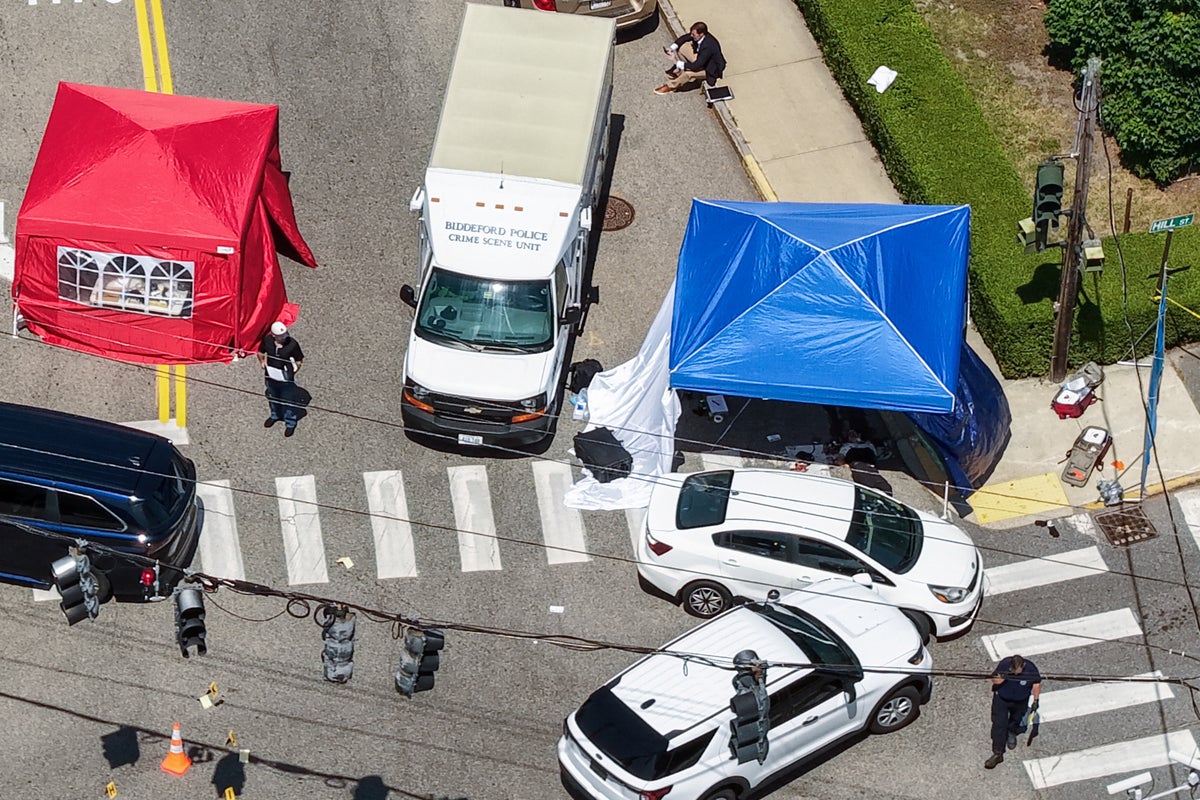
On Monday morning, July 13, 2026, an Enforcement and Removal Operations (ERO) officer in Biddeford, Maine, shot and killed 26-year-old Joan Sebastian Duran Guerrero, a Colombian national. Agents were supposedly watching a nearby house, looking for someone else entirely—a person with a final deportation order. Instead, they ended up ramming Guerrero's sedan, surrounding him with guns drawn, and firing into his car when he tried to flee.
Only six days before that, an officer in Houston, Texas, did almost the exact same thing. On July 7, 52-year-old Lorenzo Salgado Araujo was shot and killed during another vehicle stop. Again, he was not the target. Related analysis regarding this has been shared by BBC News.
By Tuesday, the Department of Homeland Security issued a quiet but sweeping order. ICE agents are now banned from pulling over cars in the vast majority of their immigration operations. The move is a staggering shift for an administration that has spent the last year bragging about its record-breaking mass deportation campaign.
But if you look closely at how these operations are run, this was entirely predictable.
The Anatomy of Two Fatal Mistakes
These were not highly coordinated, surgical strikes against dangerous criminals. They were chaotic, high-tension street encounters where federal agents ignored basic policing tactics.
Let's look at the Maine incident. Guerrero was authorized to work in the United States and held a Social Security number, according to local immigrant rights groups. He lived in a quiet neighborhood. When ICE agents moved in, they didn't just pull him over; they rammed his car. Witnesses describe a terrifying scene. Mary Hayes, a neighbor who watched the aftermath, recounted the horror of seeing Guerrero’s wife fall to her knees next to her husband's body while their young daughter, still wearing a pink school backpack, cried nearby.
The Houston shooting followed a nearly identical script. Salgado Araujo had lived in the U.S. for over three decades without a criminal record and was close to securing a work permit. ICE claimed he ignored verbal commands and tried to ram his car into an officer. But his family’s attorney raised devastating questions about the response time, noting it took twenty to thirty minutes for an ambulance to arrive after he was shot.
In both cases, federal agents turned routine immigration checks into lethal confrontations. They did so without body-worn cameras, which DHS conveniently claims are unavailable due to funding issues from government shutdowns. Without footage, the public is left to rely on bystander videos and the official agency narrative, which almost always claims the officer "feared for public safety".
Why ICE Vehicle Stops are Inherently Flawed
There is a reason local police departments nationwide have heavily restricted or outright banned their officers from shooting at moving vehicles. It is bad policing.
The New York Police Department banned firing at moving vehicles back in 1972. Since then, nearly every major city department has followed suit. The logic is simple and practical. Shooting a driver does not stop a car. If you shoot the person behind the wheel, you do not magically freeze the vehicle; instead, you turn a guided three-ton steel machine into an unguided projectile flying toward bystanders or other officers.
Standard police training dictates a clear rule: get out of the way.
But ICE agents have repeatedly ignored this rule. They routinely put themselves directly in front of or behind vehicles during stops, creating a self-inflicted danger that they then use to justify lethal force.
This is not a new pattern. Back in January 2026, a Wall Street Journal investigation identified at least 13 incidents where immigration officers fired into civilian vehicles over a short span, injuring several people—including five U.S. citizens.
The most famous of these was the killing of Renée Nicole Macklin Good, a 37-year-old mother and U.S. citizen, in Minneapolis on January 7, 2026. Good had stopped her car to support her immigrant neighbors during an ICE action. An agent circled her car, stood near the front-left, and when she began to drive away, fired three shots through her windshield and driver-side window, killing her.
Federal officials claimed the agent was about to be run over. Video analysis later proved the agent was standing completely clear of the car's path when he opened fire.
When federal immigration agents treat every vehicle that tries to drive away as an imminent deadly threat, tragedies are inevitable.
The Backroom Politics of the Policy Shift
If the humanitarian toll wasn't enough to stop the practice, the political pressure finally did.
The turning point came on Monday night. Susan Collins, the Republican Senator from Maine, was alarmed by the shooting in Biddeford. She personally called DHS Secretary Mullin and urged him to immediately halt all "non-urgent" vehicle stops.
"While the investigation of the Biddeford shooting is not yet complete, it raises sufficient critical questions that I spoke with DHS Secretary Mullin last night and urged him to cease all non-urgent vehicle stops."
— Senator Susan Collins via X (July 14, 2026)
The administration’s ERO division issued the directive the next morning. The instructions are clear: halt the initiation of vehicle stops nationwide.
If agents want to stop a car, they must now meet a much higher bar. The target must have a serious or violent criminal history, and ICE must coordinate with local law enforcement partner agencies to execute the stop under a judicial warrant.
DHS has refused to publicly detail the new guidance, hiding behind a boilerplate statement about "not discussing law enforcement tactics". But internal sources confirmed the ban is real, nationwide, and effective immediately.
It is a rare retreat for a White House that usually defends its immigration tactics at all costs. But with 11 fatal federal immigration shootings since the administration took office last year, the political damage was becoming impossible to ignore.
The Legal Ground and Your Rights
Can immigration agents legally pull you over in the first place? Yes, but only under very specific, strict conditions.
Many people don't realize that federal immigration agents do not have the authority to pull you over for a routine traffic violation like speeding or a broken taillight. That power belongs strictly to state and local police.
For ICE or Border Patrol to stop your vehicle, they must have reasonable suspicion that someone inside the car is committing a crime or is subject to deportation. "Reasonable suspicion" is a real legal standard, not just a hunch or a profile. Except for random immigration checkpoints located within 100 miles of the physical U.S. border, agents cannot target individual cars on a whim.
Furthermore, a landmark federal court order in January 2026 specifically banned federal agents from stopping or detaining drivers who are simply following them at a safe distance. This was a major victory for community monitoring groups, who had routinely been targeted and charged with "interfering" with federal agents just for filming their activities from public streets.
What to Do If You Are Pulled Over
The nationwide pause on ICE traffic stops is supposed to be temporary while agents undergo "further training". Whether that training actually changes the agency's culture remains to be seen. In the meantime, you need to know how to protect yourself.
- Stay calm and keep your hands visible. This is the most critical safety rule. Do not make sudden movements or reach into your glove box or pockets without stating what you are doing first.
- You have the right to remain silent. You do not have to answer questions about your immigration status, where you were born, or how you entered the country. If you choose to remain silent, state it clearly: "I am exercising my right to remain silent."
- Do not consent to a search. Agents may ask to search your vehicle. You have the right to say no. State clearly: "I do not consent to a search of my car."
- Record the interaction. If you are a passenger or a bystander, you have a constitutional right to record federal law enforcement officers executing their duties in public spaces, provided you do not physically interfere with their operations.
- Ask if you are free to leave. If you are stopped, ask the officer: "Am I being detained, or am I free to go?" If they do not have reasonable suspicion, they must let you leave.
ICE’s aggressive use of pretextual vehicle stops has cost too many lives. While the agency tries to figure out how to do its job without turning residential streets into shooting galleries, your best defense is knowing your rights and refusing to let federal agents bypass the law.