Ten years is a lifetime in politics. In Turkey, it's long enough to turn a night of genuine terror into a rigid state myth.
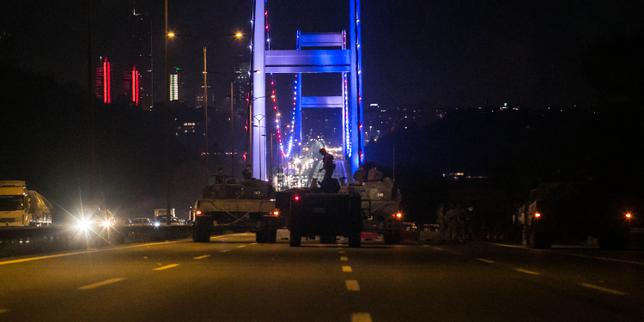
Walk through Istanbul or Ankara in mid-July 2026, and you're surrounded by the official machinery of memory. Giant banners hang from glass skyscrapers. Digital screens in metro stations display the faces of the "martyrs". The Bosphorus Bridge, where civilians faced down tanks under a humid summer sky, has long been renamed the July 15 Martyrs Bridge. Meanwhile, you can find other stories here: Why Pride Still Matters In 2026.
Officially, this is the Day of Democracy and National Unity. The government wants you to remember it as a glorious popular triumph, a moment when ordinary citizens saved the republic.
The reality on the ground is far more complicated, and infinitely more bitter. To see the bigger picture, check out the detailed report by NBC News.
Behind the patriotic songs and state-sponsored drone shows lies a deeply polarized country. For half of Turkey, July 15, 2016, is the day their democracy was saved. For the other half, it's the exact moment their remaining freedoms died.
The Night That Fractured a Nation
To understand the bitter division in Turkey today, you have to remember how chaotic that night actually was. It wasn't a clean, cinematic battle. It was messy, terrifying, and deeply confusing.
On July 15, 2016, a rogue faction within the Turkish military attempted to overthrow President Recep Tayyip Erdogan. They closed the bridges. They seized the state broadcaster, forcing a visibly shaken anchor to read their manifesto at gunpoint. Fighter jets flew low over Ankara, breaking the sound barrier and shattering windows across the capital.
Then came the turning point.
Erdogan, speaking through a FaceTime connection on a journalist's smartphone, called on the public to take to the streets. Thousands complied. They stood in front of tanks. They marched toward gunfire.
By morning, the putsch had collapsed.
The human cost was devastating. A total of 253 people were killed. More than 2,700 were injured.
On July 16, there was a brief, fragile moment of national unity. Every major political party, including the secular opposition, condemned the coup attempt. No one wanted a military junta. The country had survived four previous military interventions since 1960, and nobody wanted a fifth.
That unity lasted about forty-eight hours.
The Purge That Swallowed the State
What came next wasn't a targeted investigation. It was a dragnet of historic proportions.
The government placed the blame entirely on the followers of Fethullah Gulen, a US-based cleric and former close ally of Erdogan. While the Gulenist network had undoubtedly spent decades placing its people inside the military, judiciary, and police, the state's response went far beyond punishing the conspirators.
Erdogan famously called the failed coup a "gift from God". It gave him the perfect mandate to clean house. He didn't just fire suspected coup plotters. He restructured the entire Turkish state.
Take a look at the sheer scale of the post-coup purge:
- Public employees: Over 150,000 civil servants, including teachers, doctors, and police officers, were summarily dismissed via state decrees.
- The judiciary: Nearly one-third of all judges and prosecutors in Turkey were removed overnight, replaced by young loyalists.
- The military: Thousands of officers were jailed or dismissed, effectively decapitating the command structure of NATO's second-largest standing army.
- Media and civil society: Hundreds of news outlets, universities, and non-governmental organizations were closed down.
For millions of Turks, this was the real coup.
If your name appeared on a government decree list, your life was effectively over. You lost your job. Your passport was cancelled. You couldn't get a job in the private sector because companies feared government retaliation. Your bank accounts were frozen. You became a social ghost.
I've talked to families who had to rely on relatives for food money because a distant cousin had once deposited funds in a Gulen-linked bank. The guilt by association was absolute. It broke families, ruined careers, and drove thousands into exile.
The Rise of Absolute Power
The long-term political consequences of July 15 are still shaping Turkish life.
Before 2016, Erdogan was a powerful but constrained leader. He faced a fiercely independent judiciary, a skeptical military, and a lively, if embattled, free press.
The failed coup cleared the board.
In 2017, Turkey held a narrow, highly controversial referendum that abolished the parliamentary system. It replaced it with an executive presidency that concentrated nearly all state power in Erdogan's hands. The office of the prime minister was wiped out. The presidency gained the power to issue decrees with the force of law, bypass parliament, and appoint top judges.
The institutional checks and balances that took decades to build were dismantled in a matter of months.
When the state holds ceremonies celebrating "national unity" today, critics see a bitter irony. True national unity requires a shared public square. Instead, Turkey has a society where speaking out against the government can get you labeled a terrorist or a traitor.
The Two Sides of the Memory
Go to the official commemorations in Ankara, and you'll hear speeches about the "Ghazi" parliament, which was bombed by its own military's jets. You'll see veterans proudly showing off their scars. To those who fought on the streets, that night was a genuine defense of their homeland. Their sacrifice was real, and their memory deserves respect.
But step away from the state-sanctioned crowds. Talk to secular liberals, Kurdish activists, or the families of the purged.
To them, July 15 represents the day Turkey officially turned its back on the rule of law. They remember the young, terrified conscripts who didn't even know they were part of a coup, some of whom were lynched by angry mobs on the bridges of Istanbul. They remember the brilliant academics who were stripped of their titles simply for signing peace petitions years earlier.
This is the bitter reality. The very event that the state uses to bind the nation together is the one that keeps it hopelessly divided.
What Observers Need to Watch Next
If you are looking at Turkey's future, whether as an investor, a political analyst, or a traveler, you have to understand that this ten-year legacy is not just history. It dictates how the country operates today.
The New Normal of Risk
The purges hollowed out Turkey's bureaucratic expertise. Decisions that used to be made by seasoned technocrats are now made by loyalists with little experience, leading to erratic economic policies and massive inflation over the last few years. When doing business in Turkey, remember that political loyalty still trump meritocracy.
The Legal Limbo
Thousands of people remain in legal limbo, fighting in international courts to get their jobs and reputations back. If you are tracking Turkish human rights or legal reforms, pay attention to the European Court of Human Rights rulings on post-coup trials. The Turkish state's refusal to implement many of these rulings remains a major sticking point in its relations with the West.
The state will continue to march, light up the Bosphorus, and praise the martyrs. But until Turkey can acknowledge the deep, systemic wounds inflicted after the tanks left the streets, the country will remain haunted by the ghost of July 15.