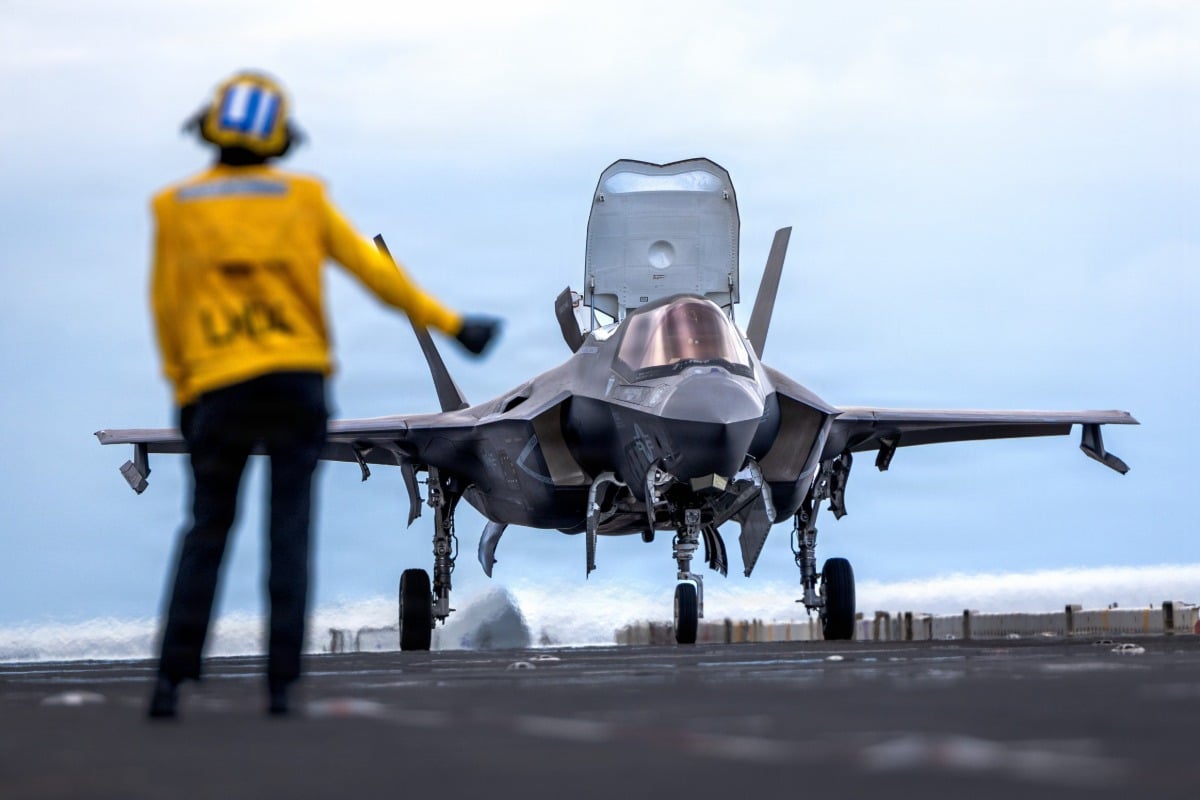
Fifth-generation stealth fighters aren't supposed to get bogged down by everyday gunk. Yet, the U.S. Navy and Marine Corps are staring down a messy reality with the F-35B Lightning II. It turns out that executing short takeoffs and vertical landings (STOVL) creates an unintended byproduct: a thick, hardened paste that threatens the aircraft's propulsion health.
The problem centers on the F-35B’s LiftFan clutch cooling system. To understand why this happens, look at how the STOVL system operates. When the F-35B transitions from conventional flight to a vertical hover, a massive clutch engages the engine's main driveshaft to spin the Rolls-Royce LiftFan located right behind the cockpit. That heavy engagement generates intense heat and friction. To manage this, the aircraft relies on a specialized cooling system that relies on synthetic oil to keep things from melting.
The friction also sheers away microscopic particles from the clutch’s carbon fiber plates. When that fine carbon fiber dust mixes with airborne synthetic oil mist, it creates a sticky, abrasive slurry. Over dozens of flight hours, this slurry bakes inside the high-temperature exhaust ductwork and vent panel screens, curing into a stubborn substance known officially as clutch sludge.
Why Clutch Sludge Is a Maintenance Nightmare
The F-35 Joint Program Office (JPO) recently flagged this issue, issuing an urgent Request for Information (RFI) to locate commercial tech that can scrub the internal ductwork without destroying the jet. This isn't just about cosmetic buildup. Left alone, the sludge restricts the airflow through the clutch cooling exhaust ducts. If the exhaust vents get choked off by hardened carbon-oil crust, heat builds up rapidly within the clutch housing.
Excessive heat kills high-performance machinery. In a worst-case scenario, an overheated clutch could fail to engage properly or warp during critical vertical landing operations. Maintainers can't just take a pressure washer to the inside of a trillion-dollar stealth fighter. The ductwork is tightly integrated, and using the wrong cleaning tools risks damaging sensitive low-observable coatings, structural composites, or nearby electronics.
Right now, clearing the gunk requires intense manual labor, which drives down the aircraft's mission-capability rates. The Navy needs a deployable, on-site cleaning system that can hook directly to the F-35B’s unique hardware. The goal is to blast away the hardened sludge using precisely controlled water temperatures and pressures, while simultaneously vacuuming up the toxic runoff so it doesn't pool inside the airframe.
The Marine Corps Bearing the Brunt
While the F-35C (the Navy's carrier variant) and the F-35A (the Air Force's conventional runway variant) deal with their own maritime issues—like airframe discoloration and galvanic corrosion from salty sea air—the sludge issue is entirely unique to the F-35B. Because the Marines rely heavily on the B-model to operate from amphibious assault ships and austere forward bases, their maintenance crews are the ones stuck dealing with the buildup.
This discovery follows a string of recent quality-control and maintenance headaches for Marine fighter squadrons. Documents leaked from Marine Fighter Attack Squadron 311 (VMFA-311) revealed that newly delivered jets arrived with factory defects, including metal shavings and Krytox grease contaminating the fuel lines. Adding a recurring sludge problem to the mix further strains ground crews who are already playing catch-up on complex fleet sustainment.
What Happens Next
The JPO's Propulsion Support Equipment Sustainment Manager is fast-tracking engineering trials to find a fix. They're evaluating commercial off-the-shelf cleaning hardware that can be modified to safely mate with the jet’s exhaust vents. The military wants a system that can be deployed directly to Marine Corps Air Stations, ensuring that squadrons don't have to ship aircraft back to deep depots just to clear out clogged plumbing.
For tactical aviation, the immediate next steps involve testing these specialized pressure-washing and effluent-capture rigs on grounded testbeds. Until a standardized, automated tool is fielded across the fleet, expect maintainers to spend extra hours under the fuselage, keeping a close eye on the vents to ensure the world’s most advanced jump-jet doesn't choke on its own dust.