You don't have to look far to see the baffling nature of human genetics. Two siblings born to the exact same parents can look like they come from different continents. One gets a shock of thick, curly black hair. The other winds up with fine, straight blonde strands.
If they share the same biological blueprint, how does this happen?
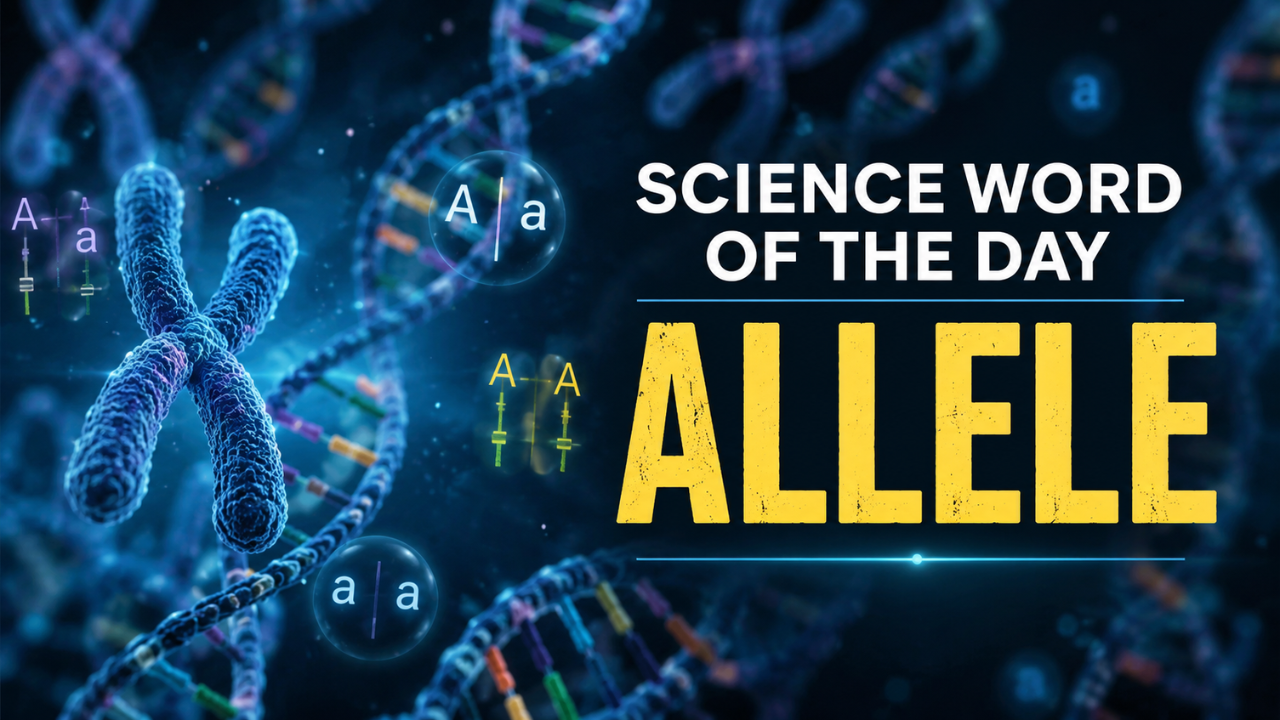
The answer doesn't lie in your genes alone. It lives in the specific flavors of those genes. We call these variations alleles. Think of a gene as a master recipe for a dish, like cookies. An allele is the specific tweak to that recipe—one version adds chocolate chips, while another adds raisins. You're still getting cookies, but the outcome looks and tastes completely different. Understanding this distinction changes how you view your health, your ancestry, and the future of medicine.
What is an Allele Anyway
Let's clear up the messy terminology that text books often butcher. People frequently use "gene" and "allele" interchangeably. That's a mistake.
A gene is a specific segment of DNA located on a chromosome that codes for a general trait, like eye color or blood type. An allele is the specific variation of that gene.
Because you inherit one set of chromosomes from your mother and one set from your father, you carry two alleles for every gene. Scientists call this specific position on the chromosome a locus.
- Homozygous: You inherited the exact same allele from both parents.
- Heterozygous: You inherited two completely different alleles for that gene.
When you have two different alleles, they don't always compromise. Usually, one takes charge. This is the dominant allele, and it masks the expression of the other, which we call the recessive allele. If you have one allele for brown eyes and one for blue eyes, your eyes will be brown. The brown allele simply overrides the blue one. To end up with blue eyes, you need to inherit the recessive blue allele from both parents.
The Brilliant Rebel Who Named the Variations
We didn't always have a clean word for this phenomenon. In fact, when Gregor Mendel famously cross-bred pea plants in his monastery garden during the 1860s, he didn't even know what DNA was. He just knew there were distinct "factors" controlling whether a pea plant grew tall or short.
The actual word came much later, thanks to a defiant British zoologist named William Bateson.
Working alongside fellow geneticist Edith Rebecca Saunders in 1902, Bateson found himself frustrated by the lack of precise language to describe the messy reality of heredity. He was the chief champion of Mendel’s forgotten laws of inheritance in the English-speaking world. To describe the contrasting pairs of characteristics, Bateson and Saunders coined the term allelomorph, which they pulled from the Greek words allelo (meaning "each other" or "reciprocal") and morph (meaning "form").
Basically, the word literally means "other form."
As time went on, the clunky five-syllable word proved to be a bit of a mouthful for scientists working in fast-moving laboratories. The community eventually chopped it down to just allele. Bateson didn't just give us this word, either. He's the same guy who coined the term "genetics" itself, effectively building the linguistic framework for the entire field.
How Alleles Shape Modern Medicine and Technology
This isn't just dusty scientific history. The way these genetic variations interact drives some of the most critical breakthroughs in modern healthcare, forensics, and conservation biology today.
Pharmacogenomics
Have you ever wondered why a standard dose of pain medication works perfectly for your friend but leaves you feeling absolutely miserable or completely unaffected? It's not in your head. It's in your alleles. The field of pharmacogenomics studies how your specific genetic variants influence your response to drugs.
For instance, the liver enzyme CYP2D6 is responsible for processing a massive chunk of prescribed medications, including antidepressants and codeine. Depending on which alleles you carry, you might be a poor metabolizer or an ultra-rapid metabolizer. Knowing this allows doctors to skip the dangerous trial-and-error phase of prescription writing and hand you a personalized dosage that actually works.
Forensic Science and Identification
When forensic scientists analyze a crime scene, they aren't looking at your entire genome. That would take too long and cost too much. Instead, they look at specific regions of non-coding DNA called Short Tandem Repeats (STRs).
At these specific locations, the number of repeating chemical units varies wildly from person to person. These variations act as unique alleles. By comparing the specific combination of alleles across 20 distinct loci, investigators can create a genetic profile with a matching probability of less than one in a quintillion. It's the backbone of modern DNA fingerprinting.
Predicting Inherited Diseases
Some alleles carry devastating consequences. Take sickle cell anemia, a painful blood disorder. It's caused by a specific mutated allele in the gene that builds hemoglobin.
If you inherit just one copy of this mutated allele, you become a carrier but won't show severe symptoms. In an interesting evolutionary twist, carrying that single mutated allele actually protects you from dying of malaria. But if two carriers have a child together, there's a 25% chance the child will inherit the mutated allele from both parents, resulting in full-blown sickle cell disease. Genetic testing allows prospective parents to screen for these hidden variants before planning a family.
Step Inside Your Own Biology
If you want to move past the theory and see how your own alleles manifest, look at the physical traits you carry. While things like height and intelligence involve hundreds of genes working together, a few simple traits provide a quick glance at your dominant and recessive variants.
Check your earlobes. Are they detached and dangling free, or do they attach directly to the side of your head? The allele for detached earlobes is dominant. If yours are attached, you're looking at a pure expression of recessive alleles.
Next, try to roll your tongue into a U-shape. If you can do it, you carry at least one copy of the dominant tongue-rolling allele. If you can't, no amount of practice will change it—your alleles simply didn't write that capability into your muscular blueprint.
Your traits are a living record of genetic choices made generations ago. If you want to dive deeper into your personal genetic makeup, consider looking into a reputable consumer health genotyping service. Just make sure you research their data privacy policies first so you know exactly who has access to your biological data.