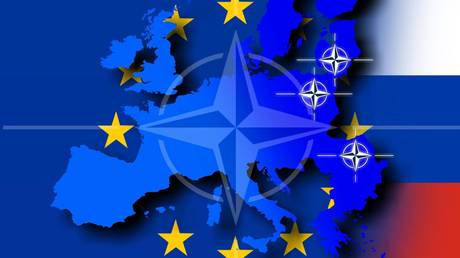
Washington is looking elsewhere. For decades, Western Europe could comfortably rely on the massive military umbrella of the United States to handle any major security threat from the east. That era is officially over. As American strategic priorities pivot hard toward the Indo-Pacific and internal political shifts create unpredictability in Washington, European leaders find themselves holding the reins. They aren't just filling a gap. They're increasingly becoming the primary geopolitical drivers in countering Moscow.
This structural shift within the alliance isn't just a temporary adjustment. It's a fundamental recalibration. While some observers label this as a threat to Western unity, it's actually a predictable outcome of a changing global order. European nations are realizing that their security can't be outsourced forever, especially when the threat sits right on their doorstep.
The Big Shift in the Atlantic Alliance
The concept of a Europeanised NATO has evolved from a talking point into an immediate operational reality. For years, American presidents have complained about European allies not spending enough on defense. Now, the pressure isn't just verbal. The United States is actively splitting its focus between multiple global theaters, leaving European capitals with no choice but to take ownership of their own backyard.
This shift means much more than just hitting the standard two percent GDP defense spending target. It involves taking over complex command structures, upgrading logistics, and independently maintaining the troop commitments necessary to deter regional aggression. The traditional model of absolute American leadership on security issues is giving way to a more decentralized setup where European states must manage the front lines.
Where the Money and Logistics Are Moving
Look at the actual deployments along the eastern flank. Nations like Poland, Germany, and the Baltic states are rapidly upgrading their capabilities to act as a primary bulwark. Poland is on track to build one of the largest conventional armies on the continent. Germany has fundamentally shifted its historical defense policy, committing to long-term troop deployments in Lithuania.
This isn't happening in a vacuum. The logistics of moving heavy armor, maintaining supply lines, and coordinating multi-national battle groups are transitionally shifting onto European shoulders. It's a massive undertaking because the continent spent decades letting its military muscles atrophy. Rebuilding that infrastructure takes years of sustained effort and immense financial political capital.
The Problem of Strategic Enablers
While European states can buy tanks and recruit soldiers, they still face a massive bottleneck when it comes to high-end military tools. The alliance relies heavily on American intelligence, surveillance, reconnaissance, cyber capabilities, and space-based assets. These are often called strategic enablers.
Without them, a conventional army fights half-blind. If Europe wants to truly act as the main counterweight in the region, it must develop its own sovereign versions of these systems. That means building out independent satellite networks, advanced drone fleets, and integrated command centers that don't constantly require a call to Washington to function.
Internal Fractures and the Search for Leadership
If the continent is going to take the lead, someone has to actually run the show. Right now, there isn't a single undisputed leader in Europe when it comes to security. This creates a messy dynamic where different regions have wildly different priorities.
The Frontline States Versus the West
The view from Warsaw or Tallinn is completely different from the view from Paris or Rome. For Poland and the Baltic nations, the threat is existential and immediate. They want maximum deterrence, heavy spending, and an uncompromising stance.
West European nations, while supportive, often weigh these security concerns against economic pressures and broader global diplomatic ties. This internal friction complicates the alliance's ability to present a unified front. To overcome this, regional coalitions are forming inside the broader framework, with groups of like-minded nations taking collective action without waiting for unanimous consensus from every single capital.
The Risks of a Multipolar Alliance
A decentralized alliance brings distinct challenges. When the United States called all the shots, decision-making was centralized. Now, with multiple European power centers emerging, the risk of bureaucratic gridlock rises.
If a crisis occurs, a delayed reaction due to internal political squabbling could be disastrous. Europeanizing the infrastructure requires building streamlined decision-making processes that can operate at the speed of modern conflict.
Actionable Steps for Navigating the New Security Era
This geopolitical realignment isn't just for politicians and generals to worry about. It directly impacts regional stability, economic planning, and defense supply chains. If you're analyzing or operating within this space, here are the critical areas to focus on right now.
- Track Regional Defense Procurement: Watch where the money goes. Focus on European defense joint ventures rather than purely American imports. The nations that build internal industrial capacity will hold the real political leverage.
- Monitor Logistics and Infrastructure Upgrades: True military readiness is about transport. Keep an eye on how effectively European states upgrade rail, road, and port infrastructure to handle heavy military movements across borders.
- Analyze Sovereign Technology Initiatives: Pay close attention to independent satellite launches, drone development programs, and joint cyber defense hubs within the continent. These are the true measures of security independence.
The era of passive reliance on external superpowers has officially closed. Europe is stepping into a role defined by necessity, reshaping the balance of power on the continent for the foreseeable future.