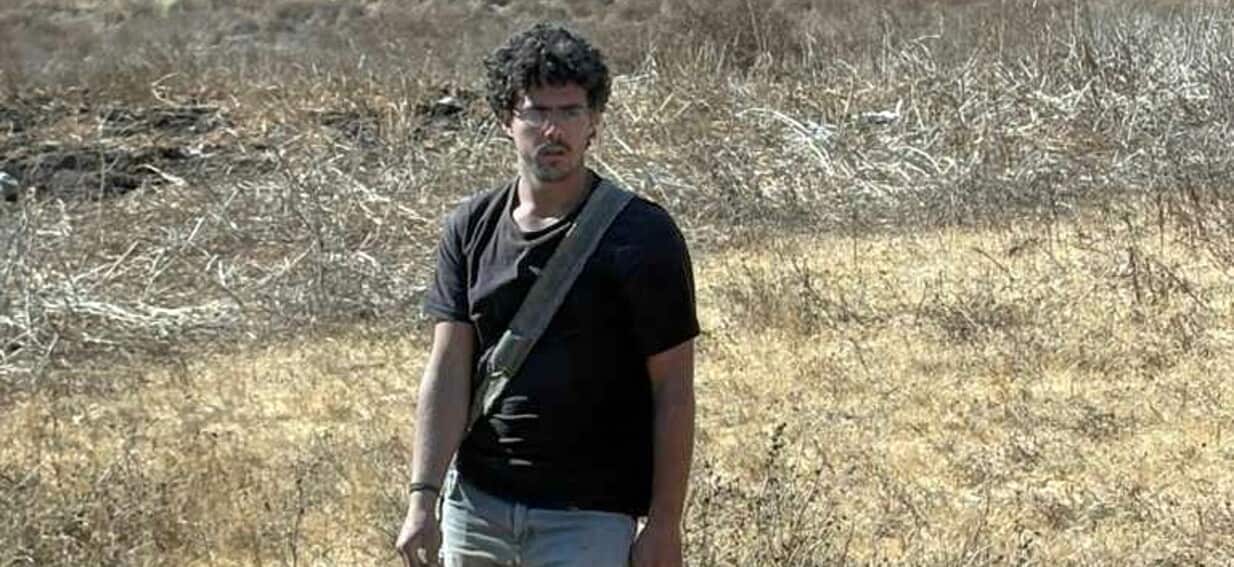
A missile strike on a taxi in Gaza City changed everything for thousands of soccer fans hoping for a brief escape from years of devastation. Just hours before Egypt faced Argentina in a massive World Cup knockout match, an Israeli airstrike killed Mohamed al-Wahidi, the man who spent weeks ensuring displaced Palestinians could watch the tournament. He wasn't a fighter. He was a 57-year-old aid worker who managed public relations and logistics for the Egyptian Relief Committee, a group funded directly by the Egyptian government to keep people fed and sheltered.
When the missile struck his vehicle in the Sabra neighborhood of Gaza City, it didn't just end his life. The blast also killed the taxi driver, 33-year-old Ahmed Jehad Rajab Doghmosh, and two young brothers, ten-year-old Hamza al-Deri and eight-year-old Fari al-Deri, who were walking home after playing soccer nearby.
This tragedy hits a raw nerve because it exposes the total collapse of safety even during a declared ceasefire. People search for news about Gaza hoping to understand if life is returning to normal, but events like this show that normal simply does not exist there. Al-Wahidi brought giant screens into tent camps and bombed-out ruins so families could experience a sliver of collective joy. His death reminds the world that in a war zone, even a temporary escape can become a target.
The Man Who Brought the World Cup to the Ruins
Mohamed al-Wahidi spent his days dealing with the brutal realities of humanitarian logistics. He worked for the Egyptian Committee in Gaza, coordinating the arrival and distribution of food, medical supplies, and temporary shelters. It was grueling work that left his family constantly worried about his exhaustion. His son, Fawaz al-Wahidi, shared that his father always insisted on pushing through the fatigue because he wanted to support the families displaced by the ongoing conflict.
When the 2026 World Cup kicked off in North America, al-Wahidi saw an opportunity to offer something beyond basic survival supplies. He wanted to give people their dignity and a sense of shared humanity back. He organized the setup of massive outdoor viewing screens across the Gaza Strip, from the battered streets of Gaza City down to the crowded tent cities in Khan Younis.
Thousands of Palestinians gathered around these screens. They sat on plastic chairs, perched on the edges of concrete slabs from collapsed buildings, and stood shoulder-to-shoulder under the night sky. For ninety minutes at a time, they weren't just refugees trying to survive. They were passionate sports fans cheering for their favorite teams, especially Egypt, a nation that has deep cultural and political ties to Gaza.
A Targeted Strike and the Collateral Damage
The Israel Defense Forces quickly confirmed the strike but stated that al-Wahidi was not the intended target. According to an official military spokesperson, the operation aimed to eliminate a specific militant belonging to Hamas's military wing who was traveling in the area. The military added that the incident is currently under review and expressed regret for any harm caused to uninvolved individuals.
Local medical officials and human rights groups paint a far more complicated picture of the strike's fallout. Dr. Mohamed Abu Selmiya, the director of Al-Shifa Hospital, confirmed the identities of the deceased and stated that the driver, Ahmed Doghmosh, was a well-known local taxi driver with no known affiliations to any militant factions. Family members of the victims expressed outrage over the justification of the attack, pointing to the two young al-Deri brothers who were caught in the blast radius while simply walking down the street.
The strike highlights a systemic pattern that human rights organizations have criticized for months. Even when high-precision weapons are deployed, the choice to execute strikes in densely populated urban neighborhoods regularly results in civilian deaths. No Palestinian militant organization has claimed any of the four individuals killed in this specific attack as members, fueling local anger that the intelligence used for the strike was either flawed or callously executed.
The Strategic Fallout Between Egypt and Israel
This incident is causing diplomatic waves outside of Gaza. Because al-Wahidi was a senior official working directly for the Egyptian government's relief arm, his death has forced a tense confrontation between Cairo and Jerusalem. Egyptian security officials confirmed that senior leadership in Cairo immediately contacted Israeli authorities to register a formal protest.
Egypt has long served as a critical mediator in the regional conflict, helping broker the ceasefire that went into effect in October. The killing of an official connected to their official humanitarian delegation threatens to undermine that fragile relationship. Egyptian representatives explicitly warned Israel against continuing what they described as a policy of targeted assassinations that disrupts humanitarian efforts and compromises the safety of international and regional aid personnel.
The tension spilled over into the sports world as well. Egypt's national team coach, Hossam Hassan, has used his platform during the World Cup to draw attention to the humanitarian crisis. Before the match against Argentina, Hassan abandoned traditional pre-game analysis during a press conference to deliver an emotional plea for the safety and sovereignty of the Palestinian people, urging global athletes and media to speak up against the ongoing violence.
Surviving Under a Ceasefire That Only Exists on Paper
To understand why this strike has caused such deep mourning, you have to look at the reality of the current ceasefire agreement. On paper, the major combat operations were supposed to halt months ago. In practice, the situation on the ground remains incredibly dangerous.
Since the October truce took effect, localized Israeli military operations and airstrikes have killed over 1,000 Palestinians. At the same time, guerrilla attacks by militants have claimed the lives of several Israeli soldiers. Israeli troops still occupy more than 60 percent of the Gaza Strip, and Prime Minister Benjamin Netanyahu has repeatedly asserted that a total military withdrawal is not on the horizon.
This hybrid state of no-war, no-peace makes daily life an exhausting psychological game for Gazans. People try to rebuild, try to go to school, and try to gather to watch a soccer game, but the threat of sudden destruction never actually leaves. Al-Wahidi was traveling in a taxi to help set up the viewing area for the Tel al-Hawa neighborhood when the missile hit. He was doing the work of peace and community resilience when he was caught in the machinery of war.
How Communities Carry On Amid Grief
Despite the shock of losing the man who made the watch parties possible, the scheduled screening of the Egypt-Argentina match went ahead on Tuesday night. It wasn't an act of disrespect. It was an act of defiance and a tribute to what al-Wahidi had tried to build.
Thousands of fans still gathered in front of the giant screens. Many brought Egyptian and Palestinian flags, waving them in memory of the aid worker whose body had been wrapped in those same colors during his funeral earlier that day. The atmosphere was heavy with grief, but the collective need to stand together and experience something communal outweighed the fear of staying home.
If you want to support the people affected by these ongoing disruptions, don't look for quick fixes. The real work happens through established, independent humanitarian channels that refuse to leave the region despite the risks.
- Support groups like the Palestinian Red Crescent Society or the International Rescue Committee that provide direct emergency medical and psychological services on the ground.
- Advocate for the safety of humanitarian corridors by contacting elected officials to demand stricter enforcement of international laws protecting aid workers.
- Stay informed through direct journalism that tracks civilian casualties and monitors the operational safety of relief organizations in conflict zones.
The screens in Gaza City will likely stay up for the remainder of the tournament because the community refuses to let go of the small spaces of joy they have clawed back. But the empty chair left by Mohamed al-Wahidi will remain a stark reminder of the true cost of this endless friction.