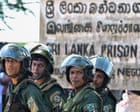
Sri Lanka just experienced its worst correctional disaster in years. A massive riot at the Negombo Prison, located about 35 kilometers north of the capital city of Colombo, has left 26 people dead and over 100 others injured. The dead include 19 inmates and seven prison guards who were caught in the crossfire.
This wasn't a sudden, unprompted explosion of violence. It was a predictable disaster driven by systemic overcrowding and escalating underworld drug wars that the state has failed to contain. If you want to understand how a routine breakfast service turned into a literal warzone, look closer at the volatile mix of overstuffed facilities and powerful narcotics syndicates operating behind bars.
How the Negombo Jail Clash Escalated Into Mayhem
The violence didn't happen all at once. Tensions flared on Sunday evening, July 5, 2026, when a localized fight broke out between long-term convicted prisoners and those held under temporary detention. Two inmates died in that initial clash. Realizing the danger, authorities quickly deployed military personnel around the perimeter, but they didn't send forces inside the building. That proved to be a fatal miscalculation.
By Monday morning, the situation devolved into absolute chaos. As breakfast was being served, inmates affiliated with two rival drug gangs launched a coordinated assault. Some prisoners managed to overpower guards, seizing several state-issued firearms.
A desperate group of inmates made a run for the main gate. Prison spokesman Chamika Gajanayake noted that while guards held the perimeter line, the interior of the prison became a free-for-all. Seven guards were killed while trying to break up the rioting as the facility slipped entirely out of state control.
The violence even triggered secondary emergencies within the compound. In an adjacent wing, panicked female inmates climbed onto the roof to protest the conditions and demand their immediate release. Under the weight of the crowd, a section of the roof collapsed, injuring multiple women.
The Brutal Numbers Behind the Violence
The medical reality of the riot is grim. Negombo Hospital director Pushpa Gamlath confirmed that the state-run facility was overwhelmed with victims suffering from deep cuts, severe bruises, and complex gunshot wounds.
The hospital initially received 23 bodies, a number that crawled up to 26 after Justice Minister Harshana Nanayakkara confirmed three more individuals succumbed to their injuries. Due to the severity of the trauma, at least 18 of the most critically injured patients had to be rushed to the Colombo National Hospital for specialized emergency surgery.
Overcrowding is a Ticking Time Bomb
The root cause of this tragedy isn't a secret. Sri Lankan jails are dangerously full. Official data from the Department of Prisons shows that across the island, correctional facilities are holding roughly 41,250 inmates.
The problem? The actual combined design capacity of these institutions is only a fraction of that number. Sri Lanka's prisons are operating at nearly four times their intended capacity.
When you cram thousands of individuals into spaces built for hundreds, basic human management breaks down. Combine that claustrophobic environment with active cartel members, and violence is inevitable. The country saw a preview of this in December 2020, when a pandemic-fueled riot at the Mahara prison killed 11 inmates and injured over a hundred more. The government responded then by releasing hundreds of minor offenders to ease the pressure, but it was a temporary fix for a chronic structural disease.
Immediate Steps Required to Prevent the Next Riot
Justice Minister Harshana Nanayakkara has publicly taken responsibility for the disaster and appointed a three-member committee, headed by a retired Supreme Court justice, to investigate the breakdown in security. However, administrative reviews won't fix a broken system. If independent monitoring bodies and regional governments want to prevent another slaughter, they must prioritize immediate operational shifts.
First, systemic segregation of the inmate population is vital. Housing low-level drug users and pre-trial detainees alongside high-ranking cartel enforcers creates a toxic recruiting ground and an immediate safety hazard. Authorities must immediately map gang affiliations and physically isolate rival factions across completely separate geographic facilities.
Second, the state must address the legislative bottleneck. Thousands of individuals languish in temporary detention for months or years waiting for trial dates. Expediting bail hearings for non-violent offenders is the fastest way to drop prison populations down to manageable, survivable levels.
Right now, the government is busy moving prisoners out of Negombo via heavily armed buses to scattered facilities across the island. Moving bodies from one overcrowded room to another doesn't solve the issue; it just redistributes the volatility. Without deep structural reform, the system remains a match waiting for another spark.