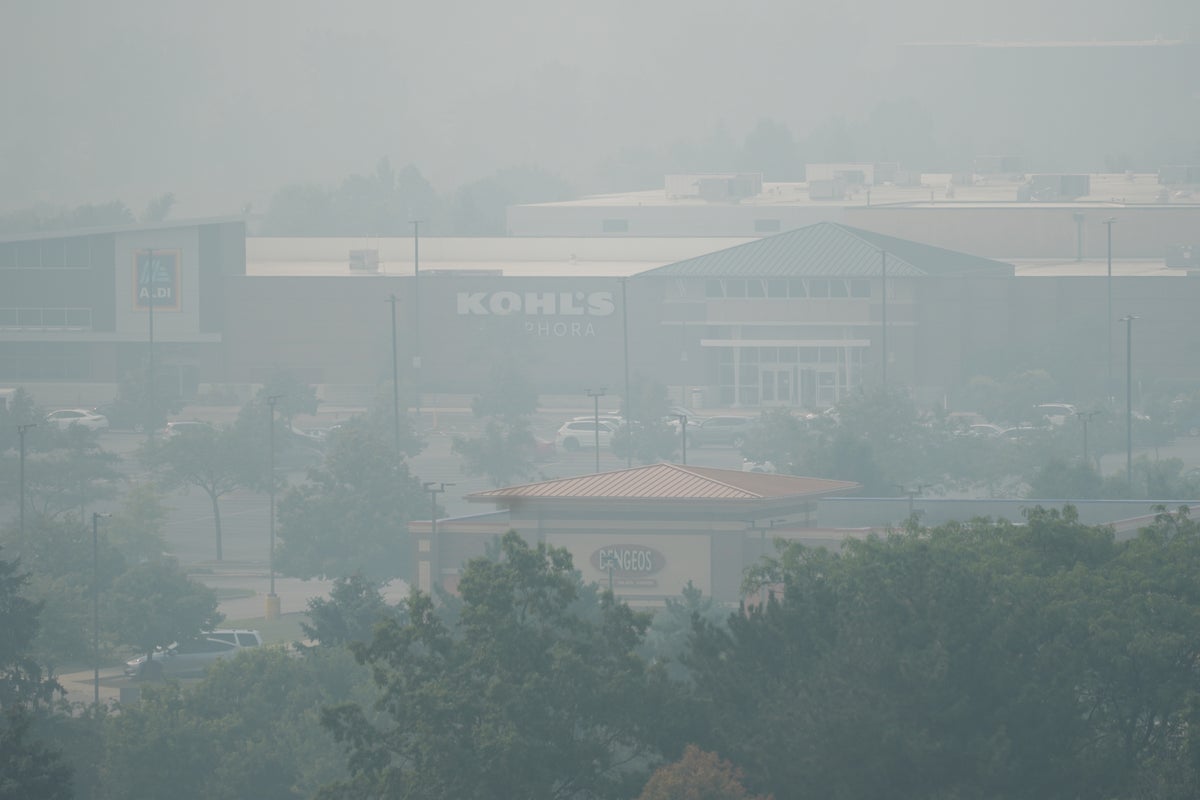
Spain's national team walked onto the training pitch in East Hanover, New Jersey, on Thursday morning, they didn't just face tactical questions about how to stop Lionel Messi's Argentina. They faced a glowing, orange-hued, toxic haze that made breathing feel like a chore.
As hundreds of out-of-control Canadian wildfires pump massive plumes of fine particulate matter (PM2.5) south, the New York-New Jersey metropolitan area has been plunged into hazardous air quality conditions. The timing couldn't be worse. MetLife Stadium—rebranded as New York New Jersey Stadium for the tournament—is slated to host the highly anticipated 2026 FIFA World Cup final between Spain and Argentina this Sunday, July 19.
But right now, the biggest battle isn't on the grass. It's in the lungs of the players and the 80,000-plus fans expected to pack the open-air arena.
The Invisible Threat Facing World Class Athletes
Most fans think about the tactical match-up, but medical experts are looking at basic physiology. During 90 minutes of elite, high-intensity soccer, players don't breathe like regular people. They inhale up to 10 to 20 times the volume of air that a person at rest does.
When that air is thick with PM2.5—minuscule soot particles that bypass the nose and throat to penetrate deep into lung tissue and enter the bloodstream—bad things happen.
"These are high-level athletes who are moving a lot of air through their lungs during every practice and every game," warns Dr. Courtney Howard, an emergency physician and Global Climate and Health Alliance official. "Really, they shouldn't be practicing outside if the air quality levels are at hazardous ranges."
While Spain had to cut through the haze in New Jersey, Argentina caught a massive break. Having just battled past England in a grueling semifinal in Atlanta, they opted to remain in Georgia for their immediate recovery and training sessions. Down south in Marietta, the air is perfectly clear, spared from the windblown wildfire smoke choking the Northeast. That leaves Spain with a distinct, frustrating environmental disadvantage in their physical preparation.
Fans in the Line of Fire
It isn't just the 22 players on the pitch who are vulnerable. The environmental crisis stretches far beyond the touchline:
- MetLife's Open-Air Design: The stadium has no roof or air filtration system. Tens of thousands of fans will sit exposed to whatever drifts in.
- Massive Fan Zones: Another 50,000 spectators plan to watch the match in Manhattan's Central Park. These unofficial gathering zones have zero infrastructure to shield people if air quality craters.
- The Canadian Precedent: This threat isn't theoretical. Earlier this week, Toronto was forced to cancel its official World Cup Fan Festival events—including a public screening of the Argentina-England semifinal—after registering the worst air quality index in the world.
New York Governor Kathy Hochul has already issued warnings, urging those with underlying respiratory or cardiovascular issues to limit outdoor exposure. For those who spent thousands of dollars on final tickets, "staying inside" isn't an option they want to consider.
Will the Weather Save Sunday's Final?
There is a glimmer of hope, and it comes from the sky. Meteorologists are tracking a cold front and rain expected to sweep through the New York-New Jersey region over the weekend.
If the front behaves, it should help push the heaviest particulate blankets out to sea and clear the skies by the 3:00 PM EDT kickoff on Sunday. But weather models are notoriously finicky. If the wind shifts slightly or the rain underdelivers, the toxic haze could settle right back over the Meadowlands just as the referee blows the opening whistle.
Even if the air clears slightly, the lingering heat wave in the region will compound the stress on the athletes' hearts and lungs.
What You Need to Do If You Are Attending
If you're lucky enough to have tickets to Sunday's final, you can't just show up and hope for the best. Take control of your own health:
- Monitor Live Air Quality: Don't rely on daily averages. Use apps like IQAir or AirNow to check real-time PM2.5 levels at East Rutherford, NJ, leading right up to gate-opening time.
- Pack High-Quality Masks: If the AQI (Air Quality Index) rises above 100, a simple cloth mask or surgical mask won't cut it against wildfire smoke. Pack well-fitted N95 or KN95 masks for the journey to and from the stadium.
- Hydrate relentlessly: Dry, smoky air irritates the airways. Double your water intake to keep your respiratory tract lubricated, especially with the high temperatures forecast for the weekend.
- Know the Medical Tent Locations: Familiarize yourself with the stadium layout and locate the nearest first-aid stations the moment you walk through the turnstiles. If you experience shortness of breath, chest tightness, or severe coughing, don't try to tough it out—go straight to the medics.